Birdr

Lappet-faced Vulture vs White-backed Vulture

Torgos tracheliotos versus Gyps africanus

Play a quiz with Lappet-faced Vulture and White-backed Vulture
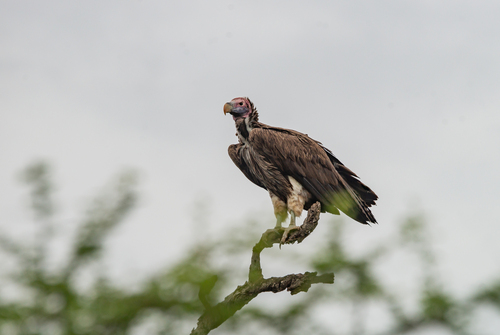
Lappet-faced Vulture (Torgos tracheliotos) Lappet-faced Vulture
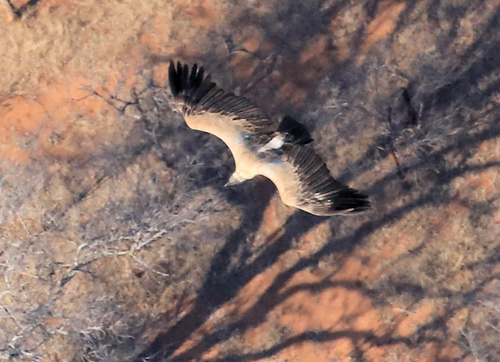
White-backed Vulture (Gyps africanus) White-backed Vulture

Media

Loading…

In short

The Lappet-faced Vulture is distinguished by its large size and bare, fleshy head with noticeable lappets, while the White-backed Vulture is smaller with a white back and lacks prominent head features. In flight, the Lappet-faced Vulture's broad wings and wedge-shaped tail contrast with the White-backed Vulture's narrower wings and shorter tail.

Identification tips

  1. Look for the large size and fleshy lappets on the head of the Lappet-faced Vulture. 2. Note the white back of the White-backed Vulture. 3. In flight, observe the broad wings and wedge-shaped tail of the Lappet-faced Vulture versus the narrower wings and shorter tail of the White-backed Vulture. 4. Consider the habitat, as Lappet-faced Vultures are more common in arid areas.

Size

The Lappet-faced Vulture is significantly larger than the White-backed Vulture, with a more robust build.

Plumage

The Lappet-faced Vulture has a mostly dark plumage with a bare, pinkish head and fleshy lappets, while the White-backed Vulture has a distinctive white back and lacks the fleshy head features.

Behaviour

Both species are often seen soaring, but the Lappet-faced Vulture is more solitary and dominant at carcasses, whereas the White-backed Vulture is more social and often found in groups.

Habitat

Both species inhabit open savannas and semi-arid regions, but the Lappet-faced Vulture is more likely to be found in arid areas.

Voice

Both species are generally silent, but the Lappet-faced Vulture may produce low grunts or hisses, especially near carcasses.

Submit a better description

Use the same sections as the comparison. Your text is published immediately.

The Lappet-faced Vulture is distinguished by its large size and bare, fleshy head with noticeable lappets, while the White-backed Vulture is smaller with a white back and lacks prominent head features. In flight, the Lappet-faced Vulture's broad wings and wedge-shaped tail contrast with the White-backed Vulture's narrower wings and shorter tail.

  1. Look for the large size and fleshy lappets on the head of the Lappet-faced Vulture. 2. Note the white back of the White-backed Vulture. 3. In flight, observe the broad wings and wedge-shaped tail of the Lappet-faced Vulture versus the narrower wings and shorter tail of the White-backed Vulture. 4. Consider the habitat, as Lappet-faced Vultures are more common in arid areas.

The Lappet-faced Vulture is significantly larger than the White-backed Vulture, with a more robust build.

The Lappet-faced Vulture has a mostly dark plumage with a bare, pinkish head and fleshy lappets, while the White-backed Vulture has a distinctive white back and lacks the fleshy head features.

Both species are often seen soaring, but the Lappet-faced Vulture is more solitary and dominant at carcasses, whereas the White-backed Vulture is more social and often found in groups.

Both species inhabit open savannas and semi-arid regions, but the Lappet-faced Vulture is more likely to be found in arid areas.

Both species are generally silent, but the Lappet-faced Vulture may produce low grunts or hisses, especially near carcasses.

Discard your changes?

You have unsaved edits. If you leave now, those changes will be lost.

Lappet-faced Vulture · White-backed Vulture · My Tricky Birds