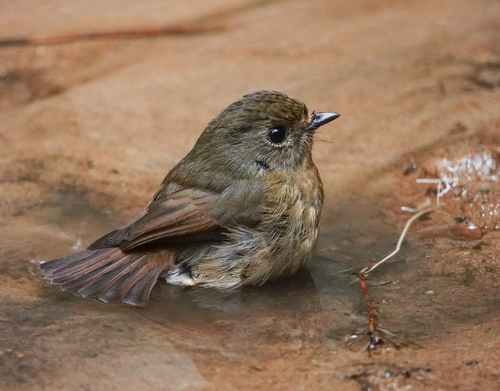
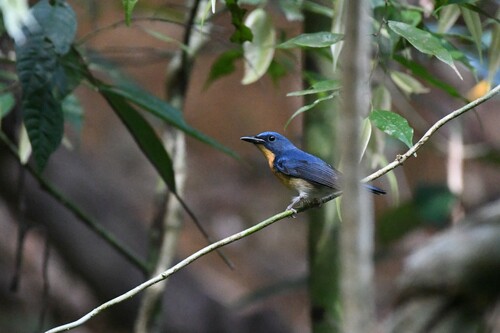
Large Blue Flycatcher vs Hill Blue Flycatcher
Cyornis magnirostris versus Cyornis whitei
Play a quiz with Large Blue Flycatcher and Hill Blue Flycatcher
Large Blue Flycatcher
Hill Blue Flycatcher
In short
The Large Blue Flycatcher and Hill Blue Flycatcher are similar in appearance but can be distinguished by subtle differences in plumage and behavior. Both species are part of the Old World Flycatchers family, but they differ in their geographic range and vocalizations.
Identification tips
- Look for the vibrancy of blue in males; the Large Blue Flycatcher is typically more vibrant. 2. Note the throat and breast color; the Large Blue Flycatcher has a brighter rufous-orange. 3. Consider the habitat; Hill Blue Flycatchers are more likely in hilly or montane forests. 4. Listen for the vocalizations; experience may be needed to distinguish subtle differences.
Size
Both species are similar in size, typical of medium-sized flycatchers.
Plumage
The male Large Blue Flycatcher has deep blue upperparts with a bright rufous-orange throat and breast, while the female is grayish-brown with a rufous tail. The Hill Blue Flycatcher male also has blue upperparts but is generally less vibrant, with a paler orange throat and breast. Females of both species can be confusingly similar, but the Hill Blue Flycatcher female tends to have a more uniform brown appearance.
Behaviour
Both species are often seen perched quietly, waiting to catch insects. The Large Blue Flycatcher is known for sitting still for long periods before darting out to capture prey.
Habitat
The Large Blue Flycatcher is common across much of southeastern Asia, while the Hill Blue Flycatcher is typically found in hilly or montane forest regions.
Voice
The Large Blue Flycatcher is often detected by its harsh calls and rich, melodious whistles. The Hill Blue Flycatcher has a similar song but may differ slightly in tone and pattern, often requiring experience to distinguish by ear.
Large Blue Flycatcher · Hill Blue Flycatcher · My Tricky Birds