Birdr

Large Cuckooshrike vs Lesser Cuckooshrike

Coracina macei versus Lalage fimbriata

Play a quiz with Large Cuckooshrike and Lesser Cuckooshrike
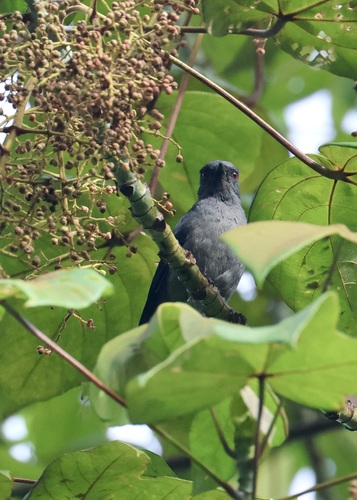
Large Cuckooshrike (Coracina macei) Large Cuckooshrike
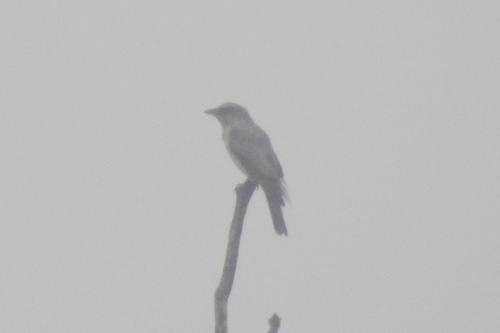
Lesser Cuckooshrike (Lalage fimbriata) Lesser Cuckooshrike

Media

Loading…

In short

The Large Cuckooshrike (Coracina macei) and the Lesser Cuckooshrike (Lalage fimbriata) can be distinguished primarily by size and plumage patterns. The Large Cuckooshrike is notably bigger with a more robust build, while the Lesser Cuckooshrike is smaller and more delicate. Both species share similar habitats but have distinct vocalizations.

Identification tips

  1. Size: Look for the larger size and bulkier build of the Large Cuckooshrike. 2. Plumage: Note the more uniform grey of the Large Cuckooshrike versus the contrasting patterns of the Lesser Cuckooshrike. 3. Vocalization: Listen for the deeper calls of the Large Cuckooshrike compared to the higher-pitched calls of the Lesser Cuckooshrike.

Size

The Large Cuckooshrike is significantly larger and bulkier compared to the smaller, more slender Lesser Cuckooshrike.

Plumage

The Large Cuckooshrike typically has a uniform grey plumage with less contrast, while the Lesser Cuckooshrike often shows more distinct patterns, including a contrasting black and white or grey plumage.

Behaviour

Both species exhibit similar behaviors, often seen perched quietly or foraging in the canopy. Specific behavioral differences are not well-documented.

Habitat

Both species inhabit similar environments, such as forests and wooded areas, and can often be found in overlapping ranges.

Voice

The vocalizations differ, with the Large Cuckooshrike having a deeper, more resonant call, while the Lesser Cuckooshrike's call is typically higher-pitched and more melodic.

Submit a better description

Use the same sections as the comparison. Your text is published immediately.

The Large Cuckooshrike (Coracina macei) and the Lesser Cuckooshrike (Lalage fimbriata) can be distinguished primarily by size and plumage patterns. The Large Cuckooshrike is notably bigger with a more robust build, while the Lesser Cuckooshrike is smaller and more delicate. Both species share similar habitats but have distinct vocalizations.

  1. Size: Look for the larger size and bulkier build of the Large Cuckooshrike. 2. Plumage: Note the more uniform grey of the Large Cuckooshrike versus the contrasting patterns of the Lesser Cuckooshrike. 3. Vocalization: Listen for the deeper calls of the Large Cuckooshrike compared to the higher-pitched calls of the Lesser Cuckooshrike.

The Large Cuckooshrike is significantly larger and bulkier compared to the smaller, more slender Lesser Cuckooshrike.

The Large Cuckooshrike typically has a uniform grey plumage with less contrast, while the Lesser Cuckooshrike often shows more distinct patterns, including a contrasting black and white or grey plumage.

Both species exhibit similar behaviors, often seen perched quietly or foraging in the canopy. Specific behavioral differences are not well-documented.

Both species inhabit similar environments, such as forests and wooded areas, and can often be found in overlapping ranges.

The vocalizations differ, with the Large Cuckooshrike having a deeper, more resonant call, while the Lesser Cuckooshrike's call is typically higher-pitched and more melodic.

Discard your changes?

You have unsaved edits. If you leave now, those changes will be lost.

Large Cuckooshrike · Lesser Cuckooshrike · My Tricky Birds