
Large Scimitar-Babbler vs Rusty-cheeked Scimitar-Babbler
Erythrogenys hypoleucos versus Erythrogenys erythrogenys
Play a quiz with Large Scimitar-Babbler and Rusty-cheeked Scimitar-Babbler
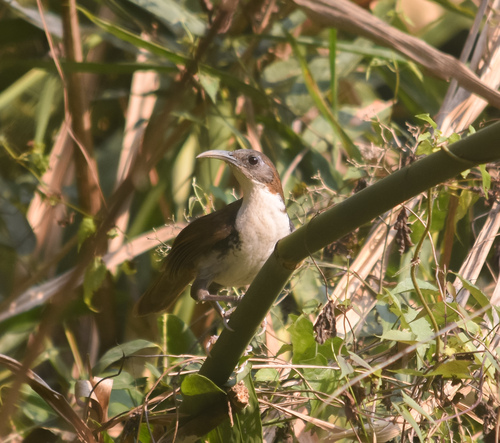
Large Scimitar-Babbler
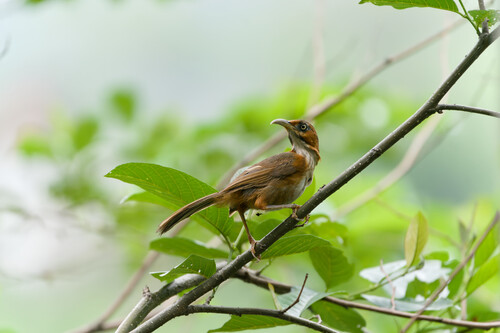
Rusty-cheeked Scimitar-Babbler
In short
The Large Scimitar-Babbler and Rusty-cheeked Scimitar-Babbler are similar in structure but can be distinguished by their plumage and vocalizations. The Large Scimitar-Babbler has a more uniform brown plumage, while the Rusty-cheeked Scimitar-Babbler features a distinctive rusty cheek patch. Their calls also differ, aiding in identification.
Identification tips
- Look for the rusty cheek patch on the Rusty-cheeked Scimitar-Babbler. 2. Listen for differences in calls; the Large Scimitar-Babbler has a whistling call, while the Rusty-cheeked has a more varied vocalization. 3. Observe the overall plumage tone; the Large Scimitar-Babbler is more uniformly brown.
Size
Both species are similar in size, with robust bodies and long, curved bills typical of scimitar-babblers.
Plumage
The Large Scimitar-Babbler is generally more uniformly brown, whereas the Rusty-cheeked Scimitar-Babbler has a notable rusty patch on its cheeks, which is a key distinguishing feature.
Behaviour
Both species exhibit similar behaviors, often foraging in dense undergrowth and being more often heard than seen.
Habitat
Both species inhabit similar environments, preferring dense forests and thickets. However, local distribution may vary, so check regional guides.
Voice
The vocalizations of these species differ, with the Large Scimitar-Babbler having a series of whistles, while the Rusty-cheeked Scimitar-Babbler's call is more varied and includes harsh notes.
Large Scimitar-Babbler · Rusty-cheeked Scimitar-Babbler · My Tricky Birds