Birdr

Lark-like Brushrunner vs Short-billed Canastero

Coryphistera alaudina versus Asthenes baeri

Play a quiz with Lark-like Brushrunner and Short-billed Canastero
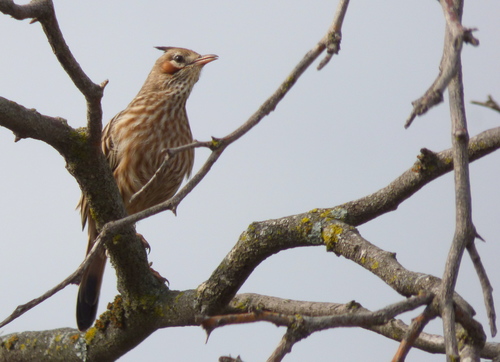
Lark-like Brushrunner (Coryphistera alaudina) Lark-like Brushrunner
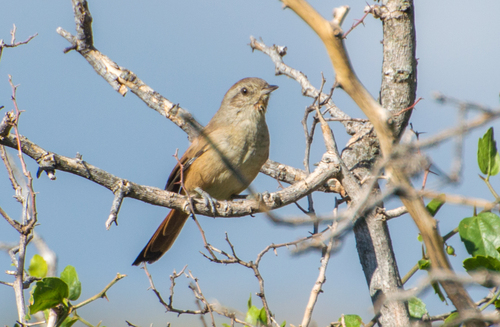
Short-billed Canastero (Asthenes baeri) Short-billed Canastero

Media

Loading…

In short

The Lark-like Brushrunner and Short-billed Canastero are both members of the Furnariidae family, but they differ in structure and habitat preferences. The Brushrunner is more robust with a longer tail, while the Canastero has a shorter bill and is often found in thorn forests.

Identification tips

Look for the longer tail and more robust body of the Lark-like Brushrunner. Note the shorter bill and preference for thorny habitats in the Short-billed Canastero. The Brushrunner's active foraging and twig-gathering behavior can also be a clue.

Size

The Lark-like Brushrunner is generally larger and more robust compared to the more compact Short-billed Canastero.

Plumage

Both species have similar earthy tones, but the Brushrunner has a more pronounced streaking pattern on its back and a paler tail. The Canastero's plumage is more uniform, with a less distinct pattern.

Behaviour

The Lark-like Brushrunner is known for its active foraging behavior, often seen gathering twigs, whereas the Short-billed Canastero is more secretive and tends to stay within dense thorny vegetation.

Habitat

The Brushrunner is found in open woodlands and scrubby areas, while the Canastero prefers scrubby dry forests with thorny trees, ranging from the Monte Desert to the Chaco.

Submit a better description

Use the same sections as the comparison. Your text is published immediately.

The Lark-like Brushrunner and Short-billed Canastero are both members of the Furnariidae family, but they differ in structure and habitat preferences. The Brushrunner is more robust with a longer tail, while the Canastero has a shorter bill and is often found in thorn forests.

Look for the longer tail and more robust body of the Lark-like Brushrunner. Note the shorter bill and preference for thorny habitats in the Short-billed Canastero. The Brushrunner's active foraging and twig-gathering behavior can also be a clue.

The Lark-like Brushrunner is generally larger and more robust compared to the more compact Short-billed Canastero.

Both species have similar earthy tones, but the Brushrunner has a more pronounced streaking pattern on its back and a paler tail. The Canastero's plumage is more uniform, with a less distinct pattern.

The Lark-like Brushrunner is known for its active foraging behavior, often seen gathering twigs, whereas the Short-billed Canastero is more secretive and tends to stay within dense thorny vegetation.

The Brushrunner is found in open woodlands and scrubby areas, while the Canastero prefers scrubby dry forests with thorny trees, ranging from the Monte Desert to the Chaco.

Discard your changes?

You have unsaved edits. If you leave now, those changes will be lost.

Lark-like Brushrunner · Short-billed Canastero · My Tricky Birds