Birdr

Lark Sparrow vs Lark Bunting

Chondestes grammacus versus Calamospiza melanocorys

Play a quiz with Lark Sparrow and Lark Bunting
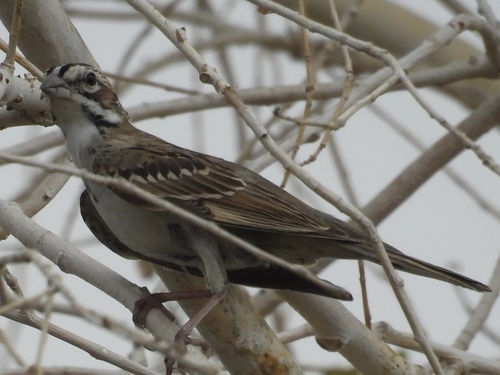
Lark Sparrow (Chondestes grammacus) Lark Sparrow
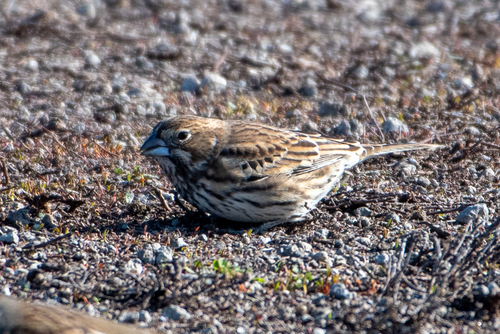
Lark Bunting (Calamospiza melanocorys) Lark Bunting

Media

Loading…

In short

Lark Sparrows and Lark Buntings can be distinguished by their plumage and behavior. Lark Sparrows have a distinctive head pattern with chestnut, white, and black markings, while Lark Buntings, especially males in breeding plumage, are mostly black with white wing patches. Both species inhabit open areas, but Lark Buntings are more associated with grasslands.

Identification tips

Size

Both species are similar in size, typical of sparrows, but the Lark Bunting may appear slightly bulkier.

Plumage

Lark Sparrows have a striking head pattern with chestnut, white, and black, and a white tail with dark corners. Lark Buntings, in breeding plumage, are mostly black with prominent white wing patches; females and non-breeding males are more subdued, with streaked brown plumage.

Behaviour

Lark Sparrows are often seen foraging on the ground in open areas, while Lark Buntings are known for their nomadic flocking behavior in winter and aerial displays during breeding.

Habitat

Lark Sparrows prefer ecotones between grasslands and forests, often in disturbed sites. Lark Buntings are more closely tied to grasslands and can adapt to human-altered habitats.

Voice

Lark Buntings have a distinctive flight song and two different song types, while Lark Sparrows have a more typical sparrow song.

Submit a better description

Use the same sections as the comparison. Your text is published immediately.

Lark Sparrows and Lark Buntings can be distinguished by their plumage and behavior. Lark Sparrows have a distinctive head pattern with chestnut, white, and black markings, while Lark Buntings, especially males in breeding plumage, are mostly black with white wing patches. Both species inhabit open areas, but Lark Buntings are more associated with grasslands.

  • Head Pattern: Look for the Lark Sparrow's distinctive chestnut and white head pattern.
  • Wing Patches: In breeding season, male Lark Buntings are mostly black with white wing patches.
  • Tail: Lark Sparrows have a white tail with dark corners.
  • Behavior: Note the flocking behavior of Lark Buntings in winter and their aerial displays in breeding season.
  • Habitat: Consider the habitat; Lark Buntings are more likely in open grasslands.

Both species are similar in size, typical of sparrows, but the Lark Bunting may appear slightly bulkier.

Lark Sparrows have a striking head pattern with chestnut, white, and black, and a white tail with dark corners. Lark Buntings, in breeding plumage, are mostly black with prominent white wing patches; females and non-breeding males are more subdued, with streaked brown plumage.

Lark Sparrows are often seen foraging on the ground in open areas, while Lark Buntings are known for their nomadic flocking behavior in winter and aerial displays during breeding.

Lark Sparrows prefer ecotones between grasslands and forests, often in disturbed sites. Lark Buntings are more closely tied to grasslands and can adapt to human-altered habitats.

Lark Buntings have a distinctive flight song and two different song types, while Lark Sparrows have a more typical sparrow song.

Discard your changes?

You have unsaved edits. If you leave now, those changes will be lost.

Lark Sparrow · Lark Bunting · My Tricky Birds