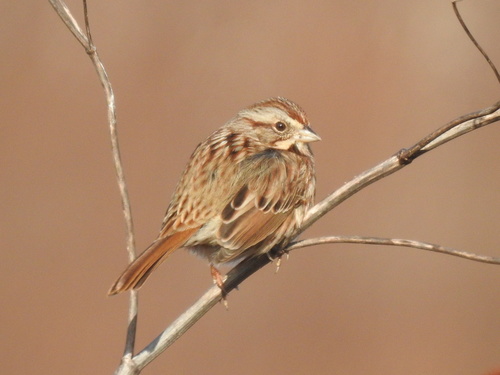
Lark Sparrow vs Song Sparrow
Chondestes grammacus versus Melospiza melodia
Play a quiz with Lark Sparrow and Song Sparrow
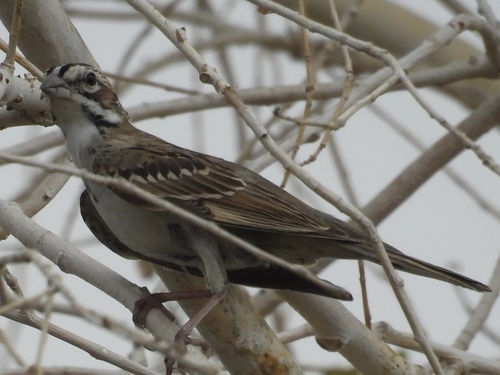
Lark Sparrow
Song Sparrow
In short
The Lark Sparrow and Song Sparrow can be distinguished by their head patterns and habitat preferences. The Lark Sparrow has a distinctive facial pattern with a chestnut crown and cheek patches, while the Song Sparrow has a more streaked appearance overall. Both species inhabit different environments, with Lark Sparrows favoring open, edge habitats and Song Sparrows more commonly found in dense vegetation near water.
Identification tips
- Look for the chestnut crown and cheek patches on the Lark Sparrow's head. 2. Note the streaked appearance and central breast spot of the Song Sparrow. 3. Observe habitat: Lark Sparrows in open areas, Song Sparrows near water. 4. Listen for the melodic song of the Song Sparrow compared to the simpler song of the Lark Sparrow.
Size
Both species are similar in size, but the Song Sparrow can appear slightly bulkier due to its more rounded body shape.
Plumage
The Lark Sparrow features a bold facial pattern with a chestnut crown and cheek patches, and a white tail with dark corners. In contrast, the Song Sparrow is heavily streaked overall, with a central breast spot and lacks the distinct facial markings of the Lark Sparrow.
Behaviour
Lark Sparrows are often seen foraging on the ground in open areas, while Song Sparrows are more likely to be found in dense vegetation, often near water. Both species exhibit ground-feeding behavior but in different habitats.
Habitat
Lark Sparrows prefer open, edge habitats such as grasslands with scattered shrubs, while Song Sparrows are more adaptable but typically found in dense vegetation near water, such as marshes and riparian areas.
Voice
The Song Sparrow is known for its varied and melodic song, which is more complex than the simpler, more mechanical song of the Lark Sparrow.