Birdr

Lazuli Bunting vs Painted Bunting

Passerina amoena versus Passerina ciris

Play a quiz with Lazuli Bunting and Painted Bunting
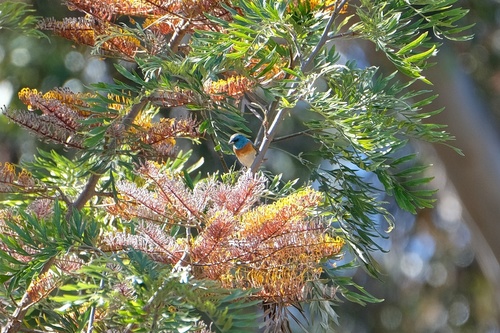
Lazuli Bunting (Passerina amoena) Lazuli Bunting
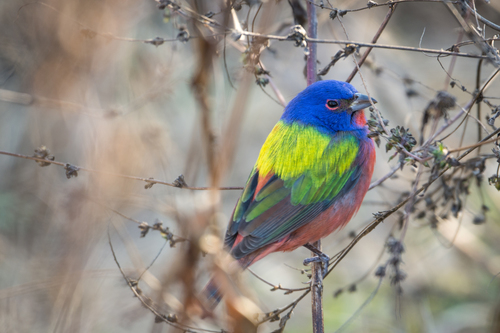
Painted Bunting (Passerina ciris) Painted Bunting

Media

Loading…

In short

The Lazuli Bunting and Painted Bunting are both small, colorful songbirds, but they can be distinguished by their distinct plumage patterns and regional habitats. The Lazuli Bunting is found in the western U.S. and southwestern Canada, while the Painted Bunting is more common in the southeastern U.S. and parts of the south-central U.S.

Identification tips

  1. Location: Lazuli Buntings are in the western U.S., Painted Buntings in the southeast. 2. Male Plumage: Look for the blue head and rusty breast of the Lazuli versus the multicolored Painted. 3. Female Plumage: Lazuli females are brownish, while Painted females are green. 4. Song: Listen for the unique song patterns, especially in Lazuli Buntings.

Size

Both species are similar in size, small and sparrow-like.

Plumage

Male Lazuli Buntings have bright blue heads and backs with a rusty-orange breast and white belly. In contrast, male Painted Buntings are more vividly colored with a blue head, red underparts, and green back. Females and immature males of both species are more subdued, with the Lazuli female being brownish and the Painted female being a more uniform green.

Behaviour

Both species are known for their singing, with the Lazuli Bunting being a more persistent singer throughout the breeding season. Painted Buntings are less studied in terms of behavior but are known for their territorial songs.

Habitat

Lazuli Buntings inhabit brushy habitats from sea level to high elevations in the western U.S. and southwestern Canada. Painted Buntings prefer swampy thickets and woodland edges in the southeastern U.S. and are facing habitat loss.

Voice

Lazuli Buntings have a distinct song that is often described as an 'acoustic barcode,' unique to each male. Painted Buntings also sing, but specific vocal differences are less documented.

Submit a better description

Use the same sections as the comparison. Your text is published immediately.

The Lazuli Bunting and Painted Bunting are both small, colorful songbirds, but they can be distinguished by their distinct plumage patterns and regional habitats. The Lazuli Bunting is found in the western U.S. and southwestern Canada, while the Painted Bunting is more common in the southeastern U.S. and parts of the south-central U.S.

  1. Location: Lazuli Buntings are in the western U.S., Painted Buntings in the southeast. 2. Male Plumage: Look for the blue head and rusty breast of the Lazuli versus the multicolored Painted. 3. Female Plumage: Lazuli females are brownish, while Painted females are green. 4. Song: Listen for the unique song patterns, especially in Lazuli Buntings.

Both species are similar in size, small and sparrow-like.

Male Lazuli Buntings have bright blue heads and backs with a rusty-orange breast and white belly. In contrast, male Painted Buntings are more vividly colored with a blue head, red underparts, and green back. Females and immature males of both species are more subdued, with the Lazuli female being brownish and the Painted female being a more uniform green.

Both species are known for their singing, with the Lazuli Bunting being a more persistent singer throughout the breeding season. Painted Buntings are less studied in terms of behavior but are known for their territorial songs.

Lazuli Buntings inhabit brushy habitats from sea level to high elevations in the western U.S. and southwestern Canada. Painted Buntings prefer swampy thickets and woodland edges in the southeastern U.S. and are facing habitat loss.

Lazuli Buntings have a distinct song that is often described as an 'acoustic barcode,' unique to each male. Painted Buntings also sing, but specific vocal differences are less documented.

Discard your changes?

You have unsaved edits. If you leave now, those changes will be lost.

Lazuli Bunting · Painted Bunting · My Tricky Birds