Birdr

Leaden Flycatcher vs Broad-billed Flycatcher

Myiagra rubecula versus Myiagra ruficollis

Play a quiz with Leaden Flycatcher and Broad-billed Flycatcher
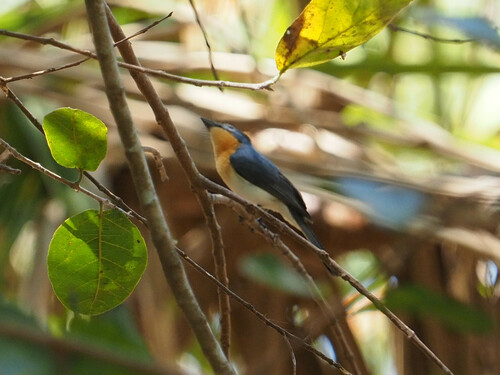
Leaden Flycatcher (Myiagra rubecula) Leaden Flycatcher
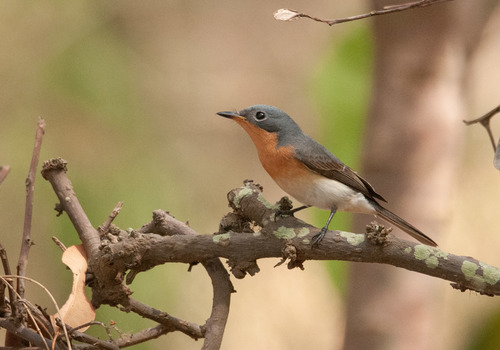
Broad-billed Flycatcher (Myiagra ruficollis) Broad-billed Flycatcher

Media

Loading…

In short

The Leaden Flycatcher and Broad-billed Flycatcher are similar in size and shape, but can be distinguished by bill size and plumage details. The Broad-billed Flycatcher has a broader bill and more rufous underparts, while the Leaden Flycatcher is more uniformly leaden-grey. Vocalizations also differ, aiding identification in the field.

Identification tips

  1. Bill size: The Broad-billed Flycatcher has a noticeably broader bill. 2. Plumage: Look for rufous underparts in the Broad-billed Flycatcher versus the more uniform grey of the Leaden Flycatcher. 3. Vocalizations: Listen for the melodic song of the Leaden Flycatcher compared to the harsher calls of the Broad-billed Flycatcher. 4. Habitat: Consider the habitat; Broad-billed Flycatchers are more common in mangroves.

Size

Both species are similar in size, typical of small flycatchers.

Plumage

The Leaden Flycatcher is predominantly leaden-grey with a paler throat and belly, while the Broad-billed Flycatcher has more rufous tones on the underparts and a broader, darker bill.

Behaviour

Both species exhibit typical flycatcher behavior, sallying from perches to catch insects.

Habitat

Both species inhabit similar habitats, including forests and woodlands, but the Broad-billed Flycatcher is more often found in mangroves and coastal areas.

Voice

The Leaden Flycatcher has a more melodic song compared to the harsher calls of the Broad-billed Flycatcher.

Submit a better description

Use the same sections as the comparison. Your text is published immediately.

The Leaden Flycatcher and Broad-billed Flycatcher are similar in size and shape, but can be distinguished by bill size and plumage details. The Broad-billed Flycatcher has a broader bill and more rufous underparts, while the Leaden Flycatcher is more uniformly leaden-grey. Vocalizations also differ, aiding identification in the field.

  1. Bill size: The Broad-billed Flycatcher has a noticeably broader bill. 2. Plumage: Look for rufous underparts in the Broad-billed Flycatcher versus the more uniform grey of the Leaden Flycatcher. 3. Vocalizations: Listen for the melodic song of the Leaden Flycatcher compared to the harsher calls of the Broad-billed Flycatcher. 4. Habitat: Consider the habitat; Broad-billed Flycatchers are more common in mangroves.

Both species are similar in size, typical of small flycatchers.

The Leaden Flycatcher is predominantly leaden-grey with a paler throat and belly, while the Broad-billed Flycatcher has more rufous tones on the underparts and a broader, darker bill.

Both species exhibit typical flycatcher behavior, sallying from perches to catch insects.

Both species inhabit similar habitats, including forests and woodlands, but the Broad-billed Flycatcher is more often found in mangroves and coastal areas.

The Leaden Flycatcher has a more melodic song compared to the harsher calls of the Broad-billed Flycatcher.

Discard your changes?

You have unsaved edits. If you leave now, those changes will be lost.

Leaden Flycatcher · Broad-billed Flycatcher · My Tricky Birds