Birdr

Least Grebe vs Great Grebe

Tachybaptus dominicus versus Podiceps major

Play a quiz with Least Grebe and Great Grebe
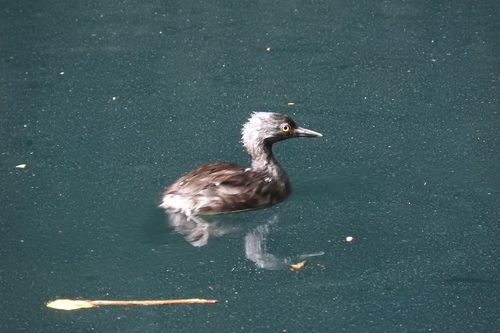
Least Grebe (Tachybaptus dominicus) Least Grebe
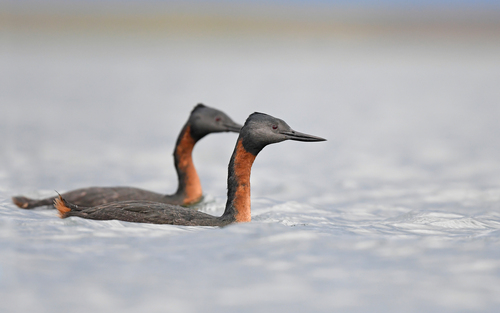
Great Grebe (Podiceps major) Great Grebe

Media

Loading…

In short

The Least Grebe and Great Grebe are easily distinguished by size and plumage. The Least Grebe is the smallest New World grebe, while the Great Grebe is the largest, with a distinct rufous neck and dagger-like bill.

Identification tips

Size

The Least Grebe is significantly smaller, being the smallest New World grebe, whereas the Great Grebe is the largest of the Podicipedidae family.

Plumage

The Least Grebe has a more subdued plumage with a generally dark appearance, while the Great Grebe features a striking rufous neck, dark back, and whitish underparts.

Behaviour

Both species dive for food, but the Great Grebe is known for its ability to catch fish, crabs, and even young waterbirds, reflecting its larger size and more varied diet.

Habitat

Least Grebes are found in tropical and subtropical fresh and brackish waters, while Great Grebes inhabit a wide range of large water bodies, including rocky coasts and inland lakes in southern South America.

Submit a better description

Use the same sections as the comparison. Your text is published immediately.

The Least Grebe and Great Grebe are easily distinguished by size and plumage. The Least Grebe is the smallest New World grebe, while the Great Grebe is the largest, with a distinct rufous neck and dagger-like bill.

  • Size: Least Grebe is much smaller than Great Grebe.
  • Neck and Bill: Great Grebe has a long, thin neck and a dagger-like bill.
  • Plumage: Look for the rufous neck of the Great Grebe compared to the darker, more uniform plumage of the Least Grebe.
  • Habitat: Consider the habitat; Least Grebes prefer smaller, more sheltered waters, whereas Great Grebes are found in larger, open water bodies.

The Least Grebe is significantly smaller, being the smallest New World grebe, whereas the Great Grebe is the largest of the Podicipedidae family.

The Least Grebe has a more subdued plumage with a generally dark appearance, while the Great Grebe features a striking rufous neck, dark back, and whitish underparts.

Both species dive for food, but the Great Grebe is known for its ability to catch fish, crabs, and even young waterbirds, reflecting its larger size and more varied diet.

Least Grebes are found in tropical and subtropical fresh and brackish waters, while Great Grebes inhabit a wide range of large water bodies, including rocky coasts and inland lakes in southern South America.

Discard your changes?

You have unsaved edits. If you leave now, those changes will be lost.

Least Grebe · Great Grebe · My Tricky Birds