Birdr

LeConte's Thrasher vs Sage Thrasher

Toxostoma lecontei versus Oreoscoptes montanus

Play a quiz with LeConte's Thrasher and Sage Thrasher
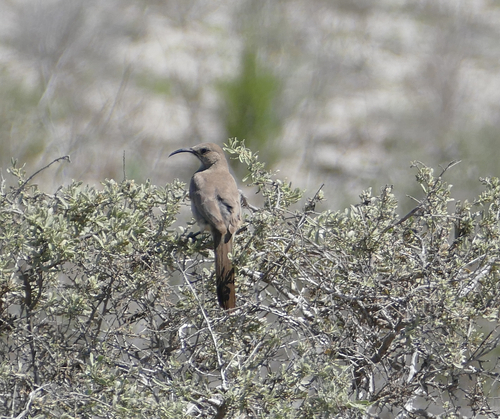
LeConte's Thrasher (Toxostoma lecontei) LeConte's Thrasher
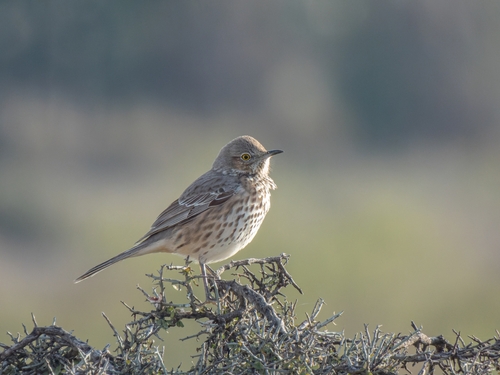
Sage Thrasher (Oreoscoptes montanus) Sage Thrasher

Media

Loading…

In short

LeConte's Thrasher and Sage Thrasher can be distinguished by their habitat preferences and subtle differences in plumage and behavior. LeConte's Thrasher is more adapted to desert environments, while Sage Thrasher is typically found in sagebrush habitats. Both species are elusive, but their songs and flight patterns offer additional clues.

Identification tips

  1. Habitat: Check the surrounding environment; desert suggests LeConte's, sagebrush indicates Sage Thrasher. 2. Plumage: Look for the pale sandy color of LeConte's versus the grayish-brown and streaked breast of Sage Thrasher. 3. Behavior: Observe flight patterns and song; Sage Thrasher's song is more complex and flight more undulating. 4. Size: Note the slightly larger size of LeConte's Thrasher.

Size

LeConte's Thrasher is slightly larger and more robust than the Sage Thrasher, which is the smallest thrasher species.

Plumage

LeConte's Thrasher has a pale, sandy-brown plumage that blends with desert environments, while the Sage Thrasher is more grayish-brown with faint streaking on the breast.

Behaviour

Both species are ground-dwelling and elusive, but the Sage Thrasher is known for its undulating courtship flight and melodious song. LeConte's Thrasher tends to stay low and is more secretive.

Habitat

LeConte's Thrasher is found in arid desert regions with sparse vegetation, whereas the Sage Thrasher is a sagebrush obligate, preferring large expanses of sagebrush steppe.

Voice

The Sage Thrasher has a long, melodious song reminiscent of a mockingbird, while LeConte's Thrasher's vocalizations are less documented but generally quieter and less varied.

Submit a better description

Use the same sections as the comparison. Your text is published immediately.

LeConte's Thrasher and Sage Thrasher can be distinguished by their habitat preferences and subtle differences in plumage and behavior. LeConte's Thrasher is more adapted to desert environments, while Sage Thrasher is typically found in sagebrush habitats. Both species are elusive, but their songs and flight patterns offer additional clues.

  1. Habitat: Check the surrounding environment; desert suggests LeConte's, sagebrush indicates Sage Thrasher. 2. Plumage: Look for the pale sandy color of LeConte's versus the grayish-brown and streaked breast of Sage Thrasher. 3. Behavior: Observe flight patterns and song; Sage Thrasher's song is more complex and flight more undulating. 4. Size: Note the slightly larger size of LeConte's Thrasher.

LeConte's Thrasher is slightly larger and more robust than the Sage Thrasher, which is the smallest thrasher species.

LeConte's Thrasher has a pale, sandy-brown plumage that blends with desert environments, while the Sage Thrasher is more grayish-brown with faint streaking on the breast.

Both species are ground-dwelling and elusive, but the Sage Thrasher is known for its undulating courtship flight and melodious song. LeConte's Thrasher tends to stay low and is more secretive.

LeConte's Thrasher is found in arid desert regions with sparse vegetation, whereas the Sage Thrasher is a sagebrush obligate, preferring large expanses of sagebrush steppe.

The Sage Thrasher has a long, melodious song reminiscent of a mockingbird, while LeConte's Thrasher's vocalizations are less documented but generally quieter and less varied.

Discard your changes?

You have unsaved edits. If you leave now, those changes will be lost.

LeConte's Thrasher · Sage Thrasher · My Tricky Birds