Lesser Honeyguide vs African Golden-Weaver
Indicator minor versus Ploceus subaureus
Play a quiz with Lesser Honeyguide and African Golden-Weaver
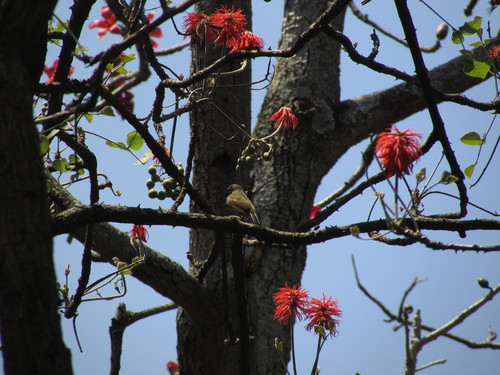
Lesser Honeyguide
African Golden-Weaver
In short
The Lesser Honeyguide (Indicator minor) and the African Golden-Weaver (Ploceus subaureus) can be distinguished by their tail and plumage features. The Lesser Honeyguide has distinctive white edges on its tail, especially visible in flight, while the African Golden-Weaver is notable for its bright yellow plumage. Both species occupy different habitats, which can aid in identification.
Identification tips
Look for the white edges on the tail of the Lesser Honeyguide during flight. Note the bright yellow plumage of the African Golden-Weaver. Consider the habitat: wooded areas suggest Lesser Honeyguide, while wetlands suggest African Golden-Weaver. Observe behavior: brood parasitism might indicate a honeyguide, while social flocking and nest-building are typical of weavers.
Size
Both species are small birds, but the Lesser Honeyguide is generally more slender compared to the more robust African Golden-Weaver.
Plumage
The Lesser Honeyguide features a small pale loral spot and a dark malar stripe with white-edged tail feathers. In contrast, the African Golden-Weaver is characterized by its bright yellow plumage, lacking the distinctive tail markings of the honeyguide.
Behaviour
The Lesser Honeyguide is known for its brood parasitic behavior, often targeting barbets and woodpeckers, while the African Golden-Weaver is a social bird, often seen in flocks and known for its intricate nest-building.
Habitat
Lesser Honeyguides are found in a variety of wooded habitats, gardens, and orchards, while African Golden-Weavers are typically found in wetlands and areas with tall grasses.
Voice
Vocalizations are not a primary distinguishing feature between these species in the field.