Lesser Honeyguide vs Magpie Mannikin
Indicator minor versus Spermestes fringilloides
Play a quiz with Lesser Honeyguide and Magpie Mannikin
Lesser Honeyguide
Magpie Mannikin
In short
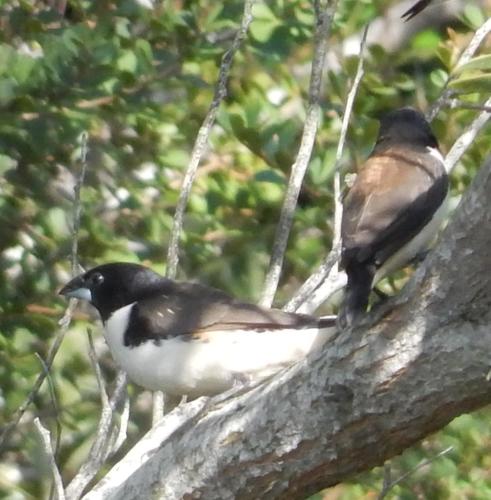
The Lesser Honeyguide and Magpie Mannikin are distinct in both appearance and behavior. The Lesser Honeyguide is known for its white-edged tail and dark malar stripe, while the Magpie Mannikin features a striking black and white plumage. These species also differ significantly in their habitats and feeding behaviors.
Identification tips
- Tail edges: Look for white edges on the Lesser Honeyguide's tail, especially in flight.
- Plumage contrast: Note the stark black and white plumage of the Magpie Mannikin.
- Habitat: Consider the environment; wooded areas suggest Lesser Honeyguide, while open grasslands suggest Magpie Mannikin.
- Behavior: Observe feeding behavior; brood parasitism and flycatching indicate Lesser Honeyguide.
Size
The Lesser Honeyguide is generally larger than the Magpie Mannikin.
Plumage
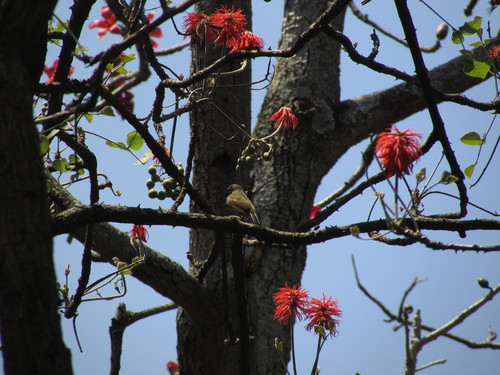
The Lesser Honeyguide has a subtle plumage with white edges on the tail and a dark malar stripe, whereas the Magpie Mannikin displays a bold black and white coloration.
Behaviour
The Lesser Honeyguide is an obligatory brood parasite, often seen flycatching or searching for food in trees. In contrast, the Magpie Mannikin forages for seeds and is not a brood parasite.
Habitat
Lesser Honeyguides are found in wooded areas, gardens, and orchards, while Magpie Mannikins prefer grasslands and open areas with scattered trees.
Voice
Vocalizations of the Lesser Honeyguide are not well-documented in this context, while the Magpie Mannikin is known for its soft, musical calls.