Birdr

Lesser Honeyguide vs Scaly-throated Honeyguide

Indicator minor versus Indicator variegatus

Play a quiz with Lesser Honeyguide and Scaly-throated Honeyguide
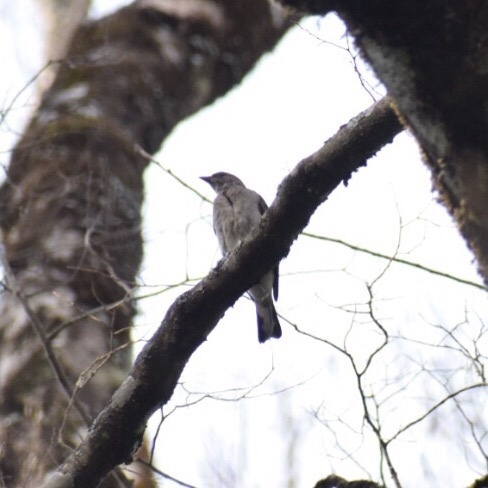
Lesser Honeyguide (Indicator minor) Lesser Honeyguide
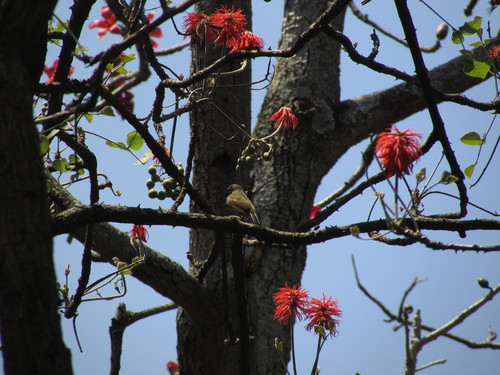
Scaly-throated Honeyguide (Indicator variegatus) Scaly-throated Honeyguide

Media

Loading…

In short

The Lesser Honeyguide and Scaly-throated Honeyguide can be distinguished by their tail patterns and throat markings. The Lesser Honeyguide has white edges to the tail and a dark malar stripe, while the Scaly-throated Honeyguide features a scaly pattern on its throat. Both species are similar in size and structure.

Identification tips

1. Tail pattern: Look for white edges on the tail of the Lesser Honeyguide. 2. Throat markings: Check for a scaly pattern on the throat of the Scaly-throated Honeyguide. 3. Malar stripe: Note the dark malar stripe on the Lesser Honeyguide. 4. Habitat context: Consider the habitat, though both species overlap in many areas.

Size

Both species are similar in size, typical of honeyguides, with no significant differences in structure.

Plumage

The Lesser Honeyguide has white edges to the tail, a small pale loral spot, and a dark malar stripe. In contrast, the Scaly-throated Honeyguide is notable for its scaly throat pattern.

Behaviour

Both species are brood parasites and feed on beeswax and insects, often seen flycatching or foraging on tree bark and foliage.

Habitat

The Lesser Honeyguide inhabits a variety of habitats including wooded areas, gardens, and orchards, while the Scaly-throated Honeyguide is often found in similar environments but specific habitat preferences are less documented.

Voice

Vocalizations are not well-differentiated between the two species, with no significant differences noted in available sources.

Submit a better description

Use the same sections as the comparison. Your text is published immediately.

The Lesser Honeyguide and Scaly-throated Honeyguide can be distinguished by their tail patterns and throat markings. The Lesser Honeyguide has white edges to the tail and a dark malar stripe, while the Scaly-throated Honeyguide features a scaly pattern on its throat. Both species are similar in size and structure.

1. Tail pattern: Look for white edges on the tail of the Lesser Honeyguide. 2. Throat markings: Check for a scaly pattern on the throat of the Scaly-throated Honeyguide. 3. Malar stripe: Note the dark malar stripe on the Lesser Honeyguide. 4. Habitat context: Consider the habitat, though both species overlap in many areas.

Both species are similar in size, typical of honeyguides, with no significant differences in structure.

The Lesser Honeyguide has white edges to the tail, a small pale loral spot, and a dark malar stripe. In contrast, the Scaly-throated Honeyguide is notable for its scaly throat pattern.

Both species are brood parasites and feed on beeswax and insects, often seen flycatching or foraging on tree bark and foliage.

The Lesser Honeyguide inhabits a variety of habitats including wooded areas, gardens, and orchards, while the Scaly-throated Honeyguide is often found in similar environments but specific habitat preferences are less documented.

Vocalizations are not well-differentiated between the two species, with no significant differences noted in available sources.

Discard your changes?

You have unsaved edits. If you leave now, those changes will be lost.

Lesser Honeyguide · Scaly-throated Honeyguide · My Tricky Birds