Birdr

Lesser Kestrel vs Saker Falcon

Falco naumanni versus Falco cherrug

Play a quiz with Lesser Kestrel and Saker Falcon
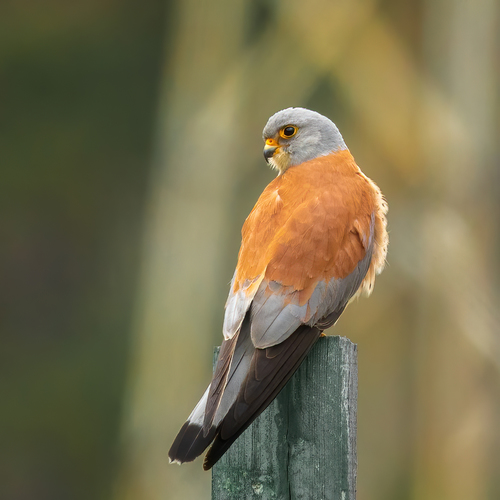
Lesser Kestrel (Falco naumanni) Lesser Kestrel
Saker Falcon (Falco cherrug) Saker Falcon

Media

Loading…

In short

The Lesser Kestrel (Falco naumanni) and Saker Falcon (Falco cherrug) can be distinguished by size and plumage details. The Saker Falcon is significantly larger and more robust, while the Lesser Kestrel is smaller and more delicate. Both species share similar habitats but differ in vocalizations and behavior.

Identification tips

  1. Size: Use size as a primary indicator; Saker Falcons are larger. 2. Plumage: Look for less streaking on Lesser Kestrels. 3. Behavior: Note hovering behavior in Lesser Kestrels. 4. Vocalizations: Listen for the high-pitched calls of Lesser Kestrels. 5. Habitat: Consider the habitat; Saker Falcons prefer more arid regions.

Size

The Saker Falcon is much larger and more robust than the Lesser Kestrel, which is smaller and more slender.

Plumage

Lesser Kestrels have a more uniform and lighter plumage with less streaking, especially on the underparts, compared to the Saker Falcon, which has heavier streaking and a more mottled appearance.

Behaviour

Lesser Kestrels often hover while hunting, a behavior less commonly seen in Saker Falcons, which prefer to hunt in open areas with fast, direct flights.

Habitat

Both species can be found in open habitats, but Saker Falcons are more frequently associated with steppe and semi-desert regions, while Lesser Kestrels are often found in agricultural areas and grasslands.

Voice

Lesser Kestrels have a distinctive, high-pitched 'klee-klee-klee' call, while Saker Falcons have a deeper, harsher call.

Submit a better description

Use the same sections as the comparison. Your text is published immediately.

The Lesser Kestrel (Falco naumanni) and Saker Falcon (Falco cherrug) can be distinguished by size and plumage details. The Saker Falcon is significantly larger and more robust, while the Lesser Kestrel is smaller and more delicate. Both species share similar habitats but differ in vocalizations and behavior.

  1. Size: Use size as a primary indicator; Saker Falcons are larger. 2. Plumage: Look for less streaking on Lesser Kestrels. 3. Behavior: Note hovering behavior in Lesser Kestrels. 4. Vocalizations: Listen for the high-pitched calls of Lesser Kestrels. 5. Habitat: Consider the habitat; Saker Falcons prefer more arid regions.

The Saker Falcon is much larger and more robust than the Lesser Kestrel, which is smaller and more slender.

Lesser Kestrels have a more uniform and lighter plumage with less streaking, especially on the underparts, compared to the Saker Falcon, which has heavier streaking and a more mottled appearance.

Lesser Kestrels often hover while hunting, a behavior less commonly seen in Saker Falcons, which prefer to hunt in open areas with fast, direct flights.

Both species can be found in open habitats, but Saker Falcons are more frequently associated with steppe and semi-desert regions, while Lesser Kestrels are often found in agricultural areas and grasslands.

Lesser Kestrels have a distinctive, high-pitched 'klee-klee-klee' call, while Saker Falcons have a deeper, harsher call.

Discard your changes?

You have unsaved edits. If you leave now, those changes will be lost.

Lesser Kestrel · Saker Falcon · My Tricky Birds