Lesser Redpoll vs Parrot Crossbill
Acanthis cabaret versus Loxia pytyopsittacus
Play a quiz with Lesser Redpoll and Parrot Crossbill
Lesser Redpoll
Parrot Crossbill
In short
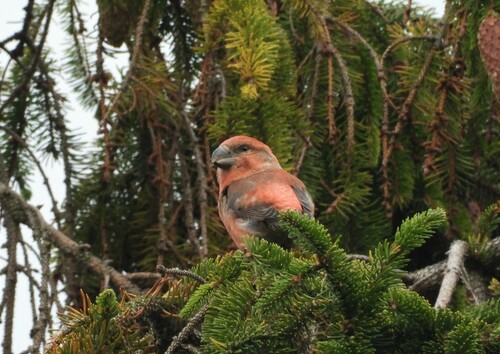
The bill shape is the most reliable field mark: the Lesser Redpoll has a slender, pointed bill, while the Parrot Crossbill features a robust, crossed bill. These structural differences are more diagnostic than plumage, which can vary.
Identification tips
- Bill Shape: Look for the slender, pointed bill of the Lesser Redpoll versus the robust, crossed bill of the Parrot Crossbill. 2. Size: Note the size difference; Parrot Crossbill is larger and bulkier. 3. Plumage: Check for the red forehead and pinkish breast of the Lesser Redpoll. 4. Habitat: Consider the habitat; Lesser Redpolls in open woodlands, Parrot Crossbills in coniferous forests. 5. Vocalization: Listen for the rapid 'chit-chit-chit' of the Lesser Redpoll compared to the deeper 'chup' of the Parrot Crossbill.
Size
The Parrot Crossbill is significantly larger than the Lesser Redpoll, with a bulkier body and a more robust appearance.
Plumage
Both species have streaked brown plumage, but the Lesser Redpoll often shows a red forehead and a pinkish wash on the breast, especially in males, whereas the Parrot Crossbill lacks these red tones.
Behaviour
Lesser Redpolls are often seen in flocks, feeding on seeds in birch and alder trees. Parrot Crossbills also feed in flocks but are more likely to be found in coniferous forests, using their strong bills to extract seeds from cones.
Habitat
Lesser Redpolls are typically found in open woodlands and scrub, while Parrot Crossbills prefer coniferous forests, particularly those with a high density of pine or spruce.
Voice
Lesser Redpolls have a distinctive, rapid 'chit-chit-chit' call, while Parrot Crossbills produce a deeper, more metallic 'chup' or 'chip' call.