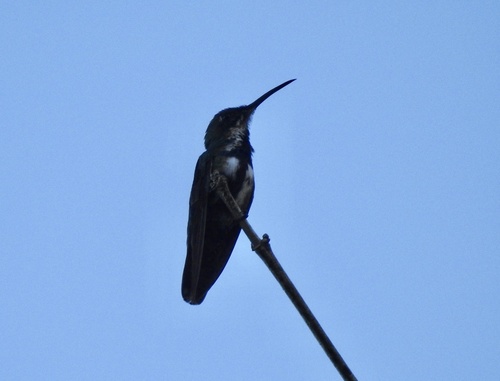
Lesser Violetear vs Green-breasted Mango
Colibri cyanotus versus Anthracothorax prevostii
Play a quiz with Lesser Violetear and Green-breasted Mango
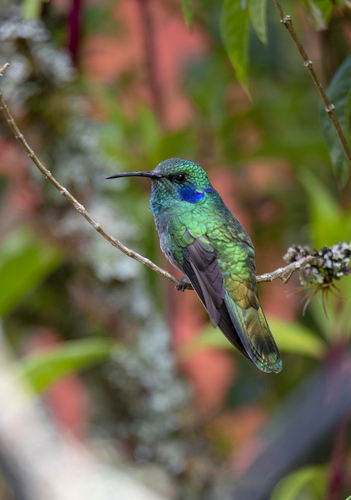
Lesser Violetear
Green-breasted Mango
In short
The Lesser Violetear and Green-breasted Mango are both hummingbirds but differ notably in plumage and habitat preferences. The Lesser Violetear is mostly glittering green with a violet ear patch, while the Green-breasted Mango has a distinctive green breast with a dark central stripe. Habitat preferences also differ, with the Violetear favoring highland forests and the Mango preferring lowland areas.
Identification tips
Check the habitat first: highland areas suggest Lesser Violetear, lowland areas suggest Green-breasted Mango. Look for the violet ear patch on the Lesser Violetear and the dark central stripe on the breast of the Green-breasted Mango. Note the tail behavior: Mangos often fan their tails, which is less common in Violetears. Listen for the Mango's distinctive twangy song if vocalizations are heard.
Size
Both species are similar in size, typical of medium-sized hummingbirds.
Plumage
The Lesser Violetear is mostly glittering green with a violet patch on the sides of the head. In contrast, the Green-breasted Mango features a green breast with a dark central stripe and often fans its tail, which is a key behavioral trait.
Behaviour
Green-breasted Mangos are known for fanning their tails while feeding and singing from high perches. Lesser Violetears do not exhibit these behaviors as prominently.
Habitat
Lesser Violetears inhabit highland humid forest borders and clearings, while Green-breasted Mangos are found in open lowland habitats with broadleaf trees, including mangroves and urban areas.
Voice
Green-breasted Mangos have a twangy song repeated three or four times in a row, while Lesser Violetears' vocalizations are less documented in the sources.