Birdr

Lesser Whistling-Duck vs Indochinese Blue Flycatcher

Dendrocygna javanica versus Cyornis sumatrensis

Play a quiz with Lesser Whistling-Duck and Indochinese Blue Flycatcher

Lesser Whistling-Duck (Dendrocygna javanica) Lesser Whistling-Duck
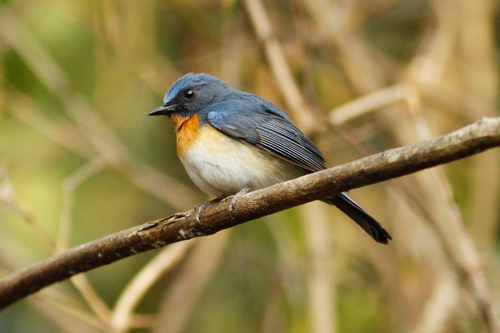
Indochinese Blue Flycatcher (Cyornis sumatrensis) Indochinese Blue Flycatcher

Media

Loading…

In short

The Lesser Whistling-Duck is a waterfowl with a distinctive whistling call, while the Indochinese Blue Flycatcher is a small passerine with vibrant blue plumage. These species differ greatly in habitat and behavior, making them easy to distinguish in the field.

Identification tips

  1. Location: Check the habitat; ducks are in wetlands, flycatchers in forests. 2. Size and Shape: Ducks are larger and stockier; flycatchers are small and slender. 3. Plumage: Look for the blue coloration in flycatchers versus the brown of ducks. 4. Behavior: Ducks often in groups on water; flycatchers are solitary in trees.

Size

The Lesser Whistling-Duck is significantly larger, typically around 41 cm, compared to the much smaller Indochinese Blue Flycatcher, which is about 13–14 cm.

Plumage

Lesser Whistling-Ducks have a brown body with a paler face and a dark bill. In contrast, the Indochinese Blue Flycatcher has striking blue upperparts and a white belly, with males showing more vibrant blue than females.

Behaviour

Lesser Whistling-Ducks are often seen in flocks on water bodies, while Indochinese Blue Flycatchers are solitary or in pairs, often flitting through the forest understory.

Habitat

Lesser Whistling-Ducks are found in wetlands, ponds, and lakes. Indochinese Blue Flycatchers prefer forested areas, often in lowland and foothill forests.

Voice

The Lesser Whistling-Duck is known for its soft, whistling calls, often heard in flight. The Indochinese Blue Flycatcher has a melodious song, but specific details are less documented.

Submit a better description

Use the same sections as the comparison. Your text is published immediately.

The Lesser Whistling-Duck is a waterfowl with a distinctive whistling call, while the Indochinese Blue Flycatcher is a small passerine with vibrant blue plumage. These species differ greatly in habitat and behavior, making them easy to distinguish in the field.

  1. Location: Check the habitat; ducks are in wetlands, flycatchers in forests. 2. Size and Shape: Ducks are larger and stockier; flycatchers are small and slender. 3. Plumage: Look for the blue coloration in flycatchers versus the brown of ducks. 4. Behavior: Ducks often in groups on water; flycatchers are solitary in trees.

The Lesser Whistling-Duck is significantly larger, typically around 41 cm, compared to the much smaller Indochinese Blue Flycatcher, which is about 13–14 cm.

Lesser Whistling-Ducks have a brown body with a paler face and a dark bill. In contrast, the Indochinese Blue Flycatcher has striking blue upperparts and a white belly, with males showing more vibrant blue than females.

Lesser Whistling-Ducks are often seen in flocks on water bodies, while Indochinese Blue Flycatchers are solitary or in pairs, often flitting through the forest understory.

Lesser Whistling-Ducks are found in wetlands, ponds, and lakes. Indochinese Blue Flycatchers prefer forested areas, often in lowland and foothill forests.

The Lesser Whistling-Duck is known for its soft, whistling calls, often heard in flight. The Indochinese Blue Flycatcher has a melodious song, but specific details are less documented.

Discard your changes?

You have unsaved edits. If you leave now, those changes will be lost.

Lesser Whistling-Duck · Indochinese Blue Flycatcher · My Tricky Birds