Birdr

Lewin's Honeyeater vs White-lined Honeyeater

Meliphaga lewinii versus Meliphaga albilineata

Play a quiz with Lewin's Honeyeater and White-lined Honeyeater
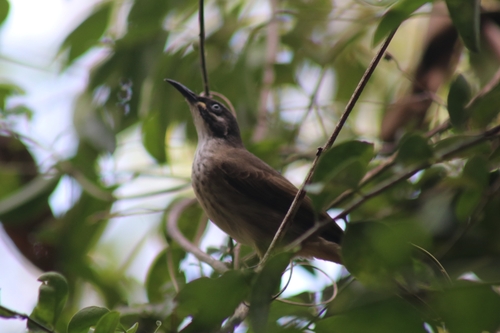
Lewin's Honeyeater (Meliphaga lewinii) Lewin's Honeyeater
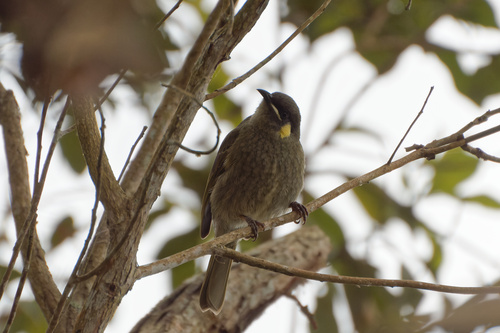
White-lined Honeyeater (Meliphaga albilineata) White-lined Honeyeater

Media

Loading…

In short

Lewin's Honeyeater and White-lined Honeyeater are similar in structure, but can be distinguished by their plumage and vocalizations. Lewin's Honeyeater has a more prominent yellow patch on the face, while the White-lined Honeyeater features a distinctive white line above the eye. Both species inhabit different regions, which can aid in identification.

Identification tips

  1. Look for the yellow face patch on Lewin's Honeyeater and the white line above the eye on the White-lined Honeyeater. 2. Consider the habitat: Lewin's is more likely in eastern rainforests, while White-lined is in northern tropical woodlands. 3. Listen for the loud, rattle-like calls of Lewin's Honeyeater.

Size

Both species are similar in size, typical of honeyeaters.

Plumage

Lewin's Honeyeater has a noticeable yellow patch on its face and a more olive-brown overall plumage. In contrast, the White-lined Honeyeater is characterized by a white line above the eye and generally has a more subdued coloration.

Behaviour

Both species exhibit typical honeyeater behaviors, such as feeding on nectar and insects, but specific behavioral differences are not well-documented.

Habitat

Lewin's Honeyeater is found in eastern Australia, often in rainforests and wet sclerophyll forests. The White-lined Honeyeater is more restricted to northern Australia, typically in tropical woodlands and monsoon forests.

Voice

Lewin's Honeyeater has a distinctive, loud, and varied call, often described as a 'machine-gun' rattle. The White-lined Honeyeater's vocalizations are less documented but are generally softer and less varied.

Submit a better description

Use the same sections as the comparison. Your text is published immediately.

Lewin's Honeyeater and White-lined Honeyeater are similar in structure, but can be distinguished by their plumage and vocalizations. Lewin's Honeyeater has a more prominent yellow patch on the face, while the White-lined Honeyeater features a distinctive white line above the eye. Both species inhabit different regions, which can aid in identification.

  1. Look for the yellow face patch on Lewin's Honeyeater and the white line above the eye on the White-lined Honeyeater. 2. Consider the habitat: Lewin's is more likely in eastern rainforests, while White-lined is in northern tropical woodlands. 3. Listen for the loud, rattle-like calls of Lewin's Honeyeater.

Both species are similar in size, typical of honeyeaters.

Lewin's Honeyeater has a noticeable yellow patch on its face and a more olive-brown overall plumage. In contrast, the White-lined Honeyeater is characterized by a white line above the eye and generally has a more subdued coloration.

Both species exhibit typical honeyeater behaviors, such as feeding on nectar and insects, but specific behavioral differences are not well-documented.

Lewin's Honeyeater is found in eastern Australia, often in rainforests and wet sclerophyll forests. The White-lined Honeyeater is more restricted to northern Australia, typically in tropical woodlands and monsoon forests.

Lewin's Honeyeater has a distinctive, loud, and varied call, often described as a 'machine-gun' rattle. The White-lined Honeyeater's vocalizations are less documented but are generally softer and less varied.

Discard your changes?

You have unsaved edits. If you leave now, those changes will be lost.

Lewin's Honeyeater · White-lined Honeyeater · My Tricky Birds