
Limpkin vs Herring Gull
Aramus guarauna versus Larus argentatus
Play a quiz with Limpkin and Herring Gull
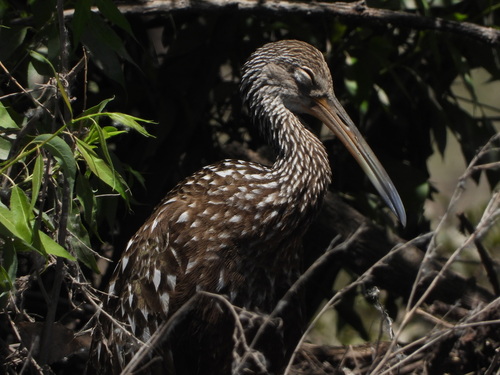
Limpkin
Herring Gull
In short
The Limpkin and Herring Gull are distinct in both appearance and behavior, with the Limpkin resembling a large rail and the Herring Gull a typical large gull. The most reliable field mark is the Limpkin's long, slightly curved bill and brown body with white streaks, compared to the Herring Gull's stout yellow bill and predominantly gray and white plumage.
Identification tips
1. Bill Shape: Limpkin's bill is long and slightly curved, ideal for probing; Herring Gull's bill is stout and straight. 2. Plumage: Look for the Limpkin's brown and white streaked plumage versus the Herring Gull's gray and white coloration. 3. Habitat: Limpkins are more restricted to freshwater wetlands, while Herring Gulls are found in diverse habitats including coastal areas. 4. Behavior: Limpkins are often solitary or in pairs, while Herring Gulls are frequently seen in flocks. 5. Calls: Listen for the Limpkin's wailing calls compared to the Herring Gull's varied cries.
Size
The Limpkin is similar in size to a large rail, while the Herring Gull is a large gull, typically bulkier and heavier.
Plumage
Limpkins have a brown body with white streaks, giving them a speckled appearance. In contrast, adult Herring Gulls have a clean gray back, white underparts, and black wingtips with white spots.
Behaviour
Limpkins are often seen walking slowly in wetlands, probing for snails with their long bills. Herring Gulls are more likely to be seen flying over or around water bodies, scavenging or foraging in a variety of habitats.
Habitat
Limpkins are typically found in freshwater wetlands, especially where apple snails are abundant. Herring Gulls are more versatile, found in coastal areas, lakes, and urban environments.
Voice
Limpkins are known for their loud, wailing calls, especially at dawn and dusk. Herring Gulls have a variety of calls, including loud, harsh cries and a distinctive laughing call.