Birdr

Little Bee-eater vs Black-backed Puffback

Merops pusillus versus Dryoscopus cubla

Play a quiz with Little Bee-eater and Black-backed Puffback
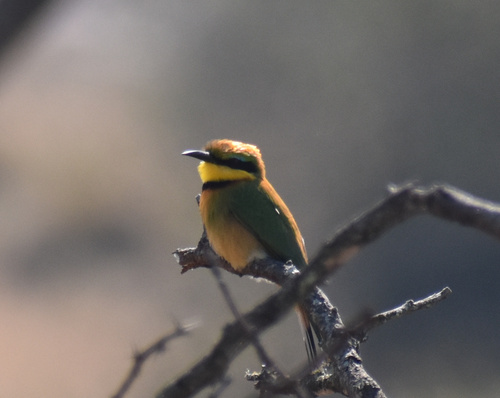
Little Bee-eater (Merops pusillus) Little Bee-eater
Black-backed Puffback (Dryoscopus cubla) Black-backed Puffback

Media

Loading…

In short

The Little Bee-eater and Black-backed Puffback are distinct in both appearance and behavior. The Little Bee-eater is a small, colorful bird often seen in open habitats, while the Black-backed Puffback is a larger, more subdued bird found in wooded areas. Their vocalizations and flight patterns also differ significantly.

Identification tips

  1. Size and Shape: Note the smaller size and slender build of the Little Bee-eater compared to the larger, more robust Black-backed Puffback. 2. Plumage: Look for the bright green and yellow coloration of the Little Bee-eater, which contrasts with the black and white plumage of the Puffback. 3. Habitat: Observe the habitat; Little Bee-eaters are in open areas, while Puffbacks are in wooded environments. 4. Behavior: Watch for the bee-eater's aerial insect-catching behavior versus the Puffback's more secretive movements in foliage. 5. Vocalization: Listen for the bee-eater's soft calls and the Puffback's distinctive whistles and clicks.

Size

The Little Bee-eater is smaller and more slender compared to the larger and more robust Black-backed Puffback.

Plumage

The Little Bee-eater has bright green upperparts, a yellow throat, and a black eye stripe. In contrast, the Black-backed Puffback has a black back and wings with white underparts and lacks the vivid coloration of the bee-eater.

Behaviour

Little Bee-eaters are often seen in open areas, perching conspicuously and sallying for insects. Black-backed Puffbacks are more secretive, often found in wooded areas, and may be seen flitting through foliage.

Habitat

Little Bee-eaters prefer open habitats like savannas and grasslands. Black-backed Puffbacks are typically found in wooded areas, including forests and dense thickets.

Voice

The Little Bee-eater has a soft, pleasant call, often heard in open areas. The Black-backed Puffback's call is a series of whistles and clicks, more commonly heard in wooded habitats.

Submit a better description

Use the same sections as the comparison. Your text is published immediately.

The Little Bee-eater and Black-backed Puffback are distinct in both appearance and behavior. The Little Bee-eater is a small, colorful bird often seen in open habitats, while the Black-backed Puffback is a larger, more subdued bird found in wooded areas. Their vocalizations and flight patterns also differ significantly.

  1. Size and Shape: Note the smaller size and slender build of the Little Bee-eater compared to the larger, more robust Black-backed Puffback. 2. Plumage: Look for the bright green and yellow coloration of the Little Bee-eater, which contrasts with the black and white plumage of the Puffback. 3. Habitat: Observe the habitat; Little Bee-eaters are in open areas, while Puffbacks are in wooded environments. 4. Behavior: Watch for the bee-eater's aerial insect-catching behavior versus the Puffback's more secretive movements in foliage. 5. Vocalization: Listen for the bee-eater's soft calls and the Puffback's distinctive whistles and clicks.

The Little Bee-eater is smaller and more slender compared to the larger and more robust Black-backed Puffback.

The Little Bee-eater has bright green upperparts, a yellow throat, and a black eye stripe. In contrast, the Black-backed Puffback has a black back and wings with white underparts and lacks the vivid coloration of the bee-eater.

Little Bee-eaters are often seen in open areas, perching conspicuously and sallying for insects. Black-backed Puffbacks are more secretive, often found in wooded areas, and may be seen flitting through foliage.

Little Bee-eaters prefer open habitats like savannas and grasslands. Black-backed Puffbacks are typically found in wooded areas, including forests and dense thickets.

The Little Bee-eater has a soft, pleasant call, often heard in open areas. The Black-backed Puffback's call is a series of whistles and clicks, more commonly heard in wooded habitats.

Discard your changes?

You have unsaved edits. If you leave now, those changes will be lost.

Little Bee-eater · Black-backed Puffback · My Tricky Birds