Birdr

Little Bittern vs Black-crowned Night Heron

Botaurus minutus versus Nycticorax nycticorax

Play a quiz with Little Bittern and Black-crowned Night Heron
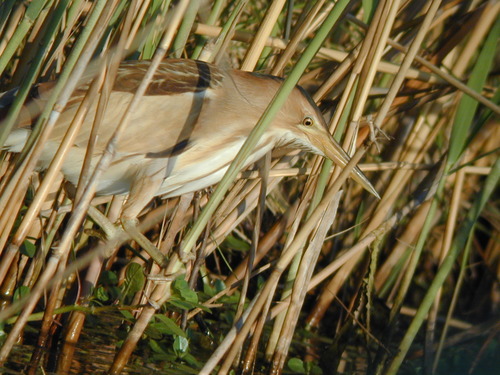
Little Bittern (Botaurus minutus) Little Bittern
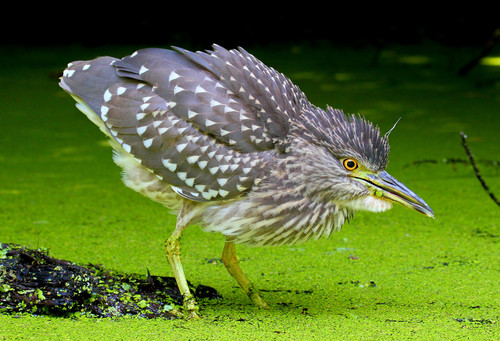
Black-crowned Night Heron (Nycticorax nycticorax) Black-crowned Night Heron

Media

Loading…

In short

The Little Bittern and Black-crowned Night Heron are both herons but differ significantly in size and behavior. The Little Bittern is much smaller and more secretive, while the Black-crowned Night Heron is larger and more often seen during twilight hours.

Identification tips

1. Size: Look for the much smaller size of the Little Bittern. 2. Plumage: Note the black cap and back of the Black-crowned Night Heron. 3. Behavior: Observe the time of activity; Black-crowned Night Herons are more active at dusk. 4. Habitat: Consider the habitat; Little Bitterns are more likely in dense reeds. 5. Vocalization: Listen for the 'quawk' call of the Black-crowned Night Heron.

Size

The Little Bittern is significantly smaller, about half the size of the Black-crowned Night Heron.

Plumage

Little Bitterns have a more uniform buff and black plumage, while Black-crowned Night Herons have a distinctive black cap and back with gray wings and underparts.

Behaviour

Little Bitterns are elusive and often seen skulking in dense reeds, while Black-crowned Night Herons are more active at dusk and dawn, often seen roosting in trees during the day.

Habitat

Both species inhabit wetlands, but Little Bitterns prefer dense reed beds, while Black-crowned Night Herons can be found in a wider range of wetland habitats, including urban areas.

Voice

Little Bitterns are generally silent, while Black-crowned Night Herons have a distinctive 'quawk' call, especially at night.

Submit a better description

Use the same sections as the comparison. Your text is published immediately.

The Little Bittern and Black-crowned Night Heron are both herons but differ significantly in size and behavior. The Little Bittern is much smaller and more secretive, while the Black-crowned Night Heron is larger and more often seen during twilight hours.

1. Size: Look for the much smaller size of the Little Bittern. 2. Plumage: Note the black cap and back of the Black-crowned Night Heron. 3. Behavior: Observe the time of activity; Black-crowned Night Herons are more active at dusk. 4. Habitat: Consider the habitat; Little Bitterns are more likely in dense reeds. 5. Vocalization: Listen for the 'quawk' call of the Black-crowned Night Heron.

The Little Bittern is significantly smaller, about half the size of the Black-crowned Night Heron.

Little Bitterns have a more uniform buff and black plumage, while Black-crowned Night Herons have a distinctive black cap and back with gray wings and underparts.

Little Bitterns are elusive and often seen skulking in dense reeds, while Black-crowned Night Herons are more active at dusk and dawn, often seen roosting in trees during the day.

Both species inhabit wetlands, but Little Bitterns prefer dense reed beds, while Black-crowned Night Herons can be found in a wider range of wetland habitats, including urban areas.

Little Bitterns are generally silent, while Black-crowned Night Herons have a distinctive 'quawk' call, especially at night.

Discard your changes?

You have unsaved edits. If you leave now, those changes will be lost.

Little Bittern · Black-crowned Night Heron · My Tricky Birds