
Little Bunting vs Rustic Bunting
Emberiza pusilla versus Emberiza rustica
Play a quiz with Little Bunting and Rustic Bunting
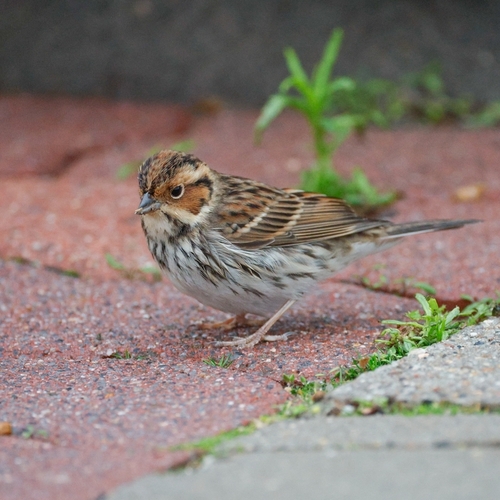 Little Bunting
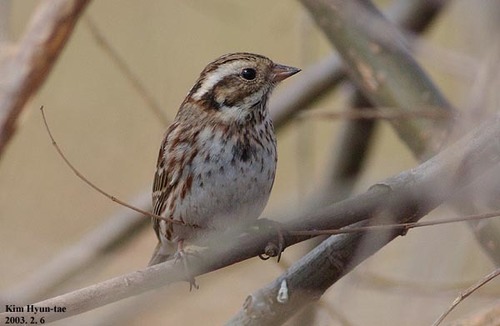 Rustic Bunting
In short
The most reliable field mark between Little Bunting and Rustic Bunting is the head pattern: Little Bunting always shows a fine white eye-ring, black crown stripes, and a sharply defined chestnut cheek patch with a white malar stripe, while Rustic Bunting lacks the eye-ring and instead features a more diffuse brown face with a whitish supercilium and, in males, a black head with a white throat and reddish breast band. Both can resemble female Reed Bunting, but Little Bunting is distinctly smaller and more compact. In all plumages, note the pink lower mandible and reddish flank streaks of Rustic Bunting versus the more uniformly streaked underparts of Little Bunting. Voice and subtle structural differences can help, but head and face pattern are the safest clues.
Identification tips
- Head pattern is key: Little Bunting always shows a neat white eye-ring, black crown stripes, and a sharply defined chestnut cheek patch with a fine dark border and white malar stripe. Rustic Bunting lacks the eye-ring and has a more diffuse brown face with a whitish supercilium.
- Male Rustic Bunting (summer): Look for a black head, white throat and supercilium, and a reddish breast band—never shown by Little Bunting.
- Female/immature Rustic Bunting: Note the chestnut nape, reddish streaks on the flanks, and a pink lower mandible. The face is brown with a pale supercilium, not as crisp or chestnut as Little Bunting.
- Little Bunting underparts: Shows fine dark streaking on the breast and sides, but never the reddish flank streaks of Rustic Bunting.
- Bill color: Rustic Bunting has a pink lower mandible (not grey), which is especially noticeable in females and immatures. Little Bunting's bill is more uniformly colored and finer.
- Size and structure: Little Bunting is smaller, lighter, and more compact, with a delicate build. Rustic Bunting is closer to Reed Bunting in size, appearing bulkier and longer.
- Cheek patch: Little Bunting's chestnut cheek is sharply bordered and set off by a white malar stripe; Rustic Bunting's face is less sharply marked and lacks the same contrast.
- Crown stripes: Only Little Bunting shows clear black crown stripes; Rustic Bunting's crown is plain brown in females/immatures or black in adult males.
- Supercilium: Rustic Bunting always has a whitish supercilium, especially obvious in females and immatures; Little Bunting's supercilium is less prominent, with the eye-ring more noticeable.
- Voice: Listen for the sharper, higher 'zik' call of Little Bunting versus the softer 'zit' of Rustic Bunting. Songs are different but rarely heard in vagrant contexts.
- Habitat: If found in dense, wet woodland or taiga-like habitat, Rustic Bunting is more likely; Little Bunting prefers more open or edge habitats.
- Sexes similar in Little Bunting: There is little sexual dimorphism; both sexes show the same head pattern. Rustic Bunting shows strong sexual dimorphism in breeding plumage.
- Comparison to Reed Bunting: Both can be confused with female Reed Bunting, but only Rustic Bunting has reddish flanks and a pink lower mandible; Little Bunting is smaller and has the distinctive head pattern.
- No distinctive wing or flight pattern differences: Sources do not mention any age-specific upperwing or flight marks for separation.
- Context: Both are rare in Western Europe; check local records and habitat carefully if uncertain.
Size
Little Bunting is noticeably smaller and lighter, with a body mass around 15.4 g, and measures only 12–14 cm in length. Rustic Bunting is closer in size to Reed Bunting, appearing bulkier and longer overall. In the field, Little Bunting often looks more compact and delicate, while Rustic Bunting gives a more robust impression, especially when perched.
Plumage
For all ages and sexes, focus on the head and face: Little Bunting has a crisp white eye-ring, black crown stripes, and a chestnut cheek patch bordered by a fine dark line and a clear white malar stripe. Rustic Bunting lacks the eye-ring and has a less sharply defined brown face with a whitish supercilium; females and immatures show a chestnut nape and reddish streaks on the flanks, while adult males in summer have a striking black head, white throat and supercilium, and a reddish breast band. Both species have white underparts, but Little Bunting shows fine dark streaking on the breast and sides, whereas Rustic Bunting's reddish flank streaks and pinkish lower mandible are distinctive. No age-specific upperwing or flight pattern differences are noted in the sources.
Behaviour
Both species behave similarly as typical buntings, often foraging on the ground or low in vegetation. Little Bunting may appear more active and restless, reflecting its smaller size. Rustic Bunting can seem more deliberate, especially in denser woodland or bushy habitats. In flight, both are unobtrusive, but Little Bunting may look more fluttery and compact.
Habitat
Little Bunting prefers open woodland edges, shrubby clearings, and sometimes gardens, especially during migration or winter. Rustic Bunting breeds in wet coniferous woodland and taiga, and is more closely associated with dense, damp forests and thickets. In Western Europe, both are rare vagrants, but Rustic Bunting is even less frequent and usually found in more wooded or overgrown areas.
Voice
Little Bunting gives a sharp, distinctive 'zik' call and a rolling, high-pitched song described as 'siroo-sir-sir-siroo.' Rustic Bunting's call is a softer 'zit,' likened to a song thrush, and its song is a more melancholic 'delee-deloo-delee.' Calls can be similar at a distance, but Little Bunting's is usually sharper and higher-pitched.