Birdr

Little Egret vs Western Cattle-Egret

Egretta garzetta versus Ardea ibis

Play a quiz with Little Egret and Western Cattle-Egret

Little Egret (Egretta garzetta) Little Egret
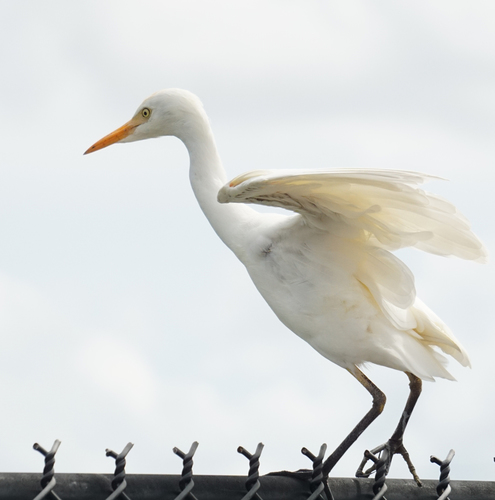
Western Cattle-Egret (Ardea ibis) Western Cattle-Egret

Media

Loading…

In short

The Little Egret and Western Cattle Egret are both small white herons, but they can be distinguished by their habitat preferences and association with livestock. The Little Egret is more aquatic, often found in wetlands, while the Western Cattle Egret is commonly seen in grasslands and pastures, often near grazing animals.

Identification tips

1. Habitat: Look for Little Egrets in aquatic environments and Western Cattle Egrets in fields with livestock. 2. Leg and foot color: Little Egrets have black legs with yellow feet; Western Cattle Egrets have yellowish legs. 3. Breeding plumage: Little Egrets have long, wispy plumes; Western Cattle Egrets have buff plumes. 4. Behavior: Note the association with livestock for Western Cattle Egrets.

Size

Both species are similar in size, with the Little Egret being slightly more slender and elegant compared to the stockier Western Cattle Egret.

Plumage

The Little Egret has a more delicate appearance with long, thin black legs and yellow feet, and in breeding season, it displays long, wispy plumes on the head and back. The Western Cattle Egret has a thicker neck and shorter legs, with buff-colored plumes on the head and back during breeding season.

Behaviour

The Little Egret is typically seen foraging in water, using its feet to stir up prey, while the Western Cattle Egret is often seen following livestock, catching insects disturbed by their movement.

Habitat

Little Egrets are usually found in wetlands, including marshes, ponds, and coastal areas. Western Cattle Egrets prefer grasslands, pastures, and agricultural fields, often in close association with livestock.

Voice

Both species are generally silent, but the Little Egret may give a harsh croak when disturbed. The Western Cattle Egret has a low, raspy call, often heard in breeding colonies.

Submit a better description

Use the same sections as the comparison. Your text is published immediately.

The Little Egret and Western Cattle Egret are both small white herons, but they can be distinguished by their habitat preferences and association with livestock. The Little Egret is more aquatic, often found in wetlands, while the Western Cattle Egret is commonly seen in grasslands and pastures, often near grazing animals.

1. Habitat: Look for Little Egrets in aquatic environments and Western Cattle Egrets in fields with livestock. 2. Leg and foot color: Little Egrets have black legs with yellow feet; Western Cattle Egrets have yellowish legs. 3. Breeding plumage: Little Egrets have long, wispy plumes; Western Cattle Egrets have buff plumes. 4. Behavior: Note the association with livestock for Western Cattle Egrets.

Both species are similar in size, with the Little Egret being slightly more slender and elegant compared to the stockier Western Cattle Egret.

The Little Egret has a more delicate appearance with long, thin black legs and yellow feet, and in breeding season, it displays long, wispy plumes on the head and back. The Western Cattle Egret has a thicker neck and shorter legs, with buff-colored plumes on the head and back during breeding season.

The Little Egret is typically seen foraging in water, using its feet to stir up prey, while the Western Cattle Egret is often seen following livestock, catching insects disturbed by their movement.

Little Egrets are usually found in wetlands, including marshes, ponds, and coastal areas. Western Cattle Egrets prefer grasslands, pastures, and agricultural fields, often in close association with livestock.

Both species are generally silent, but the Little Egret may give a harsh croak when disturbed. The Western Cattle Egret has a low, raspy call, often heard in breeding colonies.

Discard your changes?

You have unsaved edits. If you leave now, those changes will be lost.

Little Egret · Western Cattle-Egret · My Tricky Birds