Birdr

Little Grebe vs Black-necked Grebe

Tachybaptus ruficollis versus Podiceps nigricollis

Play a quiz with Little Grebe and Black-necked Grebe
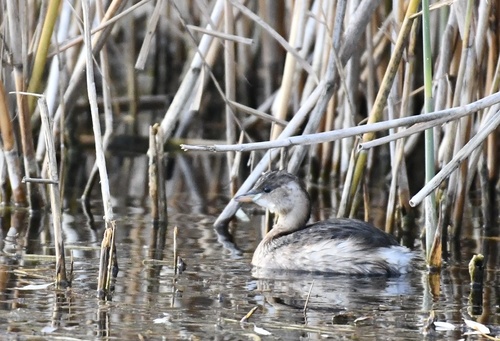
Little Grebe (Tachybaptus ruficollis) Little Grebe
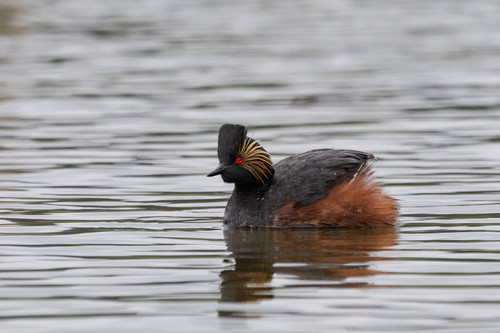
Black-necked Grebe (Podiceps nigricollis) Black-necked Grebe

Media

Loading…

In short

The Little Grebe and Black-necked Grebe are both small waterbirds with distinct differences in plumage and structure. The most reliable field mark is the neck color: Little Grebe has a rufous neck, while Black-necked Grebe has a black neck during breeding season.

Identification tips

  1. Neck color: Look for the rufous neck of the Little Grebe versus the black neck of the Black-necked Grebe. 2. Ear tufts: In breeding season, Black-necked Grebes have golden ear tufts. 3. Group size: Little Grebes are often solitary or in pairs; Black-necked Grebes can be in larger groups. 4. Habitat: Check for saline or alkaline lakes for Black-necked Grebes outside breeding season.

Size

Both species are similar in size, but the Black-necked Grebe is slightly larger.

Plumage

The Little Grebe has a rufous neck and a dark cap, while the Black-necked Grebe features a striking black neck and head with golden ear tufts during breeding season. In non-breeding plumage, the Black-necked Grebe has a more uniform dark gray appearance compared to the Little Grebe's paler body.

Behaviour

Both species are diving birds, but the Black-necked Grebe is known for its more pronounced courtship displays. Little Grebes are often seen alone or in pairs, while Black-necked Grebes can be more social.

Habitat

Both species inhabit freshwater bodies, but the Black-necked Grebe is more likely to be found in saline or alkaline lakes during migration and non-breeding seasons.

Voice

Little Grebes have a distinctive trilling call, while Black-necked Grebes produce a variety of whistles and trills, especially during breeding season.

Submit a better description

Use the same sections as the comparison. Your text is published immediately.

The Little Grebe and Black-necked Grebe are both small waterbirds with distinct differences in plumage and structure. The most reliable field mark is the neck color: Little Grebe has a rufous neck, while Black-necked Grebe has a black neck during breeding season.

  1. Neck color: Look for the rufous neck of the Little Grebe versus the black neck of the Black-necked Grebe. 2. Ear tufts: In breeding season, Black-necked Grebes have golden ear tufts. 3. Group size: Little Grebes are often solitary or in pairs; Black-necked Grebes can be in larger groups. 4. Habitat: Check for saline or alkaline lakes for Black-necked Grebes outside breeding season.

Both species are similar in size, but the Black-necked Grebe is slightly larger.

The Little Grebe has a rufous neck and a dark cap, while the Black-necked Grebe features a striking black neck and head with golden ear tufts during breeding season. In non-breeding plumage, the Black-necked Grebe has a more uniform dark gray appearance compared to the Little Grebe's paler body.

Both species are diving birds, but the Black-necked Grebe is known for its more pronounced courtship displays. Little Grebes are often seen alone or in pairs, while Black-necked Grebes can be more social.

Both species inhabit freshwater bodies, but the Black-necked Grebe is more likely to be found in saline or alkaline lakes during migration and non-breeding seasons.

Little Grebes have a distinctive trilling call, while Black-necked Grebes produce a variety of whistles and trills, especially during breeding season.

Discard your changes?

You have unsaved edits. If you leave now, those changes will be lost.

Little Grebe · Black-necked Grebe · My Tricky Birds