
Little Grebe vs Great Crested Grebe
Tachybaptus ruficollis versus Podiceps cristatus
Play a quiz with Little Grebe and Great Crested Grebe
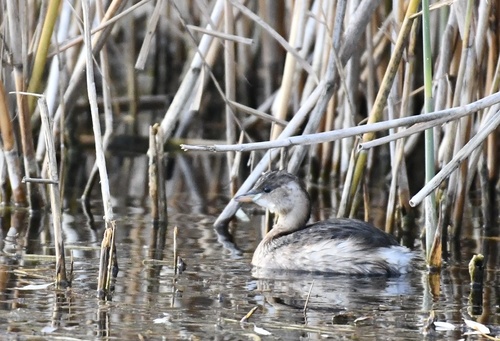 Little Grebe
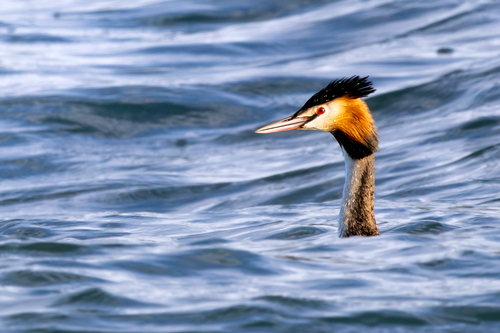 Great Crested Grebe
In short
The most reliable way to separate Little Grebe from Great Crested Grebe in the field is by size and structure, but age-specific plumage is also key: juvenile Little Grebes show yellow bills and black-and-white facial streaks, while juvenile Great Crested Grebes have boldly striped ('humbug') heads. Adults are unmistakable in summer, with Little Grebe showing a compact, dark, rufous-necked look, and Great Crested Grebe flaunting ornate head plumes and a long neck. In winter, both species lose their brightest colors, but Great Crested Grebe remains much larger and longer-necked. Flight views and habitat context can help, but focus first on size, bill, and face pattern for quick separation.
Identification tips
- Size is the first check: Great Crested Grebe is much larger and longer-necked than Little Grebe. If you see a grebe that looks almost duck-sized or more, it's not a Little Grebe.
- Juvenile face pattern: Juvenile Little Grebes have yellow bills with black tips and black-and-white streaks on the cheeks and neck. Juvenile Great Crested Grebes have bold black-and-white stripes across the entire head ('humbug' pattern), which is much more extensive and striking.
- Bill color and shape: Little Grebe has a short, pointed bill (yellow in juveniles, dark in adults), while Great Crested Grebe has a longer, straight, pinkish bill in winter and breeding seasons.
- Adult breeding plumage: Little Grebe adults show rich rufous on the neck, cheeks, and flanks with a bright yellow gape. Great Crested Grebe adults have ornate black head plumes and chestnut frills, with a white face and neck—far more flamboyant.
- Adult winter plumage: Both species become plainer, but Little Grebe is buffy with a dark cap and compact shape, while Great Crested Grebe is white-faced, long-necked, and still much larger.
- Body shape and jizz: Little Grebe is round, compact, and sits high in the water with a 'powder puff' rear end. Great Crested Grebe is elongated, low-slung, and elegant, with a long neck and flat back.
- Flight views: No distinctive upperwing pattern is described for either species here, but Little Grebe may show some white in the secondaries depending on subspecies. Great Crested Grebe in flight is long-necked and large, with broad white wing panels (not described in detail here).
- Habitat context: Little Grebe is more likely on small, weedy ponds and marshes; Great Crested Grebe prefers large lakes and open water.
- Behavior when disturbed: Little Grebe dives instantly and disappears quickly. Great Crested Grebe may swim away or dive, but is less furtive.
- Chick-carrying: Both species carry chicks on their backs, but if you see a large grebe with stripy-headed chicks, it's Great Crested Grebe.
- Vocalization: Listen for the trilled, whinnying call of Little Grebe, especially in spring and summer. Great Crested Grebe is generally quieter.
- Group size: Great Crested Grebe is often seen in pairs or small groups on open water; Little Grebe is usually solitary or in small family groups.
- Bill color in winter: Great Crested Grebe's bill is pinkish in winter, while Little Grebe's is dark.
- Facial pattern in winter: Great Crested Grebe has a white face with a dark cap; Little Grebe is plainer, with a dark cap but no strong contrast.
- When in doubt: If the bird looks 'tiny, round, and fluffy,' it's almost certainly a Little Grebe. If it looks 'long, elegant, and swan-like,' it's Great Crested Grebe.
Size
Great Crested Grebe is dramatically larger than Little Grebe: it weighs around 875 g [wikidata], while Little Grebe is much smaller (no precise mass given here, but it is the smallest European grebe). Great Crested Grebe is 46–51 cm long with a 59–73 cm wingspan [wikipedia], towering over the dumpy, short-necked Little Grebe. Even at a distance, the size gap is obvious if both are seen together. Little Grebe is compact and round-bodied, with a short neck and bill, while Great Crested Grebe is elongated, slender, and swan-like in profile.
Plumage
-
Juveniles: Little Grebe juveniles have a yellow bill with a black tip and black-and-white streaks on the cheeks and neck. As they age, the bill darkens, and streaking fades. Great Crested Grebe chicks are boldly striped black and white across the head ('humbug' pattern), which they lose during their first winter.
-
Adults (summer): Little Grebe adults are dark above with rich rufous on the neck, cheeks, and flanks, plus a bright yellow gape. Great Crested Grebe adults show elaborate black head plumes, chestnut frills, and a striking white face and neck.
-
Adults (winter): Little Grebe becomes buffy with a darker back and cap, losing the rufous, and looks plain and compact. Great Crested Grebe loses its head plumes, showing a white face with a pink bill and a long white neck, but remains much larger and more elegant.
-
Flight/wing: Little Grebe subspecies may show varying amounts of white on the secondaries, but this is not a primary field mark in most regions. No distinctive flight pattern is described for either species in these notes.
Behaviour
Both species are excellent divers and spend most of their time on water. Little Grebe is especially quick to dive when disturbed, often vanishing with barely a ripple. Great Crested Grebe is also a strong diver but is more likely to be seen performing elaborate courtship displays, especially in spring, with synchronized head-shaking and weed dances. Both species carry chicks on their backs, but Great Crested Grebe adults are famous for this behavior, often diving and leaving the chicks to float briefly before returning.
Habitat
Both species inhabit freshwater lakes and ponds, but Great Crested Grebe prefers larger, open, vegetated lakes and sometimes winters on reservoirs or coastal waters. Little Grebe is more often found on smaller ponds, marshes, and sheltered waters, and is less likely to be seen on large, open lakes. If you see a grebe on a small, weedy pond, it's more likely to be Little Grebe; on a large open lake, especially with others of its kind, Great Crested Grebe is more probable.
Voice
Little Grebe gives a trilled, repeated 'weet-weet-weet' or 'wee-wee-wee' call, reminiscent of a horse whinnying, especially in the breeding season. No specific vocalization is described for Great Crested Grebe in these notes, but its calls are generally less frequently heard and less distinctive than the Little Grebe's whinny.