Birdr

Little Gull vs Black-headed Gull

Hydrocoloeus minutus versus Chroicocephalus ridibundus

Play a quiz with Little Gull and Black-headed Gull
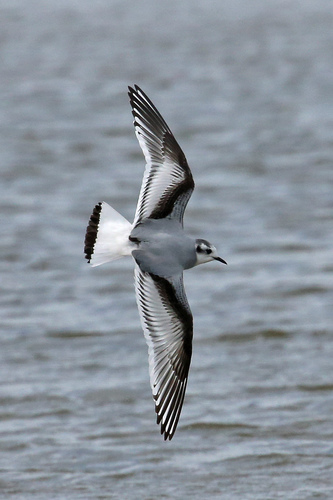
Little Gull (Hydrocoloeus minutus) Little Gull
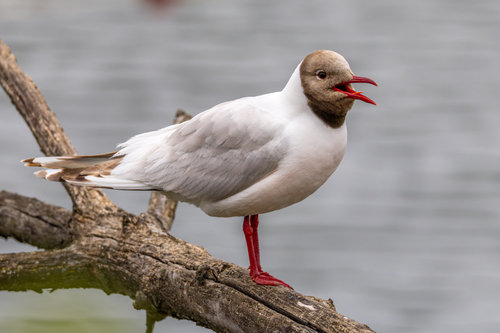
Black-headed Gull (Chroicocephalus ridibundus) Black-headed Gull

Media

Loading…

In short

The Little Gull is the smallest gull in the world, easily distinguished from the Black-headed Gull by its diminutive size and distinct plumage features. Both species can be found in similar habitats, but the Little Gull is more often seen in smaller numbers and has a more delicate structure.

Identification tips

  1. Size: Look for the smaller size of the Little Gull compared to the Black-headed Gull. 2. Underwing Color: Note the dark underwings of the Little Gull versus the pale underwings of the Black-headed Gull. 3. Hood Color: In breeding plumage, the Little Gull has a black hood, while the Black-headed Gull's hood is chocolate-brown. 4. Association: The Little Gull often associates with Bonaparte's Gulls, especially during migration.

Size

The Little Gull is significantly smaller than the Black-headed Gull, with a more delicate and compact build.

Plumage

In breeding plumage, the Little Gull has a striking black hood and a white body, while the Black-headed Gull has a chocolate-brown hood. The Little Gull's underwings are dark, contrasting with the pale underwings of the Black-headed Gull.

Behaviour

Both species may be seen in mixed flocks, but the Little Gull often associates with Bonaparte's Gulls. The Little Gull is more likely to be seen in small numbers or alone.

Habitat

Both species can be found in wetlands and along coasts, but the Little Gull is more frequently observed in the Great Lakes region and Canadian wetlands.

Voice

Vocalizations are not a reliable distinguishing feature between these two species in the field.

Submit a better description

Use the same sections as the comparison. Your text is published immediately.

The Little Gull is the smallest gull in the world, easily distinguished from the Black-headed Gull by its diminutive size and distinct plumage features. Both species can be found in similar habitats, but the Little Gull is more often seen in smaller numbers and has a more delicate structure.

  1. Size: Look for the smaller size of the Little Gull compared to the Black-headed Gull. 2. Underwing Color: Note the dark underwings of the Little Gull versus the pale underwings of the Black-headed Gull. 3. Hood Color: In breeding plumage, the Little Gull has a black hood, while the Black-headed Gull's hood is chocolate-brown. 4. Association: The Little Gull often associates with Bonaparte's Gulls, especially during migration.

The Little Gull is significantly smaller than the Black-headed Gull, with a more delicate and compact build.

In breeding plumage, the Little Gull has a striking black hood and a white body, while the Black-headed Gull has a chocolate-brown hood. The Little Gull's underwings are dark, contrasting with the pale underwings of the Black-headed Gull.

Both species may be seen in mixed flocks, but the Little Gull often associates with Bonaparte's Gulls. The Little Gull is more likely to be seen in small numbers or alone.

Both species can be found in wetlands and along coasts, but the Little Gull is more frequently observed in the Great Lakes region and Canadian wetlands.

Vocalizations are not a reliable distinguishing feature between these two species in the field.

Discard your changes?

You have unsaved edits. If you leave now, those changes will be lost.

Little Gull · Black-headed Gull · My Tricky Birds