Birdr

Little Gull vs Mediterranean Gull

Hydrocoloeus minutus versus Ichthyaetus melanocephalus

Play a quiz with Little Gull and Mediterranean Gull
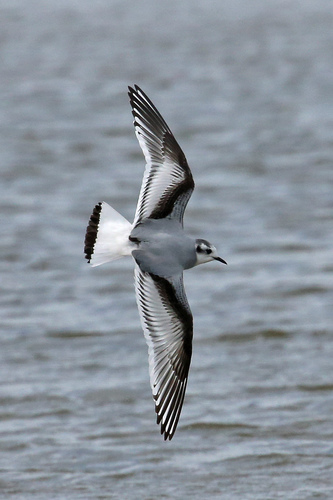
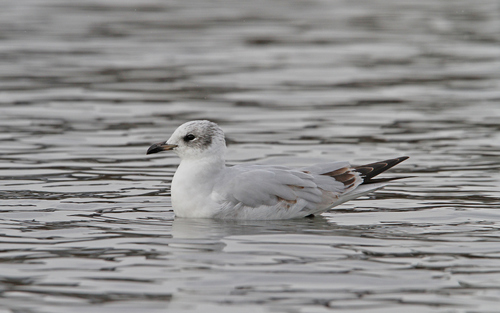
Little Gull (Hydrocoloeus minutus) Little Gull
Mediterranean Gull (Ichthyaetus melanocephalus) Mediterranean Gull

Media

Loading…

In short

The Little Gull (Hydrocoloeus minutus) is the smallest gull species, characterized by its delicate size, black cap, and pale underparts. In contrast, the Mediterranean Gull (Ichthyaetus melanocephalus) is larger, with a distinctive black head and more robust build, featuring a white mantle and a more prominent bill. This comparison will delve into the key features that distinguish these two gull species.

Identification tips

  1. Birds of the World Similar-Species Diagnostics:
  2. "Little Gull (Hydrocoloeus minutus) is distinguished from Mediterranean Gull (Ichthyaetus melanocephalus) by its smaller size, lighter build, and less robust bill. The Little Gull has a black cap and pale gray upperparts, while the Mediterranean Gull has a solid black head and a thicker bill with a red base." (Source: Birds of the World)

  3. AI Field Diagnostics:

  4. Size and Shape: Look for the smaller size of the Little Gull compared to the more robust Mediterranean Gull. If you can gauge the size against common birds like pigeons or other gulls, this will help.
  5. Plumage Patterns: Observe the head coloration—if you see a solid black head, it’s likely a Mediterranean Gull. The Little Gull's black cap is less pronounced and is accompanied by lighter, gray plumage.
  6. Behavior: If the bird is hovering and agilely picking at the water’s surface, it’s likely a Little Gull. If it's walking around on the beach or scavenging, it’s probably a Mediterranean Gull.
  7. Vocalization: Pay attention to their calls—if you hear a high-pitched ‘kree’, you’re likely observing a Little Gull. A deeper, more raucous call indicates a Mediterranean Gull.
  8. Habitat: Note the habitat; Little Gulls are more often found in fresh or brackish water environments, while Mediterranean Gulls are associated with coastal zones and urban areas.

By focusing on these key distinguishing traits, birdwatchers can successfully identify and differentiate between the Little Gull and the Mediterranean Gull in the field.

Size

Plumage

Behaviour

Habitat

Voice

Submit a better description

Use the same sections as the comparison. Your text is published immediately.

The Little Gull (Hydrocoloeus minutus) is the smallest gull species, characterized by its delicate size, black cap, and pale underparts. In contrast, the Mediterranean Gull (Ichthyaetus melanocephalus) is larger, with a distinctive black head and more robust build, featuring a white mantle and a more prominent bill. This comparison will delve into the key features that distinguish these two gull species.

  1. Birds of the World Similar-Species Diagnostics:
  2. "Little Gull (Hydrocoloeus minutus) is distinguished from Mediterranean Gull (Ichthyaetus melanocephalus) by its smaller size, lighter build, and less robust bill. The Little Gull has a black cap and pale gray upperparts, while the Mediterranean Gull has a solid black head and a thicker bill with a red base." (Source: Birds of the World)

  3. AI Field Diagnostics:

  4. Size and Shape: Look for the smaller size of the Little Gull compared to the more robust Mediterranean Gull. If you can gauge the size against common birds like pigeons or other gulls, this will help.
  5. Plumage Patterns: Observe the head coloration—if you see a solid black head, it’s likely a Mediterranean Gull. The Little Gull's black cap is less pronounced and is accompanied by lighter, gray plumage.
  6. Behavior: If the bird is hovering and agilely picking at the water’s surface, it’s likely a Little Gull. If it's walking around on the beach or scavenging, it’s probably a Mediterranean Gull.
  7. Vocalization: Pay attention to their calls—if you hear a high-pitched ‘kree’, you’re likely observing a Little Gull. A deeper, more raucous call indicates a Mediterranean Gull.
  8. Habitat: Note the habitat; Little Gulls are more often found in fresh or brackish water environments, while Mediterranean Gulls are associated with coastal zones and urban areas.

By focusing on these key distinguishing traits, birdwatchers can successfully identify and differentiate between the Little Gull and the Mediterranean Gull in the field.

  • Little Gull: It measures about 28-33 cm in length with a wingspan of approximately 70-76 cm, making it the smallest gull in the world.
  • Mediterranean Gull: This species is larger, measuring 35-42 cm in length with a wingspan of around 90-100 cm. Its more robust build contributes to its heavier appearance compared to the Little Gull.
  • Little Gull: Adults have a distinctive black cap during the breeding season, with pale gray upperparts and white underparts. The wings are gray with a white trailing edge, and they possess a subtle black mark behind the eye.
  • Mediterranean Gull: Adults have a prominent black head during the breeding season, with a white mantle and wings that are primarily gray. The bill is thicker and red with a black tip. In non-breeding plumage, the Mediterranean Gull has a more mottled appearance due to brownish feathers.
  • Little Gull: It is known for its agile flight and often forages by hovering and picking insects from the surface or diving for small fish. It typically forages in small groups and can be seen associated with larger flocks of gulls.
  • Mediterranean Gull: This species often forages by walking along beaches or mudflats, picking through human refuse or hunting for fish. Its flight is strong and direct, often seen in larger groups.
  • Little Gull: Prefers breeding in wetlands, marshes, and near freshwater lakes, primarily in the Palearctic region with some presence in North America. In migration, they can be found along coastal areas and larger inland lakes.
  • Mediterranean Gull: Typically breeds in colonies on coastal areas and islands, often near human habitation. It is distributed around the Mediterranean Sea and has expanded its range into parts of Western Europe.
  • Little Gull: Its call is a soft, high-pitched ‘kree’ or ‘keek’ sound, which can be likened to a terns' call.
  • Mediterranean Gull: The call is more raucous and deeper, sounding like a ‘kak’ or ‘karr’ call, which is distinctively more robust compared to that of the Little Gull.

Discard your changes?

You have unsaved edits. If you leave now, those changes will be lost.

Little Gull · Mediterranean Gull · My Tricky Birds