Birdr

Little Stint vs Western Sandpiper

Calidris minuta versus Calidris mauri

Play a quiz with Little Stint and Western Sandpiper

Little Stint (Calidris minuta) Little Stint
Western Sandpiper (Calidris mauri) Western Sandpiper

Media

Loading…

In short

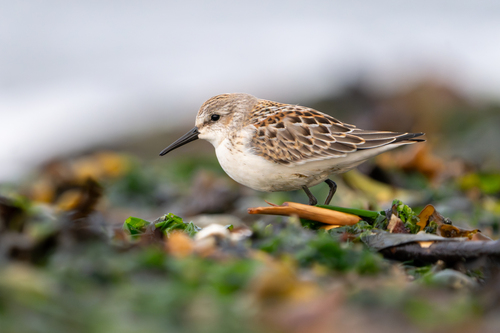
The Little Stint and Western Sandpiper are both small, similar-looking shorebirds, but they can be distinguished by key structural differences. The Little Stint has a shorter, finer bill and a more compact body, while the Western Sandpiper has a slightly longer, droop-tipped bill and a more elongated shape.

Identification tips

1. Bill shape: Look for the shorter, finer bill of the Little Stint compared to the longer, droop-tipped bill of the Western Sandpiper. 2. Body shape: Note the more compact body of the Little Stint versus the elongated shape of the Western Sandpiper. 3. Plumage tones: In breeding season, check for rufous tones on the Little Stint. 4. Location: Consider geographic range; Little Stints are more likely in Eurasia, while Western Sandpipers are found in North America.

Size

Both species are small sandpipers, but the Little Stint is generally more compact and slightly smaller than the Western Sandpiper.

Plumage

In breeding plumage, the Little Stint shows a more rufous tone on the head and back, while the Western Sandpiper has a more uniform grayish-brown appearance with less rufous. In non-breeding plumage, both species appear grayish, but the Western Sandpiper often shows more distinct streaking on the breast.

Behaviour

Both species forage by probing and picking at the mud, but the Western Sandpiper may show more active feeding behavior with rapid movements.

Habitat

The Little Stint is primarily found in Eurasia, often in freshwater habitats, while the Western Sandpiper is more common in North America, frequenting coastal mudflats and estuaries.

Voice

The vocalizations of both species are similar, consisting of high-pitched calls, but specific differences are not well-documented.

Submit a better description

Use the same sections as the comparison. Your text is published immediately.

The Little Stint and Western Sandpiper are both small, similar-looking shorebirds, but they can be distinguished by key structural differences. The Little Stint has a shorter, finer bill and a more compact body, while the Western Sandpiper has a slightly longer, droop-tipped bill and a more elongated shape.

1. Bill shape: Look for the shorter, finer bill of the Little Stint compared to the longer, droop-tipped bill of the Western Sandpiper. 2. Body shape: Note the more compact body of the Little Stint versus the elongated shape of the Western Sandpiper. 3. Plumage tones: In breeding season, check for rufous tones on the Little Stint. 4. Location: Consider geographic range; Little Stints are more likely in Eurasia, while Western Sandpipers are found in North America.

Both species are small sandpipers, but the Little Stint is generally more compact and slightly smaller than the Western Sandpiper.

In breeding plumage, the Little Stint shows a more rufous tone on the head and back, while the Western Sandpiper has a more uniform grayish-brown appearance with less rufous. In non-breeding plumage, both species appear grayish, but the Western Sandpiper often shows more distinct streaking on the breast.

Both species forage by probing and picking at the mud, but the Western Sandpiper may show more active feeding behavior with rapid movements.

The Little Stint is primarily found in Eurasia, often in freshwater habitats, while the Western Sandpiper is more common in North America, frequenting coastal mudflats and estuaries.

The vocalizations of both species are similar, consisting of high-pitched calls, but specific differences are not well-documented.

Discard your changes?

You have unsaved edits. If you leave now, those changes will be lost.

Little Stint · Western Sandpiper · My Tricky Birds