
Little Tern vs Arctic Tern
Sternula albifrons versus Sterna paradisaea
Play a quiz with Little Tern and Arctic Tern
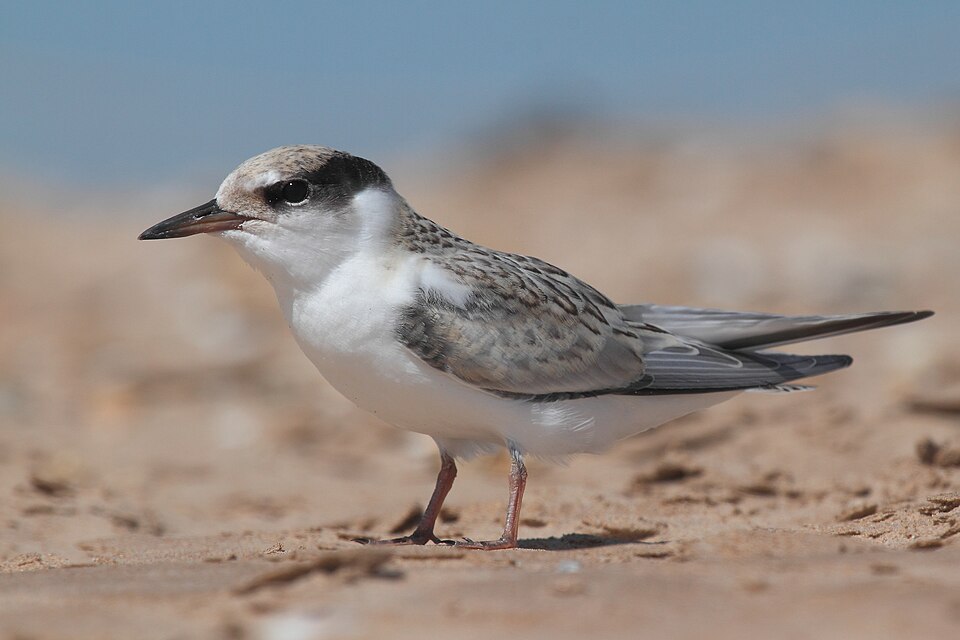 Little Tern
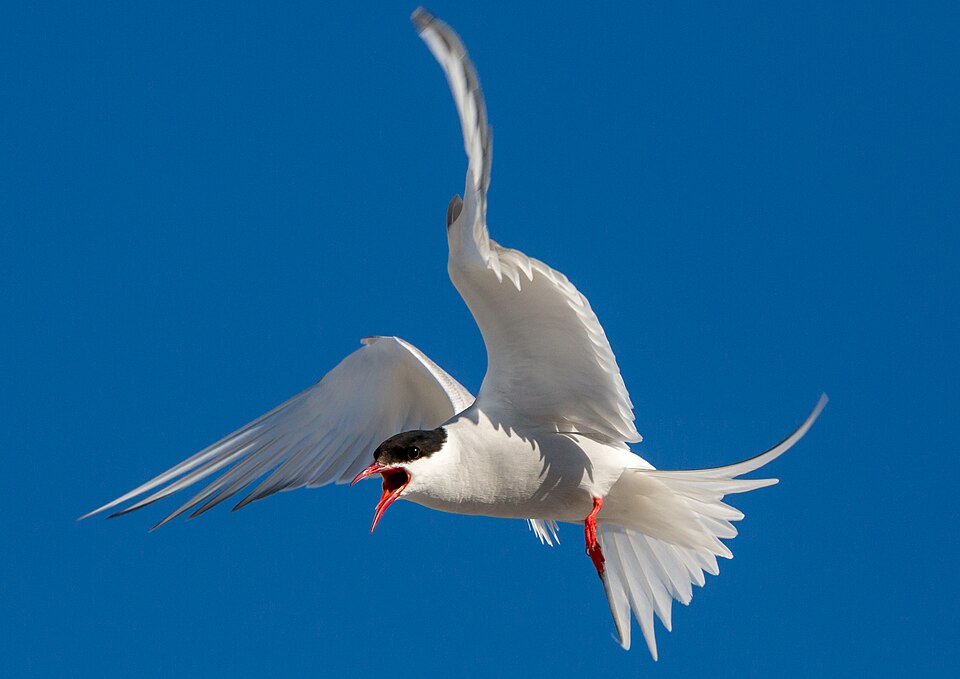 Arctic Tern
In short
The most reliable field mark between Little Tern and Arctic Tern is size: Little Tern is much smaller and more delicate, with a distinctly short, fine yellow bill (black-tipped in breeding plumage), while Arctic Tern is nearly twice as heavy, longer-winged, and has a straight, all-red bill in breeding season. Juvenile and winter birds of both species show white foreheads, but the Little Tern remains tiny and compact, while Arctic Tern juveniles have a distinctive dark carpal bar and 'scaly' upperparts. In flight, Arctic Tern shows long, deeply forked tail streamers and long, narrow wings, contrasting with the Little Tern's short, fast wingbeats and less elongated tail. Bill color and structure, tail shape, and overall jizz are key for separation, especially at a distance or in mixed-age flocks.
Identification tips
- Size and structure: Little Tern is much smaller and more compact than Arctic Tern; use this as your first check, especially in mixed flocks or at a distance. 2. Bill color and shape: In breeding season, Little Tern has a yellow bill with a black tip (fine and sharp), while Arctic Tern has a straight, all-red bill. In winter, Little Tern's bill turns black, while Arctic Tern's bill darkens but remains longer and heavier. 3. Leg color: Little Tern has yellow legs in breeding season, duller in winter; Arctic Tern has red legs in breeding, darkening in winter. 4. Forehead pattern: Both species show a white forehead in non-breeding plumage, but Little Tern's is more extensive and the bird remains much smaller. 5. Crown: Breeding Little Tern has a white forehead and black crown; Arctic Tern has a full black cap in breeding, receding in winter. 6. Juvenile wing pattern: Juvenile Arctic Tern shows a dark carpal bar and 'scaly' upperparts—look for this in flight or perched birds. Little Tern juveniles lack this strong carpal bar. 7. Tail shape: Arctic Tern has a very long, deeply forked tail with long streamers, especially obvious in adults; Little Tern's tail is shorter and less deeply forked. 8. Flight style: Little Tern is fast, fluttery, and hovers frequently; Arctic Tern is buoyant, graceful, and glides more. 9. Upperwing pattern: Arctic Tern's upperwing is pale grey with a translucent area near the tip and a narrow dark trailing edge; Little Tern's wing is less contrasting. 10. Habitat: If observed inland or in southern Europe, Little Tern is more likely; Arctic Tern is a bird of high latitudes and is rarely found far from the sea outside migration. 11. Jizz: Arctic Tern appears longer, sleeker, and more elegant; Little Tern is short-necked and stubby. 12. Bill and leg color in juveniles: Juvenile Arctic Tern has a dark bill and legs, while Little Tern juveniles are not described as having such dark bare parts. 13. Plumage in winter: Both species develop a white forehead and darker bill, but size, structure, and tail length remain reliable. 14. Mixed flocks: In areas where both species might occur together, always check for relative size, bill color, and tail length before relying on plumage details. 15. Voice: If heard, Arctic Tern's call is nasal and rasping, but this is less reliable without direct comparison.
Size
Little Tern is much smaller, with a body mass of about 57g, compared to Arctic Tern's 114g. In the field, this translates to a much daintier impression for Little Tern: it is only 21–25 cm long with a 41–47 cm wingspan, while Arctic Tern is 33–36 cm long with a 76–85 cm wingspan. Arctic Tern appears long-winged and elongated, with a proportionally longer tail and more graceful flight, while Little Tern is compact, with a short neck and stubby appearance.
Plumage
Juvenile and first-winter Arctic Terns are distinctive: they show a dark carpal bar across the upperwing, 'scaly' upperparts with dark feather tips, and a partly white forehead, as well as a dark bill and legs. Little Tern juveniles are not described as having such a marked carpal bar or scaly pattern, and retain the species' compact, pale look. In breeding plumage, Little Tern adults have a white forehead, yellow bill with black tip, and yellow legs, while Arctic Tern adults have a full black crown, all-red bill, and red legs. In non-breeding (winter) plumage, both species develop a whiter forehead and darker bills, but Little Tern's bill becomes black and the legs dull, while Arctic Tern's bill and legs darken but the bird remains larger and longer-tailed. The Arctic Tern's upperwing is pale grey with a translucent area near the tip and a narrow dark trailing edge, while Little Tern's wing pattern is not described as having such contrasts.
Behaviour
Little Tern is fast and fluttery in flight, often hovering briefly before diving for fish, with rapid, shallow wingbeats. Arctic Tern is more buoyant and graceful, with long, elastic wingbeats and a tendency to glide and soar more. On the ground, Arctic Tern stands taller with a longer tail and bill, while Little Tern looks squat and short-necked. Both species can be seen plunge-diving, but the difference in flight style and jizz is usually apparent with practice.
Habitat
Little Tern breeds on sandy or gravelly coasts and inland waterways, often in small colonies on open shingle or sand. Arctic Tern breeds much farther north, on Arctic and subarctic coasts and islands, and is rarely found inland. During migration, Arctic Tern may appear along coasts far from breeding grounds, but is still more likely in colder, northern waters. Little Tern is more likely in temperate and subtropical zones, especially near sheltered estuaries and lagoons.
Voice
No direct comparison is available in the notes, but Arctic Tern is described as having a nasal, rasping call, distinct from the more typical tern calls. Little Tern's voice is not described here, so vocalization is less reliable for separation with these notes.