Birdr

Little Whimbrel vs Slender-billed Curlew

Numenius minutus versus Numenius tenuirostris

Play a quiz with Little Whimbrel and Slender-billed Curlew
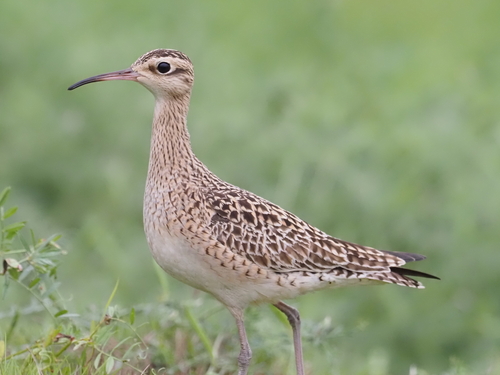
Little Whimbrel (Numenius minutus) Little Whimbrel
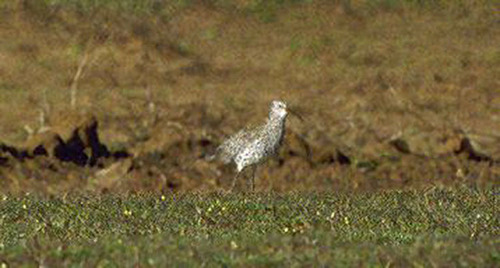
Slender-billed Curlew (Numenius tenuirostris) Slender-billed Curlew

Media

Loading…

In short

The Little Whimbrel (Numenius minutus) and Slender-billed Curlew (Numenius tenuirostris) are both small curlews, but can be distinguished by their bill shape and plumage patterns. The Little Whimbrel has a shorter, more robust bill, while the Slender-billed Curlew's bill is longer and more slender. Both species are rare, but the Slender-billed Curlew is critically endangered and sightings are extremely rare.

Identification tips

  1. Bill Shape: Look for a shorter, more robust bill in the Little Whimbrel versus a longer, slender bill in the Slender-billed Curlew. 2. Plumage: Note the paler, buffy appearance and heart-shaped flank markings of the Slender-billed Curlew compared to the more uniformly brown Little Whimbrel. 3. Size: The Slender-billed Curlew is slightly larger. 4. Rarity: Consider the extreme rarity of the Slender-billed Curlew when identifying.

Size

Both species are small curlews, but the Slender-billed Curlew is slightly larger, measuring 36–41 cm in length compared to the Little Whimbrel's smaller size.

Plumage

The Little Whimbrel has a more uniform brown plumage with a distinct supercilium, while the Slender-billed Curlew is paler with a white or pale buff ground color and heart-shaped dark markings on the breast and flanks. The Slender-billed Curlew lacks a dark crown-stripe, which can help in distinguishing it.

Behaviour

Behavioral data is limited, but both species forage by probing in soft mud and soil. The Slender-billed Curlew has been observed feeding in scrubby bushes during winter.

Habitat

The Little Whimbrel follows a narrow migration corridor and is often found in open steppe grasslands and taiga regions. The Slender-billed Curlew's habitat preferences are less well-documented due to its rarity, but it has been observed in similar open habitats.

Voice

Vocalizations are poorly documented for both species. The Slender-billed Curlew is noted for a high-pitched 'cour-lee' call, sometimes followed by a laughing trill, while the Little Whimbrel's calls are not well-described.

Submit a better description

Use the same sections as the comparison. Your text is published immediately.

The Little Whimbrel (Numenius minutus) and Slender-billed Curlew (Numenius tenuirostris) are both small curlews, but can be distinguished by their bill shape and plumage patterns. The Little Whimbrel has a shorter, more robust bill, while the Slender-billed Curlew's bill is longer and more slender. Both species are rare, but the Slender-billed Curlew is critically endangered and sightings are extremely rare.

  1. Bill Shape: Look for a shorter, more robust bill in the Little Whimbrel versus a longer, slender bill in the Slender-billed Curlew. 2. Plumage: Note the paler, buffy appearance and heart-shaped flank markings of the Slender-billed Curlew compared to the more uniformly brown Little Whimbrel. 3. Size: The Slender-billed Curlew is slightly larger. 4. Rarity: Consider the extreme rarity of the Slender-billed Curlew when identifying.

Both species are small curlews, but the Slender-billed Curlew is slightly larger, measuring 36–41 cm in length compared to the Little Whimbrel's smaller size.

The Little Whimbrel has a more uniform brown plumage with a distinct supercilium, while the Slender-billed Curlew is paler with a white or pale buff ground color and heart-shaped dark markings on the breast and flanks. The Slender-billed Curlew lacks a dark crown-stripe, which can help in distinguishing it.

Behavioral data is limited, but both species forage by probing in soft mud and soil. The Slender-billed Curlew has been observed feeding in scrubby bushes during winter.

The Little Whimbrel follows a narrow migration corridor and is often found in open steppe grasslands and taiga regions. The Slender-billed Curlew's habitat preferences are less well-documented due to its rarity, but it has been observed in similar open habitats.

Vocalizations are poorly documented for both species. The Slender-billed Curlew is noted for a high-pitched 'cour-lee' call, sometimes followed by a laughing trill, while the Little Whimbrel's calls are not well-described.

Discard your changes?

You have unsaved edits. If you leave now, those changes will be lost.

Little Whimbrel · Slender-billed Curlew · My Tricky Birds