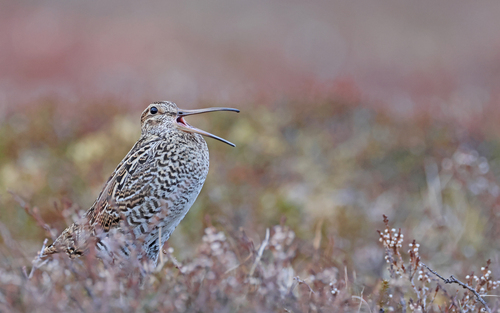
Long-billed Dowitcher vs Great Snipe
Limnodromus scolopaceus versus Gallinago media
Play a quiz with Long-billed Dowitcher and Great Snipe
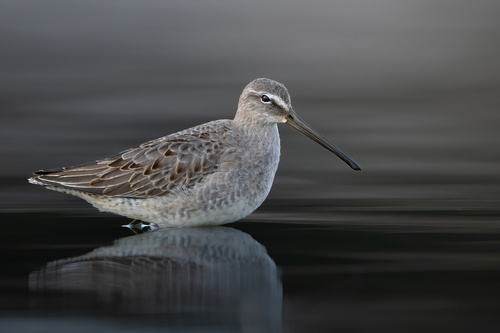
Long-billed Dowitcher
Great Snipe
In short
The Long-billed Dowitcher and Great Snipe are both medium-sized shorebirds, but they can be distinguished by their bill length and feeding behavior. The Long-billed Dowitcher has a notably long, sturdy bill and a 'sewing machine' feeding motion, while the Great Snipe has a shorter bill and more secretive habits.
Identification tips
1. Bill Length: The Long-billed Dowitcher has a bill approximately twice the length of its head, much longer than the Great Snipe's. 2. Feeding Behavior: Look for the 'sewing machine' feeding motion of the Long-billed Dowitcher. 3. Flight Markings: In flight, the Long-billed Dowitcher shows a white triangular patch above the tail. 4. Habitat Preference: Consider the habitat; Long-billed Dowitchers are more likely in coastal and marshy areas, while Great Snipes prefer grasslands.
Size
Both species are medium-sized, but the Long-billed Dowitcher appears chunkier due to its longer bill.
Plumage
The Long-billed Dowitcher shows a white triangular patch above its tail in flight, while the Great Snipe has more cryptic plumage suited for its grassland habitats.
Behaviour
The Long-billed Dowitcher feeds with a distinctive 'sewing machine' motion, whereas the Great Snipe is more secretive and less often observed feeding.
Habitat
Long-billed Dowitchers are found in small pools and salt-marsh vegetation, primarily along coastal areas. Great Snipes prefer grasslands and are less likely to be seen in open water habitats.
Voice
The Long-billed Dowitcher emits a distinctive call when flying and feeding, while the Great Snipe's vocalizations are less frequently noted in field observations.