Birdr

Long-billed Gnatwren vs Golden-winged Cacique

Ramphocaenus melanurus versus Cacicus chrysopterus

Play a quiz with Long-billed Gnatwren and Golden-winged Cacique
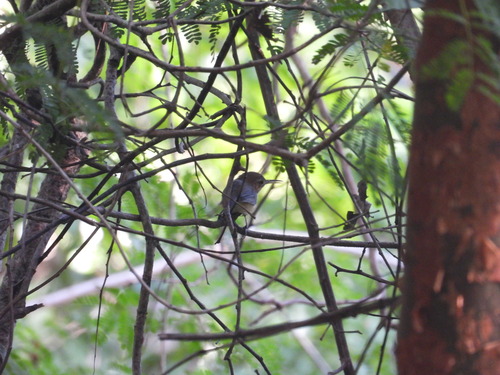
Long-billed Gnatwren (Ramphocaenus melanurus) Long-billed Gnatwren
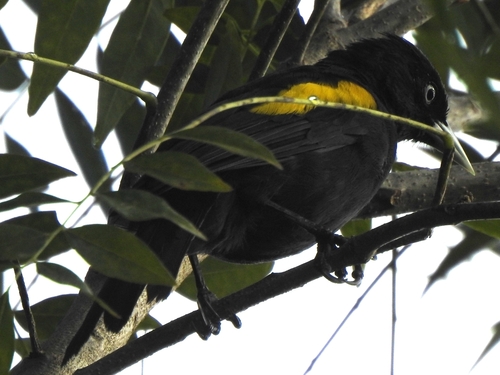
Golden-winged Cacique (Cacicus chrysopterus) Golden-winged Cacique

Media

Loading…

In short

The Long-billed Gnatwren and Golden-winged Cacique are not closely related, differing significantly in size and appearance. The gnatwren is small and elusive, often hidden in dense vegetation, while the cacique is larger, more conspicuous, and often seen near its distinctive hanging nests. Their vocalizations and behaviors also differ markedly.

Identification tips

1. Size and Shape: Look for the small size and long bill of the gnatwren versus the larger, more robust cacique. 2. Plumage: Note the gnatwren's brown tones compared to the cacique's black and golden-yellow wings. 3. Behavior: Observe the gnatwren's tail-cocking habit and the cacique's presence near its distinctive nests. 4. Habitat: Consider the dense undergrowth for the gnatwren and more open subtropical forests for the cacique. 5. Vocalization: Listen for the gnatwren's soft trilling song.

Size

The Long-billed Gnatwren is much smaller than the Golden-winged Cacique.

Plumage

The Long-billed Gnatwren has mostly dull to warm brown upperparts, while the Golden-winged Cacique is primarily black with striking golden-yellow wing patches.

Behaviour

The Long-billed Gnatwren is secretive, often staying hidden in dense undergrowth and exhibiting a distinctive tail-cocking behavior. In contrast, the Golden-winged Cacique is more visible, often seen near its large, hanging basket nests.

Habitat

The Long-billed Gnatwren prefers dense tangles of vegetation in lowland forests, while the Golden-winged Cacique is found in subtropical forests, often in the Yungas and other regions of South America.

Voice

The Long-billed Gnatwren has a soft, rattled trilling song, whereas the Golden-winged Cacique's calls are not specified here but are generally more varied and louder, typical of the Icteridae family.

Submit a better description

Use the same sections as the comparison. Your text is published immediately.

The Long-billed Gnatwren and Golden-winged Cacique are not closely related, differing significantly in size and appearance. The gnatwren is small and elusive, often hidden in dense vegetation, while the cacique is larger, more conspicuous, and often seen near its distinctive hanging nests. Their vocalizations and behaviors also differ markedly.

1. Size and Shape: Look for the small size and long bill of the gnatwren versus the larger, more robust cacique. 2. Plumage: Note the gnatwren's brown tones compared to the cacique's black and golden-yellow wings. 3. Behavior: Observe the gnatwren's tail-cocking habit and the cacique's presence near its distinctive nests. 4. Habitat: Consider the dense undergrowth for the gnatwren and more open subtropical forests for the cacique. 5. Vocalization: Listen for the gnatwren's soft trilling song.

The Long-billed Gnatwren is much smaller than the Golden-winged Cacique.

The Long-billed Gnatwren has mostly dull to warm brown upperparts, while the Golden-winged Cacique is primarily black with striking golden-yellow wing patches.

The Long-billed Gnatwren is secretive, often staying hidden in dense undergrowth and exhibiting a distinctive tail-cocking behavior. In contrast, the Golden-winged Cacique is more visible, often seen near its large, hanging basket nests.

The Long-billed Gnatwren prefers dense tangles of vegetation in lowland forests, while the Golden-winged Cacique is found in subtropical forests, often in the Yungas and other regions of South America.

The Long-billed Gnatwren has a soft, rattled trilling song, whereas the Golden-winged Cacique's calls are not specified here but are generally more varied and louder, typical of the Icteridae family.

Discard your changes?

You have unsaved edits. If you leave now, those changes will be lost.

Long-billed Gnatwren · Golden-winged Cacique · My Tricky Birds