Birdr

Long-billed Plover vs Siberian Sand Plover

Thinornis placidus versus Anarhynchus mongolus

Play a quiz with Long-billed Plover and Siberian Sand Plover
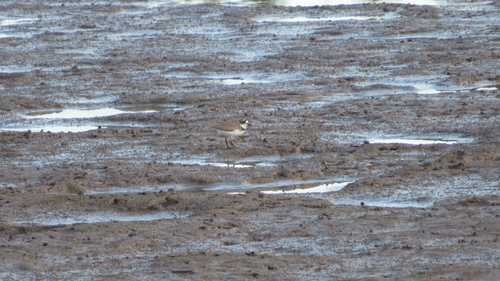
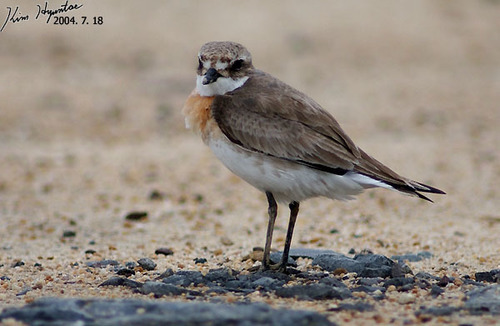
Long-billed Plover (Thinornis placidus) Long-billed Plover
Siberian Sand Plover (Anarhynchus mongolus) Siberian Sand Plover

Media

Loading…

In short

The Long-billed Plover and Siberian Sand Plover can be distinguished primarily by their bill shape and habitat preferences. The Long-billed Plover has a notably longer bill and is more often found along inland rivers, while the Siberian Sand Plover typically inhabits coastal tidal flats.

Identification tips

  1. Bill Shape: Look for the longer bill of the Long-billed Plover. 2. Habitat: Check the habitat; Long-billed Plovers are more likely found inland, while Siberian Sand Plovers are coastal. 3. Breeding Plumage: In breeding season, the Siberian Sand Plover's orange chest and black mask are distinctive. 4. Behavior: Observe flocking behavior; Siberian Sand Plovers are more social.

Size

Both species are similar in size, typical of small plovers.

Plumage

The Long-billed Plover has a more uniform brownish-gray plumage, while the Siberian Sand Plover in breeding plumage features an orange chest and black mask. Outside the breeding season, both species have more muted colors, but the Siberian Sand Plover retains a slightly more contrasting appearance.

Behaviour

The Long-billed Plover is often solitary or in small groups, while the Siberian Sand Plover is more social, often found in large flocks on tidal flats.

Habitat

Long-billed Plovers are typically found along inland rivers and streams, whereas Siberian Sand Plovers prefer coastal areas, particularly tidal flats and beaches.

Voice

No significant differences in vocalizations are noted between the two species.

Submit a better description

Use the same sections as the comparison. Your text is published immediately.

The Long-billed Plover and Siberian Sand Plover can be distinguished primarily by their bill shape and habitat preferences. The Long-billed Plover has a notably longer bill and is more often found along inland rivers, while the Siberian Sand Plover typically inhabits coastal tidal flats.

  1. Bill Shape: Look for the longer bill of the Long-billed Plover. 2. Habitat: Check the habitat; Long-billed Plovers are more likely found inland, while Siberian Sand Plovers are coastal. 3. Breeding Plumage: In breeding season, the Siberian Sand Plover's orange chest and black mask are distinctive. 4. Behavior: Observe flocking behavior; Siberian Sand Plovers are more social.

Both species are similar in size, typical of small plovers.

The Long-billed Plover has a more uniform brownish-gray plumage, while the Siberian Sand Plover in breeding plumage features an orange chest and black mask. Outside the breeding season, both species have more muted colors, but the Siberian Sand Plover retains a slightly more contrasting appearance.

The Long-billed Plover is often solitary or in small groups, while the Siberian Sand Plover is more social, often found in large flocks on tidal flats.

Long-billed Plovers are typically found along inland rivers and streams, whereas Siberian Sand Plovers prefer coastal areas, particularly tidal flats and beaches.

No significant differences in vocalizations are noted between the two species.

Discard your changes?

You have unsaved edits. If you leave now, those changes will be lost.

Long-billed Plover · Siberian Sand Plover · My Tricky Birds