Birdr

Long-billed Wren-Babbler vs Palani Laughingthrush

Napothera malacoptila versus Montecincla fairbanki

Play a quiz with Long-billed Wren-Babbler and Palani Laughingthrush
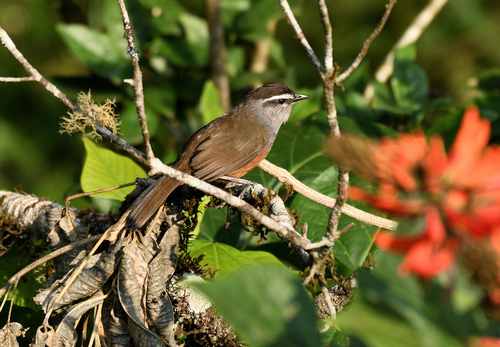
Long-billed Wren-Babbler (Napothera malacoptila) Long-billed Wren-Babbler
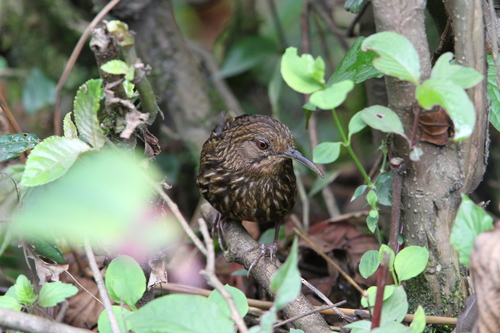
Palani Laughingthrush (Montecincla fairbanki) Palani Laughingthrush

Media

Loading…

In short

The Long-billed Wren-Babbler and Palani Laughingthrush can be distinguished primarily by their bill shape and habitat preference. The Long-billed Wren-Babbler has a notably long, slender bill, while the Palani Laughingthrush has a more robust bill. Habitat can also be a clue, as the Wren-Babbler prefers dense undergrowth, whereas the Laughingthrush is often found in more open forest areas.

Identification tips

  1. Bill Shape: Look for the long, slender bill of the Long-billed Wren-Babbler versus the robust bill of the Palani Laughingthrush. 2. Habitat: Note the habitat; dense undergrowth suggests Wren-Babbler, while open montane forest suggests Laughingthrush. 3. Plumage: Check for uniform brown in Wren-Babbler vs. contrasting facial pattern in Laughingthrush. 4. Behavior: Observe behavior; skulking in undergrowth is typical of Wren-Babbler, while more open foraging is typical of Laughingthrush.

Size

The Palani Laughingthrush is generally larger than the Long-billed Wren-Babbler.

Plumage

Both species have brownish plumage, but the Long-billed Wren-Babbler tends to have a more uniform brown color, while the Palani Laughingthrush may show more contrast with paler underparts and a distinct facial pattern.

Behaviour

The Long-billed Wren-Babbler is more likely to be seen skulking in dense undergrowth, while the Palani Laughingthrush is often more conspicuous, foraging in small groups in open forest areas.

Habitat

The Long-billed Wren-Babbler is typically found in dense, humid forest undergrowth, whereas the Palani Laughingthrush prefers montane forests and is often seen at higher elevations.

Voice

The Long-billed Wren-Babbler has a series of soft, repetitive notes, while the Palani Laughingthrush's call is louder and more varied, often including melodious whistles.

Submit a better description

Use the same sections as the comparison. Your text is published immediately.

The Long-billed Wren-Babbler and Palani Laughingthrush can be distinguished primarily by their bill shape and habitat preference. The Long-billed Wren-Babbler has a notably long, slender bill, while the Palani Laughingthrush has a more robust bill. Habitat can also be a clue, as the Wren-Babbler prefers dense undergrowth, whereas the Laughingthrush is often found in more open forest areas.

  1. Bill Shape: Look for the long, slender bill of the Long-billed Wren-Babbler versus the robust bill of the Palani Laughingthrush. 2. Habitat: Note the habitat; dense undergrowth suggests Wren-Babbler, while open montane forest suggests Laughingthrush. 3. Plumage: Check for uniform brown in Wren-Babbler vs. contrasting facial pattern in Laughingthrush. 4. Behavior: Observe behavior; skulking in undergrowth is typical of Wren-Babbler, while more open foraging is typical of Laughingthrush.

The Palani Laughingthrush is generally larger than the Long-billed Wren-Babbler.

Both species have brownish plumage, but the Long-billed Wren-Babbler tends to have a more uniform brown color, while the Palani Laughingthrush may show more contrast with paler underparts and a distinct facial pattern.

The Long-billed Wren-Babbler is more likely to be seen skulking in dense undergrowth, while the Palani Laughingthrush is often more conspicuous, foraging in small groups in open forest areas.

The Long-billed Wren-Babbler is typically found in dense, humid forest undergrowth, whereas the Palani Laughingthrush prefers montane forests and is often seen at higher elevations.

The Long-billed Wren-Babbler has a series of soft, repetitive notes, while the Palani Laughingthrush's call is louder and more varied, often including melodious whistles.

Discard your changes?

You have unsaved edits. If you leave now, those changes will be lost.

Long-billed Wren-Babbler · Palani Laughingthrush · My Tricky Birds