Birdr

Long-tailed Duck vs White-headed Duck

Clangula hyemalis versus Oxyura leucocephala

Play a quiz with Long-tailed Duck and White-headed Duck
Long-tailed Duck (Clangula hyemalis) Long-tailed Duck
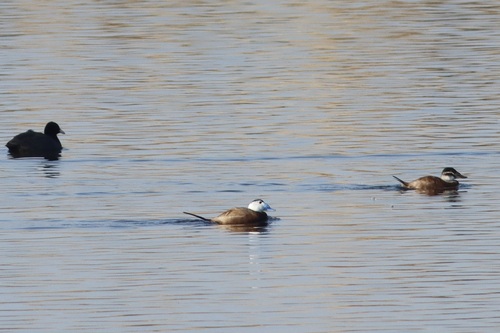
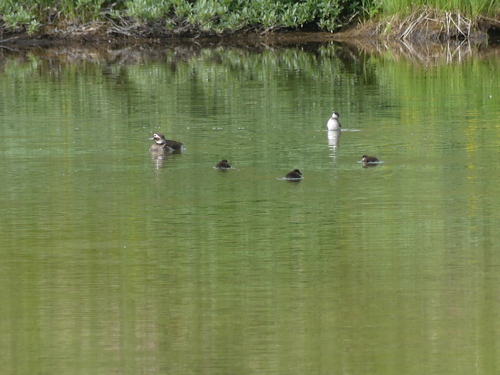
White-headed Duck (Oxyura leucocephala) White-headed Duck

Media

Loading…

In short

The Long-tailed Duck is most easily recognized by the male's long, slender tail feathers, while the White-headed Duck is notable for its distinctive white head and compact, stiff tail. Both species are highly aquatic, but their habitats and behaviors differ significantly.

Identification tips

  1. Look for the long tail feathers in male Long-tailed Ducks, especially in winter. 2. Note the white head and blue bill of the male White-headed Duck during the breeding season. 3. Observe habitat: Long-tailed Ducks are more coastal, while White-headed Ducks prefer inland wetlands. 4. Listen for the Long-tailed Duck's nasal calls. 5. Consider behavior: Long-tailed Ducks are more social, often in flocks, while White-headed Ducks are more solitary.

Size

Both are small to medium-sized ducks, but the Long-tailed Duck is more slender with a longer tail, while the White-headed Duck is more compact with a stiff tail.

Plumage

The male Long-tailed Duck in winter has a striking black and white pattern with long central tail feathers, while the White-headed Duck has a white head and a blue bill during the breeding season. Females of both species are less distinctive but can be separated by the Long-tailed Duck's more contrasting head pattern.

Behaviour

Long-tailed Ducks are more likely to be seen in flocks and are known for their distinctive calls. White-headed Ducks are more solitary and are often seen diving in open water.

Habitat

Long-tailed Ducks are found in coastal waters during winter and tundra regions in summer. White-headed Ducks prefer wetlands, including saline and brackish lakes, and are more sedentary in their range.

Voice

Long-tailed Ducks have a distinctive nasal call that can be heard from a distance, while White-headed Ducks are generally quieter, with no notable calls mentioned.

Submit a better description

Use the same sections as the comparison. Your text is published immediately.

The Long-tailed Duck is most easily recognized by the male's long, slender tail feathers, while the White-headed Duck is notable for its distinctive white head and compact, stiff tail. Both species are highly aquatic, but their habitats and behaviors differ significantly.

  1. Look for the long tail feathers in male Long-tailed Ducks, especially in winter. 2. Note the white head and blue bill of the male White-headed Duck during the breeding season. 3. Observe habitat: Long-tailed Ducks are more coastal, while White-headed Ducks prefer inland wetlands. 4. Listen for the Long-tailed Duck's nasal calls. 5. Consider behavior: Long-tailed Ducks are more social, often in flocks, while White-headed Ducks are more solitary.

Both are small to medium-sized ducks, but the Long-tailed Duck is more slender with a longer tail, while the White-headed Duck is more compact with a stiff tail.

The male Long-tailed Duck in winter has a striking black and white pattern with long central tail feathers, while the White-headed Duck has a white head and a blue bill during the breeding season. Females of both species are less distinctive but can be separated by the Long-tailed Duck's more contrasting head pattern.

Long-tailed Ducks are more likely to be seen in flocks and are known for their distinctive calls. White-headed Ducks are more solitary and are often seen diving in open water.

Long-tailed Ducks are found in coastal waters during winter and tundra regions in summer. White-headed Ducks prefer wetlands, including saline and brackish lakes, and are more sedentary in their range.

Long-tailed Ducks have a distinctive nasal call that can be heard from a distance, while White-headed Ducks are generally quieter, with no notable calls mentioned.

Discard your changes?

You have unsaved edits. If you leave now, those changes will be lost.

Long-tailed Duck · White-headed Duck · My Tricky Birds