Birdr

Lyre-tailed Nightjar vs Scissor-tailed Nightjar

Uropsalis lyra versus Hydropsalis torquata

Play a quiz with Lyre-tailed Nightjar and Scissor-tailed Nightjar
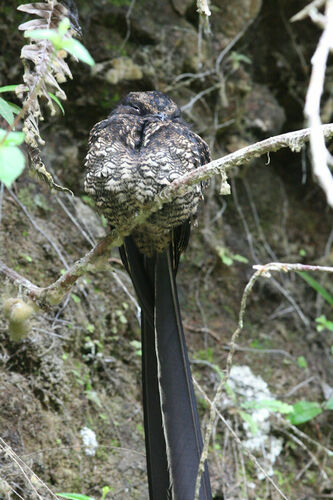
Lyre-tailed Nightjar (Uropsalis lyra) Lyre-tailed Nightjar
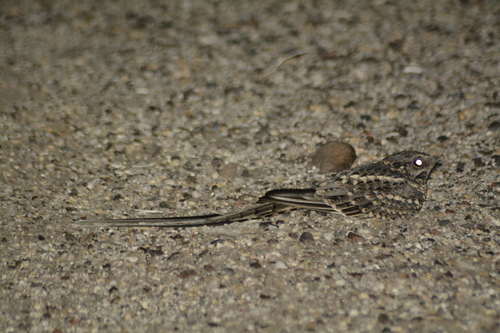
Scissor-tailed Nightjar (Hydropsalis torquata) Scissor-tailed Nightjar

Media

Loading…

In short

The Lyre-tailed Nightjar (Uropsalis lyra) and the Scissor-tailed Nightjar (Hydropsalis torquata) can be distinguished primarily by their tail shapes. The Lyre-tailed Nightjar has a notably long, lyre-shaped tail in males, while the Scissor-tailed Nightjar features a deeply forked, scissor-like tail. Both species are nightjars, so they share similar cryptic plumage and nocturnal habits.

Identification tips

1. Tail Shape: Look for the lyre-shaped tail in male Lyre-tailed Nightjars and the deeply forked tail in Scissor-tailed Nightjars. 2. Habitat: Consider the habitat; montane forests suggest Lyre-tailed, while open woodlands suggest Scissor-tailed. 3. Vocalizations: Listen for the Lyre-tailed's whistles versus the Scissor-tailed's 'tuk-tuk-tuk' calls. 4. Time of Day: Both are most active at dusk and dawn, which is the best time for observation.

Size

Both species are similar in size, typical of nightjars, but the Lyre-tailed Nightjar may appear larger due to its exceptionally long tail in males.

Plumage

Both species have cryptic plumage with mottled browns and grays. The Lyre-tailed Nightjar tends to have more pronounced white markings on the wings and tail, especially in males.

Behaviour

Both species are nocturnal and often seen at dusk or dawn. They may be observed hawking for insects in flight.

Habitat

Lyre-tailed Nightjars are typically found in montane forests, while Scissor-tailed Nightjars prefer open woodlands and savannas. Overlap can occur in transitional zones.

Voice

The Lyre-tailed Nightjar's call is a series of whistles, while the Scissor-tailed Nightjar has a distinctive, repetitive 'tuk-tuk-tuk' sound. Listening for these calls can aid in identification.

Submit a better description

Use the same sections as the comparison. Your text is published immediately.

The Lyre-tailed Nightjar (Uropsalis lyra) and the Scissor-tailed Nightjar (Hydropsalis torquata) can be distinguished primarily by their tail shapes. The Lyre-tailed Nightjar has a notably long, lyre-shaped tail in males, while the Scissor-tailed Nightjar features a deeply forked, scissor-like tail. Both species are nightjars, so they share similar cryptic plumage and nocturnal habits.

1. Tail Shape: Look for the lyre-shaped tail in male Lyre-tailed Nightjars and the deeply forked tail in Scissor-tailed Nightjars. 2. Habitat: Consider the habitat; montane forests suggest Lyre-tailed, while open woodlands suggest Scissor-tailed. 3. Vocalizations: Listen for the Lyre-tailed's whistles versus the Scissor-tailed's 'tuk-tuk-tuk' calls. 4. Time of Day: Both are most active at dusk and dawn, which is the best time for observation.

Both species are similar in size, typical of nightjars, but the Lyre-tailed Nightjar may appear larger due to its exceptionally long tail in males.

Both species have cryptic plumage with mottled browns and grays. The Lyre-tailed Nightjar tends to have more pronounced white markings on the wings and tail, especially in males.

Both species are nocturnal and often seen at dusk or dawn. They may be observed hawking for insects in flight.

Lyre-tailed Nightjars are typically found in montane forests, while Scissor-tailed Nightjars prefer open woodlands and savannas. Overlap can occur in transitional zones.

The Lyre-tailed Nightjar's call is a series of whistles, while the Scissor-tailed Nightjar has a distinctive, repetitive 'tuk-tuk-tuk' sound. Listening for these calls can aid in identification.

Discard your changes?

You have unsaved edits. If you leave now, those changes will be lost.

Lyre-tailed Nightjar · Scissor-tailed Nightjar · My Tricky Birds