Birdr

Magenta-throated Woodstar vs Volcano Hummingbird

Philodice bryantae versus Selasphorus flammula

Play a quiz with Magenta-throated Woodstar and Volcano Hummingbird
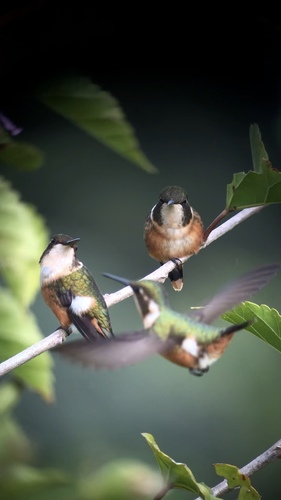
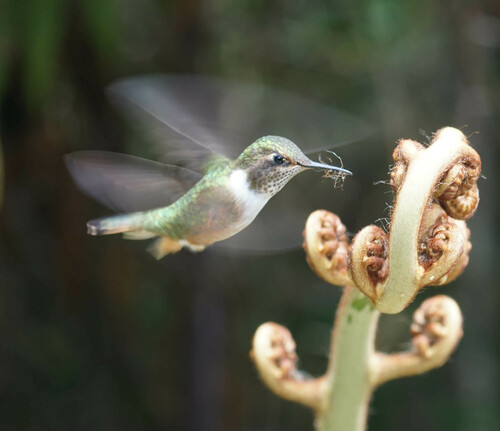
Magenta-throated Woodstar (Philodice bryantae) Magenta-throated Woodstar
Volcano Hummingbird (Selasphorus flammula) Volcano Hummingbird

Media

Loading…

In short

The Magenta-throated Woodstar and Volcano Hummingbird can be distinguished by their throat coloration and tail length. The male Magenta-throated Woodstar has a distinctive glittering purple gorget and a longer tail, whereas the Volcano Hummingbird males have variable throat colors depending on the subspecies, such as heliotrope or rose, and a shorter tail.

Identification tips

1. Throat color: Look for the glittering purple gorget in male Magenta-throated Woodstars; Volcano Hummingbird males have variable throat colors. 2. Tail length: Magenta-throated Woodstars have longer tails compared to the shorter tails of Volcano Hummingbirds. 3. Habitat: Consider the altitude and type of wooded area; Magenta-throated Woodstars prefer mid-altitude woodlands, while Volcano Hummingbirds are found at higher altitudes. 4. Behavior: Observe for territorial displays and diving behavior, more characteristic of the Volcano Hummingbird.

Size

Both species are small hummingbirds, but the Magenta-throated Woodstar generally appears slightly larger due to its longer tail.

Plumage

The male Magenta-throated Woodstar features a glittering purple gorget and a long tail, while the Volcano Hummingbird males have a variable throat color (heliotrope or rose) and a shorter tail. Both species have green upperparts, but the Magenta-throated Woodstar is spangled with rufous. Females of both species are less colorful, with the Magenta-throated Woodstar female having more rufous and white spotting.

Behaviour

Both species exhibit territorial behavior, especially around flowering areas. The Volcano Hummingbird is known for its distinctive diving displays during courtship.

Habitat

The Magenta-throated Woodstar is found in wooded areas between 700 and 1850 m, while the Volcano Hummingbird is often associated with high-altitude environments.

Voice

Vocalizations are not well-documented for the Magenta-throated Woodstar, while the Volcano Hummingbird is noted for its dives involving both vocal and non-vocal sounds.

Submit a better description

Use the same sections as the comparison. Your text is published immediately.

The Magenta-throated Woodstar and Volcano Hummingbird can be distinguished by their throat coloration and tail length. The male Magenta-throated Woodstar has a distinctive glittering purple gorget and a longer tail, whereas the Volcano Hummingbird males have variable throat colors depending on the subspecies, such as heliotrope or rose, and a shorter tail.

1. Throat color: Look for the glittering purple gorget in male Magenta-throated Woodstars; Volcano Hummingbird males have variable throat colors. 2. Tail length: Magenta-throated Woodstars have longer tails compared to the shorter tails of Volcano Hummingbirds. 3. Habitat: Consider the altitude and type of wooded area; Magenta-throated Woodstars prefer mid-altitude woodlands, while Volcano Hummingbirds are found at higher altitudes. 4. Behavior: Observe for territorial displays and diving behavior, more characteristic of the Volcano Hummingbird.

Both species are small hummingbirds, but the Magenta-throated Woodstar generally appears slightly larger due to its longer tail.

The male Magenta-throated Woodstar features a glittering purple gorget and a long tail, while the Volcano Hummingbird males have a variable throat color (heliotrope or rose) and a shorter tail. Both species have green upperparts, but the Magenta-throated Woodstar is spangled with rufous. Females of both species are less colorful, with the Magenta-throated Woodstar female having more rufous and white spotting.

Both species exhibit territorial behavior, especially around flowering areas. The Volcano Hummingbird is known for its distinctive diving displays during courtship.

The Magenta-throated Woodstar is found in wooded areas between 700 and 1850 m, while the Volcano Hummingbird is often associated with high-altitude environments.

Vocalizations are not well-documented for the Magenta-throated Woodstar, while the Volcano Hummingbird is noted for its dives involving both vocal and non-vocal sounds.

Discard your changes?

You have unsaved edits. If you leave now, those changes will be lost.

Magenta-throated Woodstar · Volcano Hummingbird · My Tricky Birds