Birdr

Malaysian Plover vs Javan Plover

Anarhynchus peronii versus Anarhynchus javanicus

Play a quiz with Malaysian Plover and Javan Plover
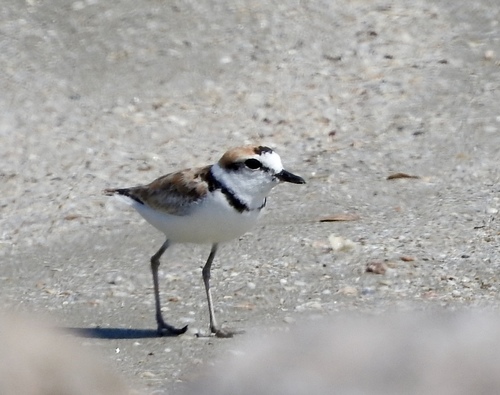
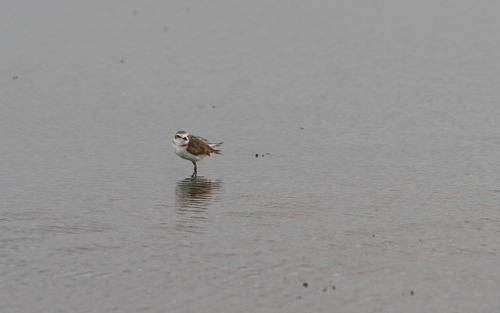
Malaysian Plover (Anarhynchus peronii) Malaysian Plover
Javan Plover (Anarhynchus javanicus) Javan Plover

Media

Loading…

In short

The Malaysian Plover and Javan Plover are similar small shorebirds, but they can be distinguished by the Malaysian Plover's more pronounced chestnut breast band in males and subtle differences in habitat preference. Observing their behavior and preferred environments can also aid in identification.

Identification tips

  1. Look for the chestnut breast band in male Malaysian Plovers. 2. Observe habitat: Malaysian Plovers favor more human-impacted coastal areas. 3. Note behavior: Malaysian Plovers are often in pairs, while Javan Plovers may be solitary. 4. Use caution with females, as plumage differences are subtle.

Size

Both species are similar in size, typical of small plovers, making size a less reliable distinguishing feature.

Plumage

Male Malaysian Plovers have a distinct chestnut breast band, which is less prominent or absent in Javan Plovers. Females of both species are more challenging to differentiate, but the Malaysian Plover often shows a slightly paler overall coloration.

Behaviour

Both species exhibit typical plover behavior, such as quick runs and stops. However, Malaysian Plovers are often seen in pairs, while Javan Plovers may be more solitary or in small groups.

Habitat

Malaysian Plovers prefer sandy beaches and coastal areas, often near human-altered environments like salt pans. Javan Plovers are more frequently found in less disturbed coastal and inland wetlands.

Voice

Vocalizations are not well-documented for field differentiation, and both species have similar calls typical of plovers.

Submit a better description

Use the same sections as the comparison. Your text is published immediately.

The Malaysian Plover and Javan Plover are similar small shorebirds, but they can be distinguished by the Malaysian Plover's more pronounced chestnut breast band in males and subtle differences in habitat preference. Observing their behavior and preferred environments can also aid in identification.

  1. Look for the chestnut breast band in male Malaysian Plovers. 2. Observe habitat: Malaysian Plovers favor more human-impacted coastal areas. 3. Note behavior: Malaysian Plovers are often in pairs, while Javan Plovers may be solitary. 4. Use caution with females, as plumage differences are subtle.

Both species are similar in size, typical of small plovers, making size a less reliable distinguishing feature.

Male Malaysian Plovers have a distinct chestnut breast band, which is less prominent or absent in Javan Plovers. Females of both species are more challenging to differentiate, but the Malaysian Plover often shows a slightly paler overall coloration.

Both species exhibit typical plover behavior, such as quick runs and stops. However, Malaysian Plovers are often seen in pairs, while Javan Plovers may be more solitary or in small groups.

Malaysian Plovers prefer sandy beaches and coastal areas, often near human-altered environments like salt pans. Javan Plovers are more frequently found in less disturbed coastal and inland wetlands.

Vocalizations are not well-documented for field differentiation, and both species have similar calls typical of plovers.

Discard your changes?

You have unsaved edits. If you leave now, those changes will be lost.

Malaysian Plover · Javan Plover · My Tricky Birds