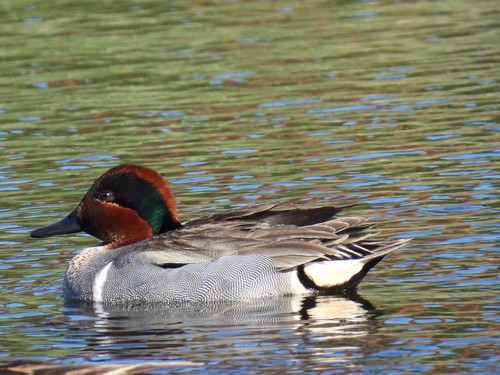
Mallard vs Eurasian/Green-winged Teal
Anas platyrhynchos versus Anas crecca
Play a quiz with Mallard and Eurasian/Green-winged Teal
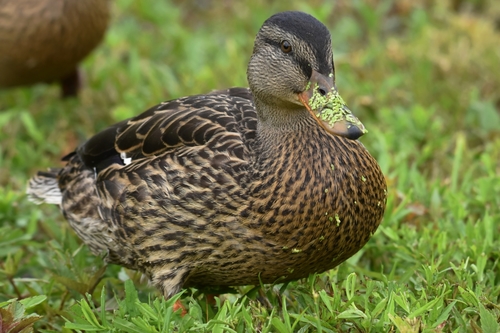
Mallard
Eurasian/Green-winged Teal
In short
The Mallard and Eurasian/Green-winged Teal are both dabbling ducks, but they differ notably in size and plumage. Mallards are larger with a distinctive iridescent green head in males, while Green-winged Teals are smaller with a more compact body and a distinctive green wing patch.
Identification tips
1. Size: Look for the larger size of the Mallard compared to the smaller Green-winged Teal. 2. Male plumage: Note the iridescent green head of the male Mallard versus the chestnut head with a green eye patch of the male Green-winged Teal. 3. Female plumage: Female Mallards have an orange bill, while female Green-winged Teals are smaller and more compact. 4. Habitat: Consider the habitat; Mallards are more likely in urban areas, while Green-winged Teals prefer shallow wetlands. 5. Vocalization: Listen for the classic quack of the Mallard versus the whistling call of the Green-winged Teal.
Size
Mallards are significantly larger than Green-winged Teals, making size a reliable field mark when both species are seen together.
Plumage
Male Mallards have a bright iridescent green head, yellow bill, and a white neck ring, while male Green-winged Teals have a chestnut head with a green eye patch. Female Mallards are mottled brown with an orange bill, whereas female Green-winged Teals are also mottled but smaller and with a more compact appearance.
Behaviour
Both species are dabblers, often seen tipping forward in the water to feed. However, Green-winged Teals are more likely to be seen in small flocks, while Mallards often occur in larger groups.
Habitat
Mallards are highly adaptable and can be found in a wide range of wetland habitats, including urban parks. Green-winged Teals prefer shallow wetlands and are less commonly found in urban areas.
Voice
Mallards have a classic quacking call, while Green-winged Teals produce a softer, whistling call.