Birdr

Mallard vs Marbled Duck

Anas platyrhynchos versus Marmaronetta angustirostris

Play a quiz with Mallard and Marbled Duck
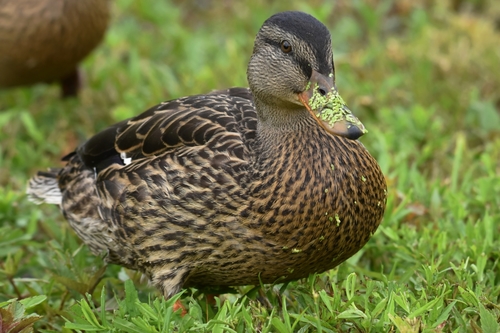
Mallard (Anas platyrhynchos) Mallard
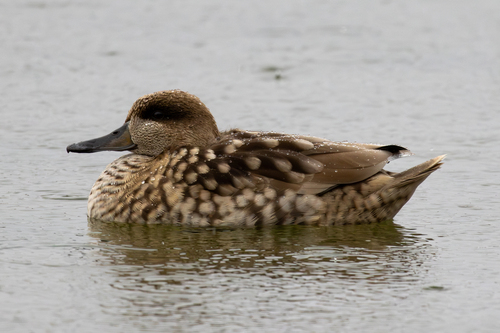
Marbled Duck (Marmaronetta angustirostris) Marbled Duck

Media

Loading…

In short

The Mallard and Marbled Duck can be differentiated by the presence of a bright speculum on the Mallard's wings, which the Marbled Duck lacks. The Marbled Duck has a distinctive dark eye patch and mottled plumage. Both species are waterfowl but occupy different habitats and geographical ranges.

Identification tips

  1. Look for the bright speculum on the Mallard's wings, absent in Marbled Ducks. 2. Note the dark eye patch on Marbled Ducks. 3. Consider habitat: Mallards are more likely in urban and varied wetlands, Marbled Ducks in brackish, vegetated areas. 4. Listen for the Mallard's quack, which is not a feature of the Marbled Duck.

Size

Mallards are generally larger and more robust than Marbled Ducks.

Plumage

Mallards have a bright iridescent blue speculum bordered by white, while Marbled Ducks lack a speculum and have a mottled brown appearance with a dark eye patch.

Behaviour

Mallards are often seen in pairs or small groups, while Marbled Ducks are gregarious and can be found in larger flocks. Marbled Ducks are non-territorial and non-aggressive.

Habitat

Mallards are adaptable, found in a variety of wetland habitats including urban parks, while Marbled Ducks prefer temporary or semi-permanent wetlands with well-structured vegetation, often brackish.

Voice

Mallards are known for their characteristic quacking, especially females. Marbled Duck vocalizations are less documented and not as distinctive.

Submit a better description

Use the same sections as the comparison. Your text is published immediately.

The Mallard and Marbled Duck can be differentiated by the presence of a bright speculum on the Mallard's wings, which the Marbled Duck lacks. The Marbled Duck has a distinctive dark eye patch and mottled plumage. Both species are waterfowl but occupy different habitats and geographical ranges.

  1. Look for the bright speculum on the Mallard's wings, absent in Marbled Ducks. 2. Note the dark eye patch on Marbled Ducks. 3. Consider habitat: Mallards are more likely in urban and varied wetlands, Marbled Ducks in brackish, vegetated areas. 4. Listen for the Mallard's quack, which is not a feature of the Marbled Duck.

Mallards are generally larger and more robust than Marbled Ducks.

Mallards have a bright iridescent blue speculum bordered by white, while Marbled Ducks lack a speculum and have a mottled brown appearance with a dark eye patch.

Mallards are often seen in pairs or small groups, while Marbled Ducks are gregarious and can be found in larger flocks. Marbled Ducks are non-territorial and non-aggressive.

Mallards are adaptable, found in a variety of wetland habitats including urban parks, while Marbled Ducks prefer temporary or semi-permanent wetlands with well-structured vegetation, often brackish.

Mallards are known for their characteristic quacking, especially females. Marbled Duck vocalizations are less documented and not as distinctive.

Discard your changes?

You have unsaved edits. If you leave now, those changes will be lost.

Mallard · Marbled Duck · My Tricky Birds