Mallard vs Mottled Duck
Anas platyrhynchos versus Anas fulvigula
Play a quiz with Mallard and Mottled Duck
Mallard
Mottled Duck
In short
Mallards and Mottled Ducks are similar in structure but differ in plumage details. The Mallard typically has a more vibrant plumage with a distinctive iridescent green head in males, while the Mottled Duck is uniformly brown. Both species share similar habitats but can be distinguished by these plumage differences and subtle behavioral cues.
Identification tips
- Look for the green head and white neck ring in male Mallards. 2. Check for the uniform mottled brown plumage in Mottled Ducks. 3. Observe the bill color: orange in female Mallards, dull yellow in Mottled Ducks. 4. Consider the habitat: urban areas may favor Mallards, while coastal marshes may indicate Mottled Ducks.
Size
Both species are similar in size, with the Mallard being slightly larger on average.
Plumage
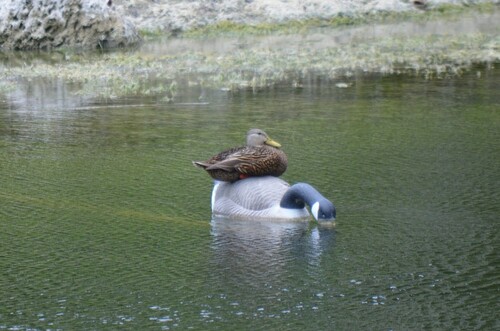
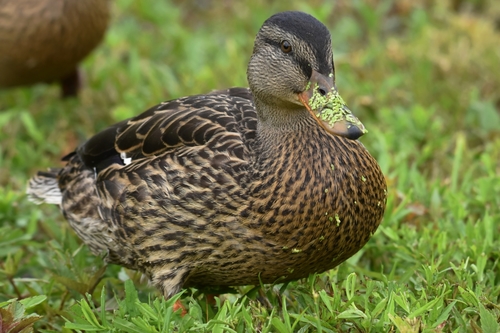
Male Mallards have a bright green head, white neck ring, and chestnut-brown breast, while females are mottled brown with an orange bill. Mottled Ducks are uniformly mottled brown with a darker cap and pale face, and both sexes have a dull yellow bill.
Behaviour
Both species dabble in water and forage on land, but the Mallard is more likely to be seen in urban parks and human-altered environments.
Habitat
Mallards are highly adaptable, found in a variety of wetland habitats, including urban areas. Mottled Ducks prefer freshwater marshes and coastal wetlands, primarily in the southeastern United States.
Voice
Mallards have a classic quacking call, while Mottled Ducks have a similar but slightly softer quack.