Birdr

Mallard vs Northern Pintail

Anas platyrhynchos versus Anas acuta

Play a quiz with Mallard and Northern Pintail
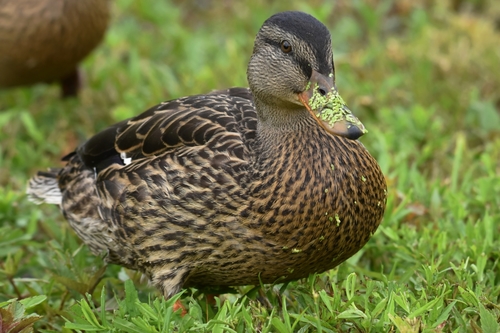
Mallard (Anas platyrhynchos) Mallard
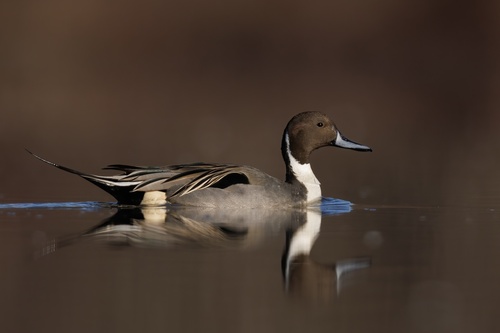
Northern Pintail (Anas acuta) Northern Pintail

Media

Loading…

In short

Mallards and Northern Pintails can be distinguished by their structure and plumage. The Mallard has a more robust body and a distinctive curled tail feather in males, while the Northern Pintail is more slender with a long neck and pointed tail. Both species can be found in similar habitats, but their behavior and vocalizations differ.

Identification tips

  1. Structure: Look for the Mallard's robust body and the Pintail's elongated neck and pointed tail. 2. Plumage: Note the Mallard's green head and the Pintail's brown head and white breast. 3. Behavior: Observe the habitat; Mallards are often in urban areas, Pintails in open wetlands. 4. Vocalization: Listen for the Mallard's quack versus the Pintail's whistle.

Size

Mallards are bulkier with a more robust body, whereas Northern Pintails are more slender and elongated.

Plumage

Male Mallards have a distinctive iridescent green head, yellow bill, and a white ring around the neck. Northern Pintail males have a chocolate-brown head, white breast, and a long, pointed tail. Females of both species are mottled brown, but the Pintail has a more slender appearance and a longer neck.

Behaviour

Mallards are more tolerant of human presence and are often found in urban parks. Northern Pintails are more likely to be seen in open wetlands and are known for their acrobatic flight displays.

Habitat

Both species inhabit wetlands, but Mallards are more adaptable and can be found in urban areas, while Northern Pintails prefer open, shallow wetlands and flooded fields.

Voice

Mallards are known for their classic quacking, while Northern Pintails have a softer, more musical whistle.

Submit a better description

Use the same sections as the comparison. Your text is published immediately.

Mallards and Northern Pintails can be distinguished by their structure and plumage. The Mallard has a more robust body and a distinctive curled tail feather in males, while the Northern Pintail is more slender with a long neck and pointed tail. Both species can be found in similar habitats, but their behavior and vocalizations differ.

  1. Structure: Look for the Mallard's robust body and the Pintail's elongated neck and pointed tail. 2. Plumage: Note the Mallard's green head and the Pintail's brown head and white breast. 3. Behavior: Observe the habitat; Mallards are often in urban areas, Pintails in open wetlands. 4. Vocalization: Listen for the Mallard's quack versus the Pintail's whistle.

Mallards are bulkier with a more robust body, whereas Northern Pintails are more slender and elongated.

Male Mallards have a distinctive iridescent green head, yellow bill, and a white ring around the neck. Northern Pintail males have a chocolate-brown head, white breast, and a long, pointed tail. Females of both species are mottled brown, but the Pintail has a more slender appearance and a longer neck.

Mallards are more tolerant of human presence and are often found in urban parks. Northern Pintails are more likely to be seen in open wetlands and are known for their acrobatic flight displays.

Both species inhabit wetlands, but Mallards are more adaptable and can be found in urban areas, while Northern Pintails prefer open, shallow wetlands and flooded fields.

Mallards are known for their classic quacking, while Northern Pintails have a softer, more musical whistle.

Discard your changes?

You have unsaved edits. If you leave now, those changes will be lost.

Mallard · Northern Pintail · My Tricky Birds