Birdr

Mangrove Hummingbird vs Blue-chested Hummingbird

Chrysuronia boucardi versus Polyerata amabilis

Play a quiz with Mangrove Hummingbird and Blue-chested Hummingbird
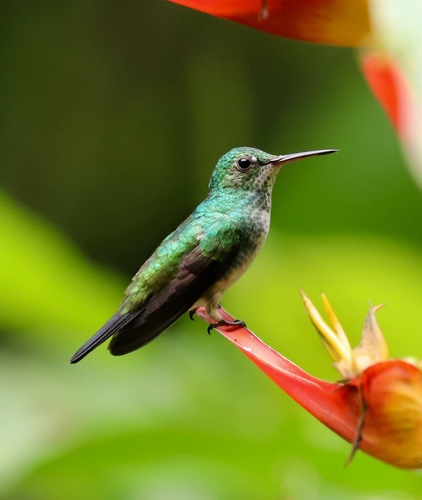
Mangrove Hummingbird (Chrysuronia boucardi) Mangrove Hummingbird
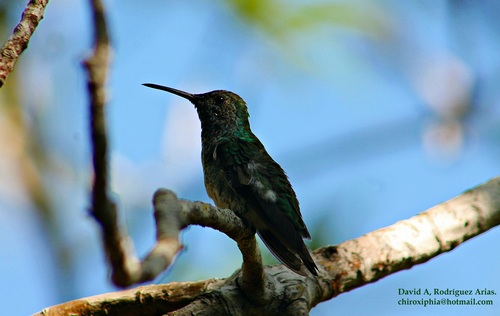
Blue-chested Hummingbird (Polyerata amabilis) Blue-chested Hummingbird

Media

Loading…

In short

The Mangrove Hummingbird and Blue-chested Hummingbird can be distinguished by their throat colors and tail shapes. The Mangrove Hummingbird has a bluish-green throat and a forked tail, while the Blue-chested Hummingbird features a blue chest and a more squared tail.

Identification tips

  1. Throat color: Look for the bluish-green throat of the Mangrove Hummingbird versus the blue chest of the Blue-chested Hummingbird. 2. Tail shape: Note the forked tail of the Mangrove Hummingbird compared to the squared tail of the Blue-chested Hummingbird. 3. Habitat: Consider the habitat; Mangrove Hummingbirds are more likely in mangrove areas.

Size

Both species are medium-sized hummingbirds with similar overall dimensions.

Plumage

The Mangrove Hummingbird has a bluish-green throat and chest, a white belly, and a forked tail with a bronze tinge. The Blue-chested Hummingbird has a blue chest and a more squared tail. Females of both species have white underparts, but the Mangrove female has small green spots on the throat and sides.

Behaviour

Both species exhibit typical hummingbird behavior, such as rapid flight and hovering at flowers, with no significant behavioral differences noted.

Habitat

The Mangrove Hummingbird is typically found in mangrove forests, while the Blue-chested Hummingbird is more adaptable, often found in a variety of forested habitats.

Voice

There are no significant vocal differences noted between the two species.

Submit a better description

Use the same sections as the comparison. Your text is published immediately.

The Mangrove Hummingbird and Blue-chested Hummingbird can be distinguished by their throat colors and tail shapes. The Mangrove Hummingbird has a bluish-green throat and a forked tail, while the Blue-chested Hummingbird features a blue chest and a more squared tail.

  1. Throat color: Look for the bluish-green throat of the Mangrove Hummingbird versus the blue chest of the Blue-chested Hummingbird. 2. Tail shape: Note the forked tail of the Mangrove Hummingbird compared to the squared tail of the Blue-chested Hummingbird. 3. Habitat: Consider the habitat; Mangrove Hummingbirds are more likely in mangrove areas.

Both species are medium-sized hummingbirds with similar overall dimensions.

The Mangrove Hummingbird has a bluish-green throat and chest, a white belly, and a forked tail with a bronze tinge. The Blue-chested Hummingbird has a blue chest and a more squared tail. Females of both species have white underparts, but the Mangrove female has small green spots on the throat and sides.

Both species exhibit typical hummingbird behavior, such as rapid flight and hovering at flowers, with no significant behavioral differences noted.

The Mangrove Hummingbird is typically found in mangrove forests, while the Blue-chested Hummingbird is more adaptable, often found in a variety of forested habitats.

There are no significant vocal differences noted between the two species.

Discard your changes?

You have unsaved edits. If you leave now, those changes will be lost.

Mangrove Hummingbird · Blue-chested Hummingbird · My Tricky Birds