Birdr

Manx Shearwater vs Black-vented Shearwater

Puffinus puffinus versus Puffinus opisthomelas

Play a quiz with Manx Shearwater and Black-vented Shearwater
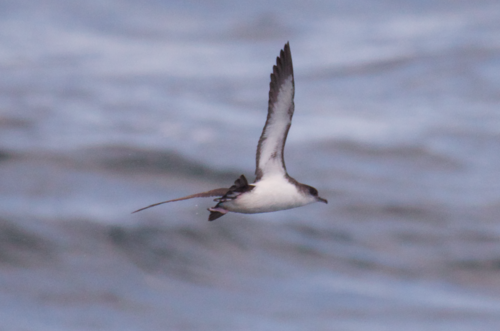
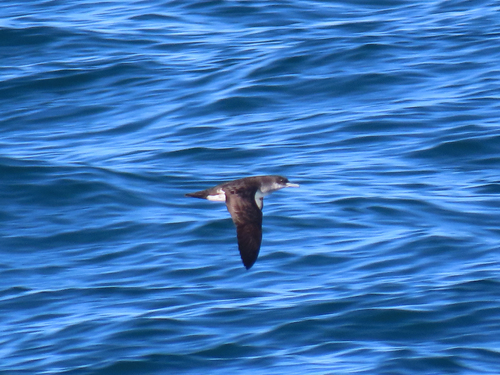
Manx Shearwater (Puffinus puffinus) Manx Shearwater
Black-vented Shearwater (Puffinus opisthomelas) Black-vented Shearwater

Media

Loading…

In short

Separating Manx Shearwater from Black-vented Shearwater in the field is challenging, as both are medium-sized Puffinus shearwaters with similar proportions and flight style. The most reliable distinction is in plumage: Black-vented Shearwater adults and juveniles show a dusky vent and undertail, while Manx Shearwater is clean white below all the way to the undertail. In flight, both species show sharp contrast between dark upperparts and white underparts, but Black-vented often has brownish smudging or speckling on the belly and vent, especially in juveniles and worn adults. Structural and behavioral differences are subtle, so careful attention to the vent area and underpart cleanliness is key. Range and season are also helpful: Manx is North Atlantic, Black-vented is Pacific, but vagrancy and overlap in California mean field marks matter.

Identification tips

  1. Vent and undertail color: The single most reliable mark is the vent/undertail area. Black-vented Shearwater always shows a dusky or brownish vent and undertail coverts, often with smudging or speckling onto the lower belly. Manx Shearwater is clean white all the way to the undertail. Check this area when the bird banks or when seen from behind.
  2. Underpart contrast: Manx Shearwater has crisp, clean white underparts with a sharp division from the black upperparts. Black-vented is usually less clean, with brownish or smudged flanks and belly, especially in juveniles and worn adults.
  3. Upperpart tone: Manx Shearwater is black above, while Black-vented is dark brown, sometimes appearing slightly paler or more chocolatey in strong light. This is subtle and not always reliable at sea.
  4. Head pattern: Both have dark heads, but Manx's is usually jet black, adding to the sharp contrast with the white face and underparts. Black-vented's head is dark brown, blending more with the upperparts.
  5. Flight silhouette: Both species show a cross-shaped profile with long, stiff wings held straight out, but Manx is sometimes described as slightly more angular. This is not a strong separator.
  6. Flight style: Both shear and glide low over the waves with minimal wingbeats. Manx may appear slightly more buoyant, but this is subtle and not diagnostic.
  7. Juvenile plumage: Juvenile Black-vented is darker and more contrasted than adults, but always shows the dusky vent. Juvenile Manx is essentially identical to adults in relevant field marks (clean white underparts).
  8. Range and season: In the North Atlantic, any Puffinus shearwater with a clean white vent is almost certainly Manx. In the eastern Pacific (especially California), Black-vented is expected; Manx is a rare vagrant but possible.
  9. Habitat: Black-vented often comes closer to shore than Manx, especially in California waters. Manx is rarely seen near land outside colonies.
  10. Bill and structure: No reliable differences in bill shape or size are noted between these two species in the sources.
  11. Sex and age: Both species are not sexually dimorphic; males and females look alike. Age differences are mainly in the darkness and contrast of Black-vented, but the vent mark is consistent.
  12. Voice: Not useful at sea; both are silent away from colonies.
  13. Pitfalls: Beware of lighting and distance, which can obscure the vent area. Worn Black-vented may appear paler, but the vent remains dusky. Manx never shows a dark vent.
  14. When in doubt: Prioritize a clear view of the undertail and vent. If this is not possible, use range and season as supporting context, but beware of vagrancy.
  15. Summary tip: If you see a Puffinus shearwater with a clean white vent and underparts, it's Manx; if the vent is dusky or smudged, it's Black-vented.

Size

Both species are very similar in size and proportions, with overlapping measurements: Manx Shearwater averages 521 g, while Black-vented Shearwater is about 400 g. Both are 30–38 cm in length with a 76–89 cm wingspan. In the field, size is not a reliable separator, as the difference is minimal and within observer error. Sexes are similar in both species, with only a slight tendency for male Black-vented to be marginally larger.

Plumage

Juvenile and adult Black-vented Shearwaters show a distinctive dusky or brownish vent and undertail coverts, often with smudges or speckling extending forward onto the lower belly. This contrasts with Manx Shearwater of all ages, which is white from throat to undertail, with a crisp division between black upperparts and white underparts. Black-vented's upperparts are dark brown rather than jet black, and the contrast with the underparts can be less stark, especially in worn or juvenile birds. Juvenile Black-vented are darker and more contrasted than worn adults, but always show the dusky vent. Both species have dark heads and upperwings, but Manx appears cleaner and more 'black-and-white' overall. There are no mentions of distinctive upperwing patterns (such as 'W' marks or panels) for either species in these sources.

Behaviour

Both species fly low over the sea with stiff, straight wings and a characteristic 'shearing' flight, dipping from side to side with few wingbeats. Manx Shearwater is noted for its cross-shaped silhouette and very low, direct flight, often with wingtips nearly touching the water. Black-vented Shearwater forages closer to shore than most shearwaters and is often seen nearer land, especially in California. Both are nocturnal at colonies, but this is not a field mark at sea. There are no strong behavioral differences in flight style or posture that are diagnostic in the field.

Habitat

Manx Shearwater breeds on islands in the North Atlantic (UK, Ireland, Iceland, etc.) and is entirely marine, rarely seen near land except at colonies. Black-vented Shearwater is endemic to the Pacific coast of Mexico and the Gulf of California, breeding on offshore islands and foraging much closer to shore than Manx. In California waters, Black-vented is relatively common in cold months, while Manx is a rare vagrant. Thus, location and season are important context clues, but overlap is possible in the eastern Pacific.

Voice

Both species are mostly silent at sea and vocalize at night in colonies. Black-vented Shearwater's call is described as a moaning growl, similar to a dentist's drill, but is rarely heard except at night and is not a practical field mark for separation. Manx Shearwater is also vocal at colonies but not at sea. Thus, voice is not a useful separator for most observers.

Submit a better description

Use the same sections as the comparison. Your text is published immediately.

Separating Manx Shearwater from Black-vented Shearwater in the field is challenging, as both are medium-sized Puffinus shearwaters with similar proportions and flight style. The most reliable distinction is in plumage: Black-vented Shearwater adults and juveniles show a dusky vent and undertail, while Manx Shearwater is clean white below all the way to the undertail. In flight, both species show sharp contrast between dark upperparts and white underparts, but Black-vented often has brownish smudging or speckling on the belly and vent, especially in juveniles and worn adults. Structural and behavioral differences are subtle, so careful attention to the vent area and underpart cleanliness is key. Range and season are also helpful: Manx is North Atlantic, Black-vented is Pacific, but vagrancy and overlap in California mean field marks matter.

  1. Vent and undertail color: The single most reliable mark is the vent/undertail area. Black-vented Shearwater always shows a dusky or brownish vent and undertail coverts, often with smudging or speckling onto the lower belly. Manx Shearwater is clean white all the way to the undertail. Check this area when the bird banks or when seen from behind.
  2. Underpart contrast: Manx Shearwater has crisp, clean white underparts with a sharp division from the black upperparts. Black-vented is usually less clean, with brownish or smudged flanks and belly, especially in juveniles and worn adults.
  3. Upperpart tone: Manx Shearwater is black above, while Black-vented is dark brown, sometimes appearing slightly paler or more chocolatey in strong light. This is subtle and not always reliable at sea.
  4. Head pattern: Both have dark heads, but Manx's is usually jet black, adding to the sharp contrast with the white face and underparts. Black-vented's head is dark brown, blending more with the upperparts.
  5. Flight silhouette: Both species show a cross-shaped profile with long, stiff wings held straight out, but Manx is sometimes described as slightly more angular. This is not a strong separator.
  6. Flight style: Both shear and glide low over the waves with minimal wingbeats. Manx may appear slightly more buoyant, but this is subtle and not diagnostic.
  7. Juvenile plumage: Juvenile Black-vented is darker and more contrasted than adults, but always shows the dusky vent. Juvenile Manx is essentially identical to adults in relevant field marks (clean white underparts).
  8. Range and season: In the North Atlantic, any Puffinus shearwater with a clean white vent is almost certainly Manx. In the eastern Pacific (especially California), Black-vented is expected; Manx is a rare vagrant but possible.
  9. Habitat: Black-vented often comes closer to shore than Manx, especially in California waters. Manx is rarely seen near land outside colonies.
  10. Bill and structure: No reliable differences in bill shape or size are noted between these two species in the sources.
  11. Sex and age: Both species are not sexually dimorphic; males and females look alike. Age differences are mainly in the darkness and contrast of Black-vented, but the vent mark is consistent.
  12. Voice: Not useful at sea; both are silent away from colonies.
  13. Pitfalls: Beware of lighting and distance, which can obscure the vent area. Worn Black-vented may appear paler, but the vent remains dusky. Manx never shows a dark vent.
  14. When in doubt: Prioritize a clear view of the undertail and vent. If this is not possible, use range and season as supporting context, but beware of vagrancy.
  15. Summary tip: If you see a Puffinus shearwater with a clean white vent and underparts, it's Manx; if the vent is dusky or smudged, it's Black-vented.

Both species are very similar in size and proportions, with overlapping measurements: Manx Shearwater averages 521 g, while Black-vented Shearwater is about 400 g. Both are 30–38 cm in length with a 76–89 cm wingspan. In the field, size is not a reliable separator, as the difference is minimal and within observer error. Sexes are similar in both species, with only a slight tendency for male Black-vented to be marginally larger.

Juvenile and adult Black-vented Shearwaters show a distinctive dusky or brownish vent and undertail coverts, often with smudges or speckling extending forward onto the lower belly. This contrasts with Manx Shearwater of all ages, which is white from throat to undertail, with a crisp division between black upperparts and white underparts. Black-vented's upperparts are dark brown rather than jet black, and the contrast with the underparts can be less stark, especially in worn or juvenile birds. Juvenile Black-vented are darker and more contrasted than worn adults, but always show the dusky vent. Both species have dark heads and upperwings, but Manx appears cleaner and more 'black-and-white' overall. There are no mentions of distinctive upperwing patterns (such as 'W' marks or panels) for either species in these sources.

Both species fly low over the sea with stiff, straight wings and a characteristic 'shearing' flight, dipping from side to side with few wingbeats. Manx Shearwater is noted for its cross-shaped silhouette and very low, direct flight, often with wingtips nearly touching the water. Black-vented Shearwater forages closer to shore than most shearwaters and is often seen nearer land, especially in California. Both are nocturnal at colonies, but this is not a field mark at sea. There are no strong behavioral differences in flight style or posture that are diagnostic in the field.

Manx Shearwater breeds on islands in the North Atlantic (UK, Ireland, Iceland, etc.) and is entirely marine, rarely seen near land except at colonies. Black-vented Shearwater is endemic to the Pacific coast of Mexico and the Gulf of California, breeding on offshore islands and foraging much closer to shore than Manx. In California waters, Black-vented is relatively common in cold months, while Manx is a rare vagrant. Thus, location and season are important context clues, but overlap is possible in the eastern Pacific.

Both species are mostly silent at sea and vocalize at night in colonies. Black-vented Shearwater's call is described as a moaning growl, similar to a dentist's drill, but is rarely heard except at night and is not a practical field mark for separation. Manx Shearwater is also vocal at colonies but not at sea. Thus, voice is not a useful separator for most observers.

Discard your changes?

You have unsaved edits. If you leave now, those changes will be lost.

Manx Shearwater · Black-vented Shearwater · My Tricky Birds