Birdr

Marsh Sandpiper vs Lesser Yellowlegs

Tringa stagnatilis versus Tringa flavipes

Play a quiz with Marsh Sandpiper and Lesser Yellowlegs
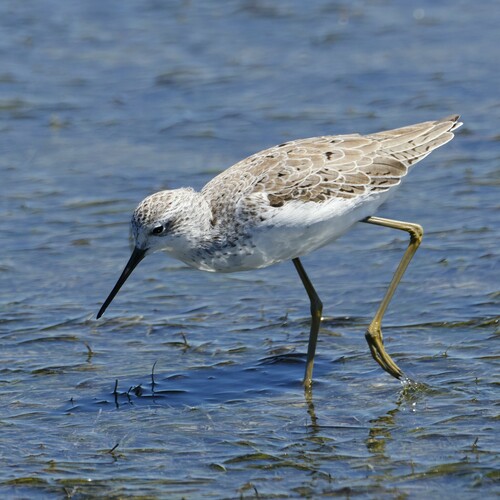
Marsh Sandpiper (Tringa stagnatilis) Marsh Sandpiper
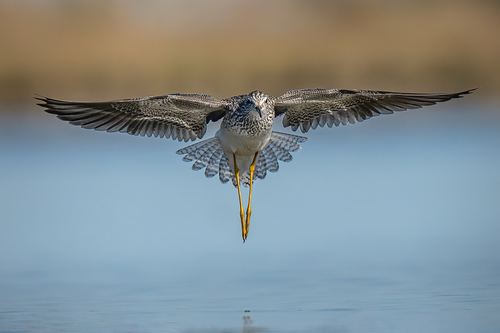
Lesser Yellowlegs (Tringa flavipes) Lesser Yellowlegs

Media

Loading…

In short

The Marsh Sandpiper and Lesser Yellowlegs are both slender, long-legged shorebirds, but they can be distinguished by their size, bill shape, and leg color. Marsh Sandpipers are smaller with a thinner, more needle-like bill and greenish legs, while Lesser Yellowlegs are larger with a thicker, straight bill and bright yellow legs.

Identification tips

Size

Marsh Sandpipers are smaller and more delicate compared to the larger and more robust Lesser Yellowlegs.

Plumage

Both species have similar plumage with mottled brown and white patterns, but the Marsh Sandpiper appears paler overall, especially in the non-breeding season.

Behaviour

Lesser Yellowlegs are often seen in small flocks and can be quite vocal, while Marsh Sandpipers are more solitary and quieter.

Habitat

Marsh Sandpipers prefer freshwater marshes and shallow wetlands, while Lesser Yellowlegs are found in a variety of wetland habitats including freshwater and coastal areas.

Voice

Lesser Yellowlegs have a distinctive, loud call often described as 'tew-tew-tew', whereas Marsh Sandpipers are generally quieter with less distinctive vocalizations.

Submit a better description

Use the same sections as the comparison. Your text is published immediately.

The Marsh Sandpiper and Lesser Yellowlegs are both slender, long-legged shorebirds, but they can be distinguished by their size, bill shape, and leg color. Marsh Sandpipers are smaller with a thinner, more needle-like bill and greenish legs, while Lesser Yellowlegs are larger with a thicker, straight bill and bright yellow legs.

  • Leg Color: Marsh Sandpiper has greenish legs; Lesser Yellowlegs has bright yellow legs.
  • Bill Shape: Marsh Sandpiper's bill is thinner and more needle-like; Lesser Yellowlegs has a thicker, straight bill.
  • Size: Marsh Sandpiper is smaller and more delicate; Lesser Yellowlegs is larger.
  • Habitat: Look for Marsh Sandpipers in freshwater marshes; Lesser Yellowlegs can be in a wider range of wetland habitats.
  • Calls: Listen for the loud 'tew-tew-tew' of Lesser Yellowlegs.

Marsh Sandpipers are smaller and more delicate compared to the larger and more robust Lesser Yellowlegs.

Both species have similar plumage with mottled brown and white patterns, but the Marsh Sandpiper appears paler overall, especially in the non-breeding season.

Lesser Yellowlegs are often seen in small flocks and can be quite vocal, while Marsh Sandpipers are more solitary and quieter.

Marsh Sandpipers prefer freshwater marshes and shallow wetlands, while Lesser Yellowlegs are found in a variety of wetland habitats including freshwater and coastal areas.

Lesser Yellowlegs have a distinctive, loud call often described as 'tew-tew-tew', whereas Marsh Sandpipers are generally quieter with less distinctive vocalizations.

Discard your changes?

You have unsaved edits. If you leave now, those changes will be lost.

Marsh Sandpiper · Lesser Yellowlegs · My Tricky Birds