Birdr

Marsh Sandpiper vs Spotted Redshank

Tringa stagnatilis versus Tringa erythropus

Play a quiz with Marsh Sandpiper and Spotted Redshank
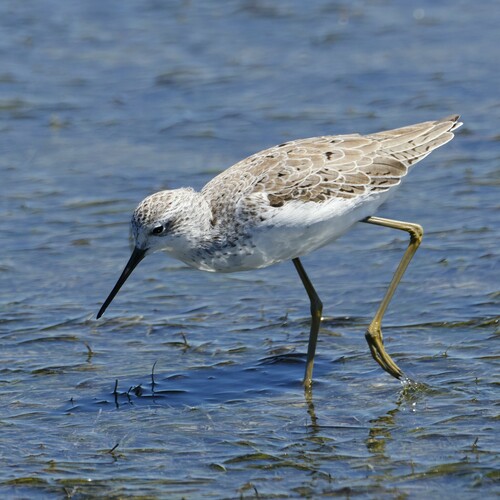
Marsh Sandpiper (Tringa stagnatilis) Marsh Sandpiper
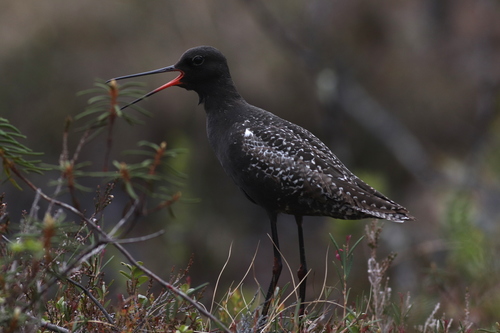
Spotted Redshank (Tringa erythropus) Spotted Redshank

Media

Loading…

In short

The Marsh Sandpiper and Spotted Redshank are both slender, long-legged waders, but the Spotted Redshank is noticeably larger and has a distinctive red base to its bill. In breeding plumage, the Spotted Redshank is strikingly black, while the Marsh Sandpiper remains pale grey. Their calls differ, with the Spotted Redshank having a more melodious and varied call.

Identification tips

  1. Size and Structure: The Spotted Redshank is larger with a thicker bill and red base. 2. Breeding Plumage: Look for the Spotted Redshank's black plumage in breeding season. 3. Bill Color: The Spotted Redshank has a red base to its bill, which is absent in the Marsh Sandpiper. 4. Call: Listen for the Spotted Redshank's more melodious call. 5. Behavior: Note the Spotted Redshank's tendency to wade in deeper water or swim.

Size

The Spotted Redshank is larger than the Marsh Sandpiper, with a more robust build.

Plumage

In breeding plumage, the Spotted Redshank is black, whereas the Marsh Sandpiper is pale grey. Outside of breeding season, both species are more similar in color, but the Spotted Redshank retains a more prominent supercilium and a red base to its bill.

Behaviour

Both species forage in shallow waters, but the Spotted Redshank often wades deeper and is more likely to be seen swimming.

Habitat

Both species can be found in similar wetland habitats, but the Spotted Redshank is more likely to be found in deeper water areas.

Voice

The Spotted Redshank has a more melodious and varied call compared to the Marsh Sandpiper's simpler, higher-pitched call.

Submit a better description

Use the same sections as the comparison. Your text is published immediately.

The Marsh Sandpiper and Spotted Redshank are both slender, long-legged waders, but the Spotted Redshank is noticeably larger and has a distinctive red base to its bill. In breeding plumage, the Spotted Redshank is strikingly black, while the Marsh Sandpiper remains pale grey. Their calls differ, with the Spotted Redshank having a more melodious and varied call.

  1. Size and Structure: The Spotted Redshank is larger with a thicker bill and red base. 2. Breeding Plumage: Look for the Spotted Redshank's black plumage in breeding season. 3. Bill Color: The Spotted Redshank has a red base to its bill, which is absent in the Marsh Sandpiper. 4. Call: Listen for the Spotted Redshank's more melodious call. 5. Behavior: Note the Spotted Redshank's tendency to wade in deeper water or swim.

The Spotted Redshank is larger than the Marsh Sandpiper, with a more robust build.

In breeding plumage, the Spotted Redshank is black, whereas the Marsh Sandpiper is pale grey. Outside of breeding season, both species are more similar in color, but the Spotted Redshank retains a more prominent supercilium and a red base to its bill.

Both species forage in shallow waters, but the Spotted Redshank often wades deeper and is more likely to be seen swimming.

Both species can be found in similar wetland habitats, but the Spotted Redshank is more likely to be found in deeper water areas.

The Spotted Redshank has a more melodious and varied call compared to the Marsh Sandpiper's simpler, higher-pitched call.

Discard your changes?

You have unsaved edits. If you leave now, those changes will be lost.

Marsh Sandpiper · Spotted Redshank · My Tricky Birds