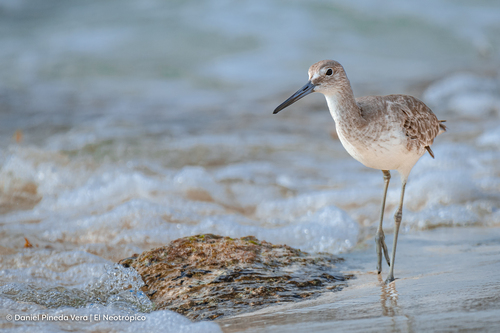
Marsh Sandpiper vs Willet
Tringa stagnatilis versus Tringa semipalmata
Play a quiz with Marsh Sandpiper and Willet
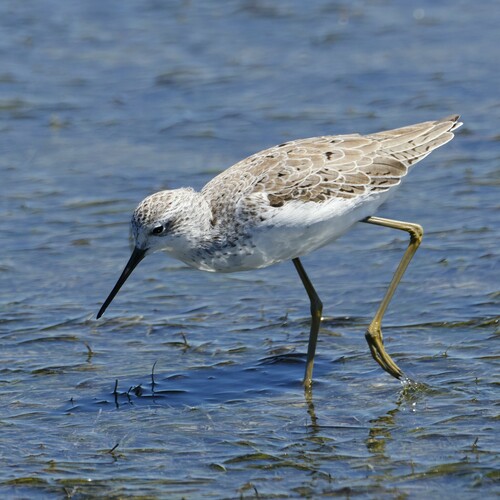
Marsh Sandpiper
Willet
In short
The Marsh Sandpiper and the Willet are both members of the sandpiper family but differ significantly in size and structure. The Marsh Sandpiper is much smaller and more delicate, while the Willet is larger and more robust. Key differences include their bill shape and plumage patterns.
Identification tips
1. Size and Structure: Look for the smaller, more delicate Marsh Sandpiper versus the larger Willet. 2. Bill Shape: The Marsh Sandpiper has a finer, straighter bill compared to the thicker bill of the Willet. 3. Wing Pattern: In flight, the Willet's bold black and white wing pattern is distinctive. 4. Habitat: Consider the habitat; Marsh Sandpipers prefer freshwater wetlands, while Willets are more coastal. 5. Vocalization: Listen for the Willet's distinctive call, which is absent in the Marsh Sandpiper.
Size
The Marsh Sandpiper is significantly smaller and more slender than the Willet, which is a large, robust shorebird.
Plumage
The Marsh Sandpiper has a more delicate appearance with a fine, straight bill and long legs. Its plumage is generally lighter and more uniform. The Willet, in contrast, has a thicker, straight bill and a more mottled appearance, especially in non-breeding plumage. In flight, the Willet shows a distinctive black and white wing pattern, which is absent in the Marsh Sandpiper.
Behaviour
Both species forage in shallow waters but the Marsh Sandpiper often appears more delicate and dainty in its movements compared to the more robust and direct foraging style of the Willet.
Habitat
The Marsh Sandpiper is typically found in freshwater wetlands, while the Willet is more commonly associated with coastal habitats like tidal mudflats and sandy beaches.
Voice
The Marsh Sandpiper is generally quieter, while the Willet is known for its loud, piercing 'pill-will-willet' call, which is a key distinguishing feature.