Birdr

Marsh Seedeater vs Chestnut-bellied Seed-Finch

Sporophila palustris versus Sporophila angolensis

Play a quiz with Marsh Seedeater and Chestnut-bellied Seed-Finch
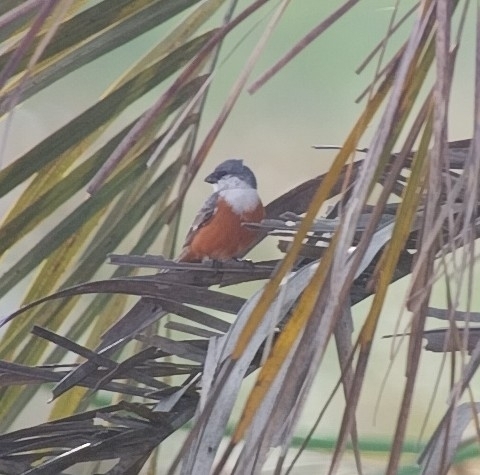
Marsh Seedeater (Sporophila palustris) Marsh Seedeater
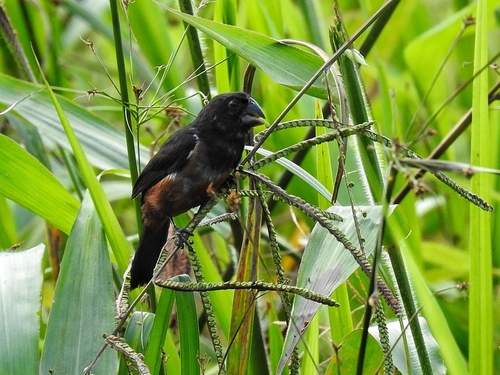
Chestnut-bellied Seed-Finch (Sporophila angolensis) Chestnut-bellied Seed-Finch

Media

Loading…

In short

The Marsh Seedeater and Chestnut-bellied Seed-Finch can be distinguished by their habitat preferences and plumage. The Marsh Seedeater is often found in marshes and adjacent grasslands, while the Chestnut-bellied Seed-Finch prefers more open and varied habitats. Plumage differences are also notable, with the Marsh Seedeater having a more subdued coloration compared to the striking chestnut belly of the Seed-Finch.

Identification tips

Look for the chestnut belly on the Chestnut-bellied Seed-Finch as a key field mark. Observe the habitat: Marsh Seedeaters are more likely in marshy, grassy areas. Note the bill: the Chestnut-bellied Seed-Finch has a thicker bill. When uncertain, consider the overall coloration and habitat context.

Size

Both species are similar in size, typical of small seedeaters, but the Chestnut-bellied Seed-Finch may appear slightly bulkier due to its thicker bill.

Plumage

The Marsh Seedeater has a more muted plumage with less contrast, whereas the Chestnut-bellied Seed-Finch is notable for its rich chestnut belly and darker upperparts.

Behaviour

Both species are seed specialists, but the Marsh Seedeater is more likely to be seen foraging on seeds still on the stalks in marshy areas.

Habitat

The Marsh Seedeater is closely tied to marshes and high grasslands, especially during breeding, while the Chestnut-bellied Seed-Finch occupies a broader range of open habitats.

Voice

Vocalizations are not well-documented in the provided notes, but field observations suggest differences in song patterns typical of Sporophila species.

Submit a better description

Use the same sections as the comparison. Your text is published immediately.

The Marsh Seedeater and Chestnut-bellied Seed-Finch can be distinguished by their habitat preferences and plumage. The Marsh Seedeater is often found in marshes and adjacent grasslands, while the Chestnut-bellied Seed-Finch prefers more open and varied habitats. Plumage differences are also notable, with the Marsh Seedeater having a more subdued coloration compared to the striking chestnut belly of the Seed-Finch.

Look for the chestnut belly on the Chestnut-bellied Seed-Finch as a key field mark. Observe the habitat: Marsh Seedeaters are more likely in marshy, grassy areas. Note the bill: the Chestnut-bellied Seed-Finch has a thicker bill. When uncertain, consider the overall coloration and habitat context.

Both species are similar in size, typical of small seedeaters, but the Chestnut-bellied Seed-Finch may appear slightly bulkier due to its thicker bill.

The Marsh Seedeater has a more muted plumage with less contrast, whereas the Chestnut-bellied Seed-Finch is notable for its rich chestnut belly and darker upperparts.

Both species are seed specialists, but the Marsh Seedeater is more likely to be seen foraging on seeds still on the stalks in marshy areas.

The Marsh Seedeater is closely tied to marshes and high grasslands, especially during breeding, while the Chestnut-bellied Seed-Finch occupies a broader range of open habitats.

Vocalizations are not well-documented in the provided notes, but field observations suggest differences in song patterns typical of Sporophila species.

Discard your changes?

You have unsaved edits. If you leave now, those changes will be lost.

Marsh Seedeater · Chestnut-bellied Seed-Finch · My Tricky Birds