Birdr

Marsh Tit vs Willow Tit

Poecile palustris versus Poecile montanus

Play a quiz with Marsh Tit and Willow Tit
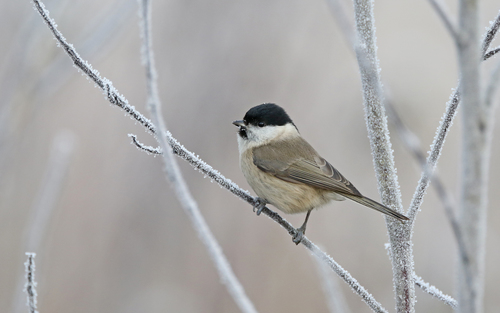
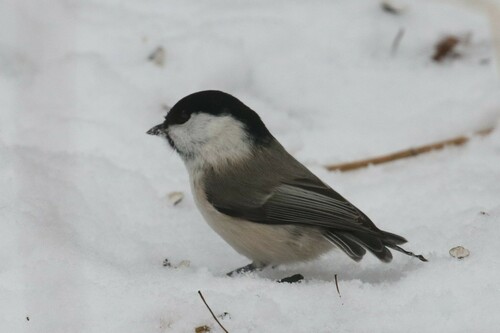
Marsh Tit (Poecile palustris) Marsh Tit
Willow Tit (Poecile montanus) Willow Tit

Media

Loading…

In short

The most reliable field mark for separating Marsh Tit from Willow Tit is the presence of a pale wing panel on the Willow Tit (formed by pale buff edges to the secondaries), which is usually absent in Marsh Tit adults but can appear faintly in Marsh Tit juveniles. If you have a good view of the closed wing, look for this pale patch as your first check. Marsh Tit typically shows a glossier black cap and a smaller, neater bib, while Willow Tit's cap is duller and the bib is longer but less tidy. Structural differences are subtle but useful: Willow Tit appears bulkier-headed and 'bull-necked' compared to the more proportioned Marsh Tit. Voice is often the clincher, as plumage differences can be unreliable, especially in western Europe where both species look similar.

Identification tips

  1. Pale Wing Panel: Willow Tit almost always shows a pale buff wing panel (edging to secondaries) on the closed wing, visible in all ages but most distinct in fresh plumage. Marsh Tit adults lack this, but juveniles can show a faint panel—check age and time of year.
  2. Cap Gloss: Marsh Tit's cap is glossy blue-black; Willow Tit's is dull, sooty black. This is best seen in good light and close views.
  3. Bib Shape: Marsh Tit has a small, neat, sharply defined black bib; Willow Tit's bib is longer and less tidy, but this is subtle and variable.
  4. Head Structure: Willow Tit appears large-headed and 'bull-necked', with a slightly heavier jizz; Marsh Tit's head is more proportionate to its body.
  5. Cheek and Ear Coverts: Both have white cheeks, but Marsh Tit's ear coverts are duskier brown, while Willow Tit's face is cleaner white.
  6. Underparts: Marsh Tit is off-white below with only a slight buff on the flanks; Willow Tit is generally buffier, with more rufous flanks.
  7. Bill Cutting Edge: Marsh Tit sometimes shows a pale cutting edge to the bill, but this is rarely visible in the field.
  8. Voice: Marsh Tit's call is an explosive 'pitchou' or 'pitchou-bee-bee-bee'; Willow Tit gives a nasal 'zee, zee, zee' or 'ipsee, ipsee'. Use voice if you know both species well, but beware of overlap.
  9. Habitat: Willow Tit prefers wetter, younger woodland with willows or birch; Marsh Tit favors mature deciduous woodland. Overlap is common, so do not rely on habitat alone.
  10. Juvenile Pitfall: Juvenile Marsh Tits can show a pale wing panel, so do not rely solely on this mark in late summer/autumn.
  11. Song: Marsh Tit has a more varied and musical song repertoire; Willow Tit's song is less varied and more nasal.
  12. Behavior: Willow Tit may be seen excavating nest holes in rotten wood, which Marsh Tit does not do.
  13. Regional Variation: In eastern Europe/Asia, Willow Tit is paler and more distinct from Marsh Tit; in western Europe, both are very similar and require close scrutiny.
  14. Sex/Age: Sexes are similar in both species; age differences mainly affect the wing panel in Marsh Tit juveniles.
  15. Mixed Flocks: Both species join mixed tit flocks in winter; do not assume flock composition based on behavior alone.

Size

Both species are very close in size: Marsh Tit averages 11.9 g and 11.5–12 cm in length, while Willow Tit is about 11 g and 11.5 cm long. Wingspan overlaps (Marsh Tit ~19 cm, Willow Tit 17–20.5 cm). In the field, size is not a useful separator; focus on structure and plumage.

Plumage

Juvenile and first-year birds are the trickiest: Willow Tit almost always shows a pale buff wing panel (formed by pale edges to the secondaries) on the closed wing, visible in all ages but most distinct in fresh plumage. Marsh Tit adults lack this panel, but juveniles can sometimes show a faint pale wing patch, so this mark is not 100% reliable in late summer. The Marsh Tit's cap is glossy blue-black, contrasting with the Willow Tit's dull, sooty black cap that often extends further down the nape. The Marsh Tit's bib is small and neat, while Willow Tit's is longer and more diffuse. Underparts are off-white in Marsh Tit with only a slight buff on the flanks, while Willow Tit is generally buffier below with more rufous flanks. Both have white cheeks, but Marsh Tit's ear coverts are duskier. Bill and legs are similar, though Marsh Tit's bill sometimes shows a pale cutting edge (hard to see in the field).

Behaviour

Behavior is not a strong separator, but Willow Tit is more likely to be seen excavating its own nest hole in rotten wood, while Marsh Tit does not. Both species are active and agile in woodland, often foraging in mixed flocks outside the breeding season. Willow Tit may appear slightly more deliberate and less acrobatic than Marsh Tit, but this is subtle.

Habitat

Habitat overlap is extensive, but Willow Tit prefers wetter, damper woodland, often with willows, birch, or alder, and is more likely in young, scrubby or regenerating woods. Marsh Tit is more typical of mature, deciduous woodland, especially with oak and beech, but can also occur in similar habitats to Willow Tit. In practice, both can be found together, so habitat is only a weak clue.

Voice

Calls are the most reliable way to separate these species. Marsh Tit gives an explosive 'pitchou' or 'pitchoo' call, often followed by a rapid 'pitchou-bee-bee-bee', and has a varied song repertoire (including 'schip-schip-schip' and 'tu-tu-tu-tu'). Willow Tit's most common call is a nasal 'zee, zee, zee', sometimes a repeated 'ipsee, ipsee'. The Marsh Tit's calls are sharper and more metallic, while Willow Tit's are softer and more nasal. However, both can mimic each other's calls, and some notes overlap, so use voice with caution unless you are familiar with both.

Submit a better description

Use the same sections as the comparison. Your text is published immediately.

The most reliable field mark for separating Marsh Tit from Willow Tit is the presence of a pale wing panel on the Willow Tit (formed by pale buff edges to the secondaries), which is usually absent in Marsh Tit adults but can appear faintly in Marsh Tit juveniles. If you have a good view of the closed wing, look for this pale patch as your first check. Marsh Tit typically shows a glossier black cap and a smaller, neater bib, while Willow Tit's cap is duller and the bib is longer but less tidy. Structural differences are subtle but useful: Willow Tit appears bulkier-headed and 'bull-necked' compared to the more proportioned Marsh Tit. Voice is often the clincher, as plumage differences can be unreliable, especially in western Europe where both species look similar.

  1. Pale Wing Panel: Willow Tit almost always shows a pale buff wing panel (edging to secondaries) on the closed wing, visible in all ages but most distinct in fresh plumage. Marsh Tit adults lack this, but juveniles can show a faint panel—check age and time of year.
  2. Cap Gloss: Marsh Tit's cap is glossy blue-black; Willow Tit's is dull, sooty black. This is best seen in good light and close views.
  3. Bib Shape: Marsh Tit has a small, neat, sharply defined black bib; Willow Tit's bib is longer and less tidy, but this is subtle and variable.
  4. Head Structure: Willow Tit appears large-headed and 'bull-necked', with a slightly heavier jizz; Marsh Tit's head is more proportionate to its body.
  5. Cheek and Ear Coverts: Both have white cheeks, but Marsh Tit's ear coverts are duskier brown, while Willow Tit's face is cleaner white.
  6. Underparts: Marsh Tit is off-white below with only a slight buff on the flanks; Willow Tit is generally buffier, with more rufous flanks.
  7. Bill Cutting Edge: Marsh Tit sometimes shows a pale cutting edge to the bill, but this is rarely visible in the field.
  8. Voice: Marsh Tit's call is an explosive 'pitchou' or 'pitchou-bee-bee-bee'; Willow Tit gives a nasal 'zee, zee, zee' or 'ipsee, ipsee'. Use voice if you know both species well, but beware of overlap.
  9. Habitat: Willow Tit prefers wetter, younger woodland with willows or birch; Marsh Tit favors mature deciduous woodland. Overlap is common, so do not rely on habitat alone.
  10. Juvenile Pitfall: Juvenile Marsh Tits can show a pale wing panel, so do not rely solely on this mark in late summer/autumn.
  11. Song: Marsh Tit has a more varied and musical song repertoire; Willow Tit's song is less varied and more nasal.
  12. Behavior: Willow Tit may be seen excavating nest holes in rotten wood, which Marsh Tit does not do.
  13. Regional Variation: In eastern Europe/Asia, Willow Tit is paler and more distinct from Marsh Tit; in western Europe, both are very similar and require close scrutiny.
  14. Sex/Age: Sexes are similar in both species; age differences mainly affect the wing panel in Marsh Tit juveniles.
  15. Mixed Flocks: Both species join mixed tit flocks in winter; do not assume flock composition based on behavior alone.

Both species are very close in size: Marsh Tit averages 11.9 g and 11.5–12 cm in length, while Willow Tit is about 11 g and 11.5 cm long. Wingspan overlaps (Marsh Tit ~19 cm, Willow Tit 17–20.5 cm). In the field, size is not a useful separator; focus on structure and plumage.

Juvenile and first-year birds are the trickiest: Willow Tit almost always shows a pale buff wing panel (formed by pale edges to the secondaries) on the closed wing, visible in all ages but most distinct in fresh plumage. Marsh Tit adults lack this panel, but juveniles can sometimes show a faint pale wing patch, so this mark is not 100% reliable in late summer. The Marsh Tit's cap is glossy blue-black, contrasting with the Willow Tit's dull, sooty black cap that often extends further down the nape. The Marsh Tit's bib is small and neat, while Willow Tit's is longer and more diffuse. Underparts are off-white in Marsh Tit with only a slight buff on the flanks, while Willow Tit is generally buffier below with more rufous flanks. Both have white cheeks, but Marsh Tit's ear coverts are duskier. Bill and legs are similar, though Marsh Tit's bill sometimes shows a pale cutting edge (hard to see in the field).

Behavior is not a strong separator, but Willow Tit is more likely to be seen excavating its own nest hole in rotten wood, while Marsh Tit does not. Both species are active and agile in woodland, often foraging in mixed flocks outside the breeding season. Willow Tit may appear slightly more deliberate and less acrobatic than Marsh Tit, but this is subtle.

Habitat overlap is extensive, but Willow Tit prefers wetter, damper woodland, often with willows, birch, or alder, and is more likely in young, scrubby or regenerating woods. Marsh Tit is more typical of mature, deciduous woodland, especially with oak and beech, but can also occur in similar habitats to Willow Tit. In practice, both can be found together, so habitat is only a weak clue.

Calls are the most reliable way to separate these species. Marsh Tit gives an explosive 'pitchou' or 'pitchoo' call, often followed by a rapid 'pitchou-bee-bee-bee', and has a varied song repertoire (including 'schip-schip-schip' and 'tu-tu-tu-tu'). Willow Tit's most common call is a nasal 'zee, zee, zee', sometimes a repeated 'ipsee, ipsee'. The Marsh Tit's calls are sharper and more metallic, while Willow Tit's are softer and more nasal. However, both can mimic each other's calls, and some notes overlap, so use voice with caution unless you are familiar with both.

Discard your changes?

You have unsaved edits. If you leave now, those changes will be lost.

Marsh Tit · Willow Tit · My Tricky Birds